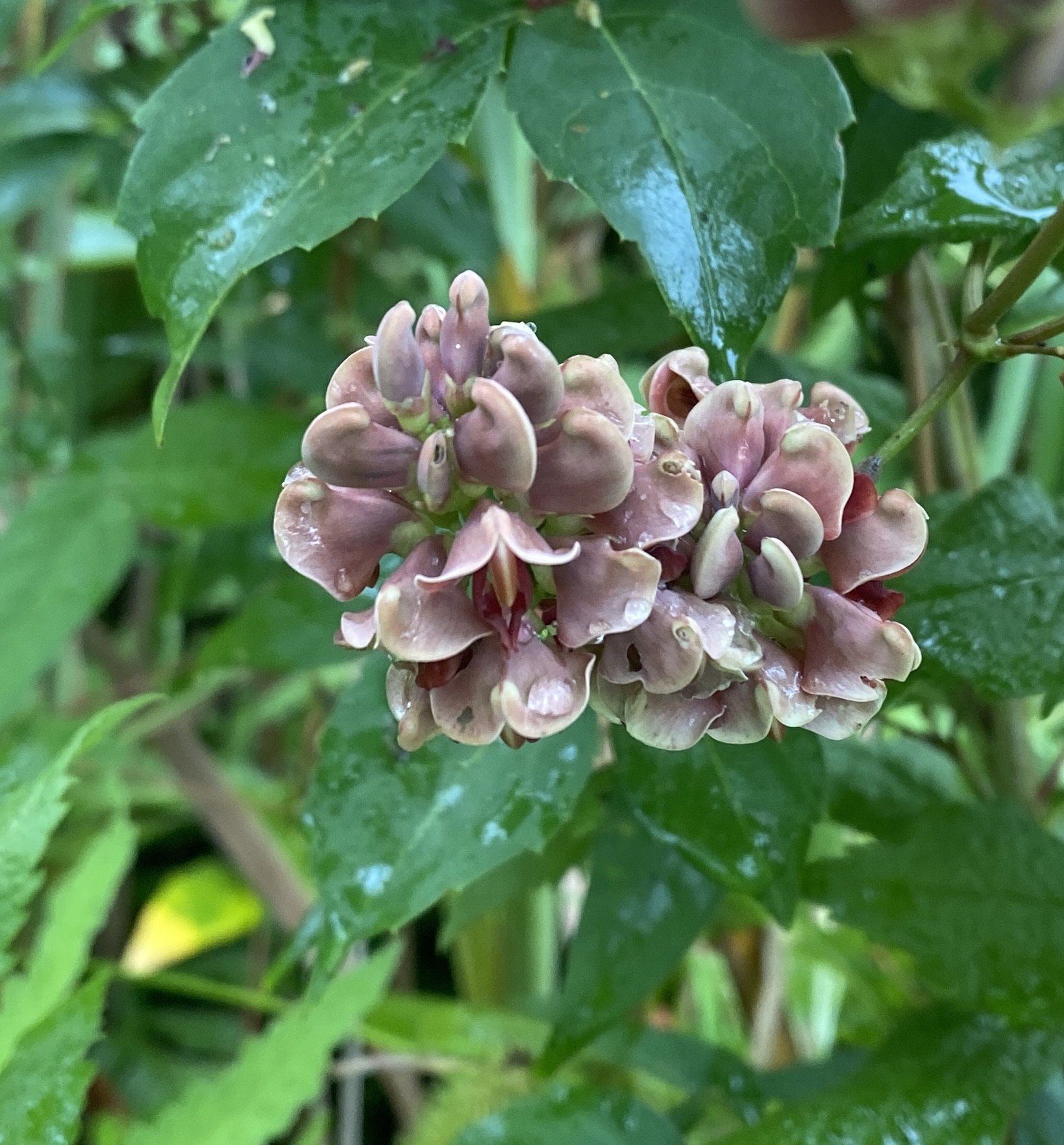
Apios americana ‘Treasure’
This is a climbing vine with maroon or reddish-brown pea-like showy flowers. This legume has a rootstalk with edible tubers that Native Americans gathered for food. The Pilgrims also relied on them for food. The tubers can be used in soups and stews or fried like potatoes. The tubers have 3 times the protein of potatoes with a nuttier flavor. The flowers are lovely.
Height: Stems can grow up to about 15 feet long
Pot size: 3 qt
Bloom time: July, August, September. Blooms are brown/copper, red/burgundy
Light: Full sun to part shade
Moisture: Moist, wet
Attracts: Host plant for Silver-spotted Skipper. Wildlife food source
Companion Plants: Elderberry, black eyed Susan, purple coneflower, sunflower, ferns
Photo by MGV Ginger Hughes

Adlumia fungosa
Delicate, biennial, climbing vine with fern like foliage with pinkish-white, tubular, hanging flowers similar to bleeding hearts (Dicentra) that bloom throughout summer. The vine is fast growing and can reach 13 feet in height if given something to climb on. Although the plant readily self-seeds, it is listed as endangered or threatened in most of it’s range Northeastern North America.
Height: Climbing stems can reach 13’
Pot size: 3 qt
Bloom time: June to September
Light: Sun, Part Shade, Shade
Moisture: Moist to Average
Attracts: Hummingbirds and other pollinators
Deer resistance: Yes
Companion Plants: Maidenhair fern, wild columbine, bee balm, purple coneflower, phlox, bellflower, ninebark
Photo Credit: Glover Perennials

Clematis virginiana
Rapid climbing, twining vine with sweetly aromatic, pure white flowers that bloom in late summer to fall. Once the flowers fade, they give way to attractive, plume-like seed-heads. Northeastern U.S. Native.
Height: 12 - 20’
Spread: 3 - 6’
Pot size: 4 qt. trellised
Bloom time: August, September, October
Light: Full sun, part shade
Moisture: Average, Wet
Attracts: Provides nesting material for birds, provides cover for wildlife
Deer Resistance: Yes
Companion Plants: Foxglove, bellflower, American elderberry, button brush, white dogwood, spotted Joe Pye weed
Photo: Glover Perennials
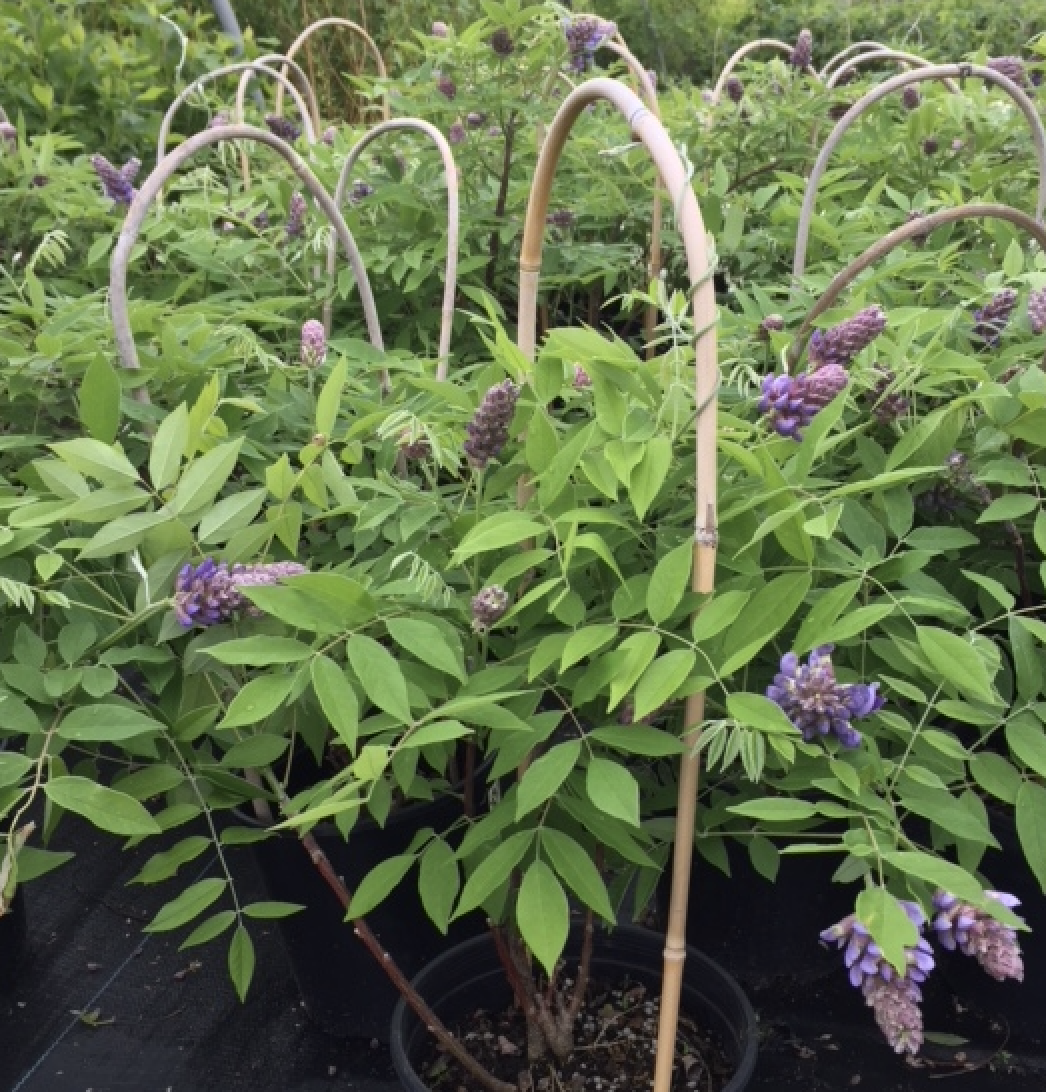
Wisteria frutescens ‘Amethyst Falls’
This is a long blooming climbing vine with fragrant blue lilac-colored flowers and glossy foliage that can be trained on deck railings, pergolas, arbors or fences. Can climb up to 30’. Vines need regular pruning to train and shape. This cultivar is considered a dwarf wisteria.
Height: 6’ plus
Spread: 10’ - 15’
Pot size: 4 qt.
Bloom time: June, July, August
Light: Full sun
Moisture: Average, Moist
Attracts: Butterflies, pollinators
Deer Resistance: Yes
Companion Plants: Little bluestem, ferns, bee balm, Labrador violet
Photo: Glover Perennials
No results match your search. Try removing a few filters.