Pycnanthemum virginianum
Flowers are in showy clusters with small pale lavender or white flowers. Flower nectar attracts beneficial insects. Fast spreading and drought tolerant. Northeastern U.S. Native.
Height: 24-36”
Spread: 12-18”
Pot size: 3 qt
Bloom time: July, August, September
Light: Full sun to partial shade
Moisture: Dry, wet
Attracts: Birds, hummingbirds, and butterflies
Deer Resistance: Yes
Companion Plants: Coastal Joe Pye weed, blazing star, wild bergamot, switchgrass, Culver’s root, little bluestem
Photo by Lady Bird Johnson Wildflower Center

Hypericum prolificum
A compact, slow growing, rounded shrub with dark green, narrow leaves. Interesting, bright, yellow, 1-inch flowers cover the plant in early summer and give way to cone shaped seed clusters once they fade. Bark of older stems exfoliates to reveal an attractive, pale orange inner bark. Plant in groups along the shrub border or use it as a hedge. Tolerates some drought once established. Will grow in a variety of soils including clay. Native to the Northeastern US.
Height: 1’-5’
Spread: 1’-4’
Pot size: 6 qt
Bloom time: June-August
Light: Full Sun- Part Shade
Moisture: Average
Attracts: Birds, Bumblebees
Deer resistance: Yes
Companion Plants: Serviceberry, New Jersey tea, bee balm
Photo credit: Erin Hunt-cc wikimedia

Chionanthus virginicus
A small, deciduous tree with a multi-stemmed habit that can be trained into a single trunk. In late spring, fragrant flower clusters with creamy white fringe-like petals appear turning into showy blue-black fruits as they mature in late summer. The bark, with its scaly dark brown ridges and red furrows, brings winter interest. Fringe Tree grows about 6 to 10 inches each year.
Height at pickup: 2’+
Height: 12-20’
Spread: 12-20’
Pot size: 5 gal
Bloom time: May - June
Light: Full to part sun. Best foliage in partial shade and the best flowering in full sun
Moisture: Medium
Attracts: Birds, host plant for butterfly and moth larvae (caterpillars), including Rustic sphinx (Manduca rustica).
Deer resistance: Moderate
Companion Plants: Indian pink, skullcap, Arrowood Viburnum, Heuchera, ferns
Photo Credit: Jason Sturner-cc wikimedia
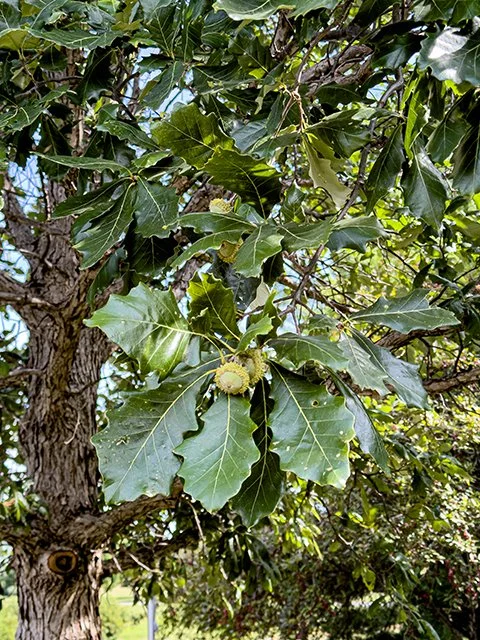
Quercus bicolor
Swamp white oak is a medium to large tree with leaves that have shallow lobes or wavy edges with a shiny green upper surface and a silvery, fuzzy underside. The bark is dark and scaly, often flaking in strips, and the tree produces acorns in pairs on long stalks. Adapted to wet soils, it thrives in swamps, riverbanks, and poorly drained areas.
Ecologically, swamp white oak provides food and shelter for birds, mammals, and insects. Its acorns are an essential energy source for wildlife. The species is also favored in urban planting due to its tolerance of compacted soils and pollutants. Its durable, water-resistant wood is used for construction, fencing, and furniture. Native to wetlands and floodplains in the eastern and midwestern United States.
Height at pickup: 12”+
Height: 50’ – 80’
Spread: 50’ - 60’
Pot size: 2 gal
Bloom time: March to May
Light: Part Shade
Moisture: Moist - Wet
Attracts: Birds, mammals and insects
Deer resistant: Moderate until maturity
Companion Plants: River birch, flowering dogwood, white turtlehead, Virginia bluebells, foamflower, coral bells
Photo: Lady Bird Johnson, Brundage, Stephanie

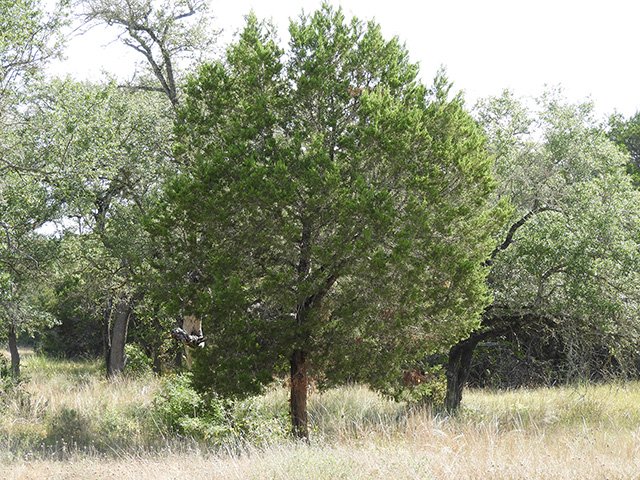
Juniperus virginiana
Magnificent evergreen, with shreddy reddish-brown bark and blue-green scale-like foliage, provides great winter interest and shelter, food and nesting material for birds and small animals. Although named redcedar, it is a juniper producing blue berry-like cones (female). This drought tolerant tree draws its name from the aromatic true cedar fragrance of its heartwood. It is a Keystone plant, stabilizing soil erosion with its deep roots, while providing and supporting wildlife. Native to eastern U.S.
Height at pickup: 6”+
Height: 30’ – 65’
Spread: 8’ – 25’
Pot size: 1 gal.
Bloom time: non-flowering
Light: Full sun
Moisture: Dry
Attracts: Birds - cedar waxwings (named for their love of the berry-like cones). Butterflies -host for the Olive Juniper Hairstreak. Moths - imperial moth
Deer resistant: Yes
Companion plants: Pussytoes, winterberry, witch hazel, lady fern
2nd Photo: Lady Bird Johnson Wildflower Center https://www.wildflower.org/
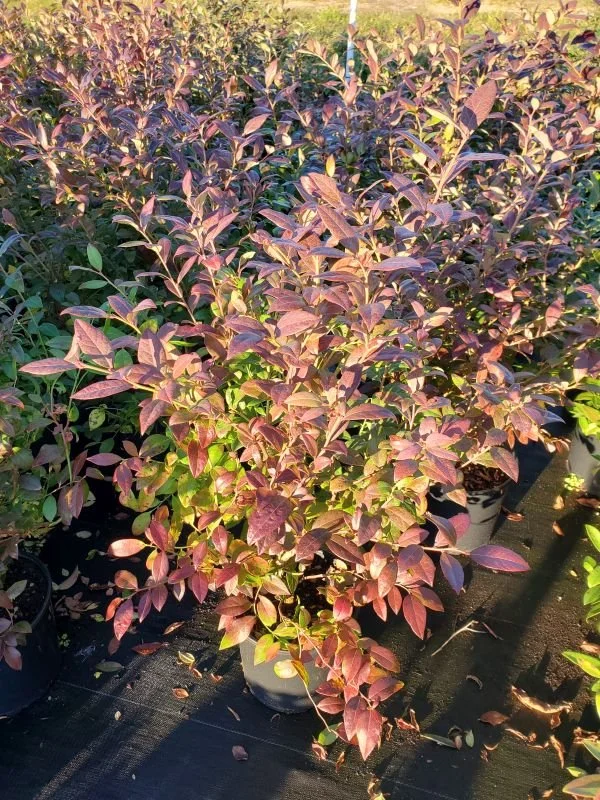
Vaccinium corymbosum ‘Legacy’
A highly productive, vigorous cultivar prized for producing some of the best-flavored, large, sweet berries with an extended mid-to-late season harvest. White urn-shaped flowers in May. Features glossy green summer leaves that turn bright orange-red in the fall. Self-fertilizing, but yields increase with a companion plant such as Vaccinium corymbosum ‘Duke’. Native to eastern North America.
Height: 4-6’
Spread: 3-4’
Pot size: 4 qt
Bloom time: May
Light: Full sun to Partial shade
Moisture: Moist
Attracts: Birds, butterflies, other pollinators and wildlife
Companion plants: Creeping phlox, lady fern, Virginia bluebells
Photo: Glover Perennials
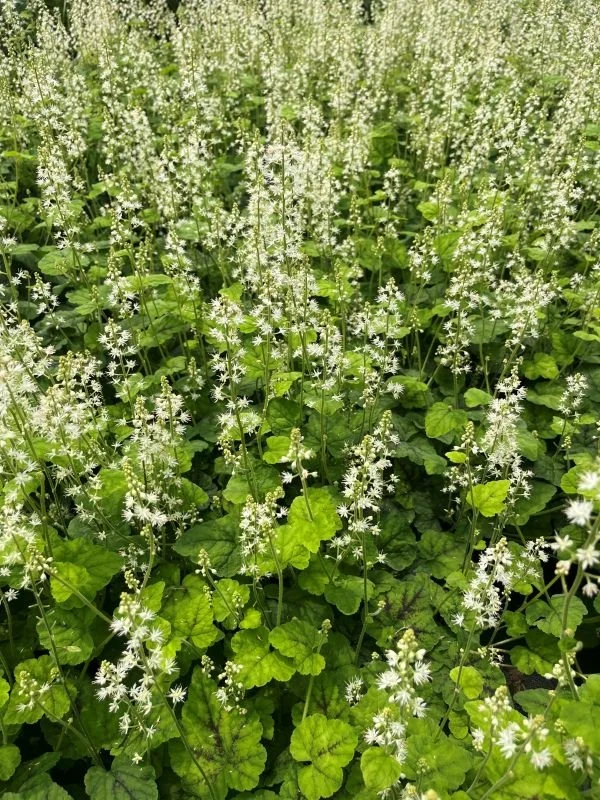
Tiarella cordifolia ‘Running Tapestry’
Spikes of delicate, white, starry flowers rise above the lush, green leaves with radiating deep red hearts. This evergreen combines well with deciduous trees & shrubs. It is an excellent groundcover and garden accent and does well in containers. Native to the northeastern U.S.
Height: 8-12”
Spread: 12-18”
Pot size: 3 qt
Bloom time: May to July
Light: Partial shade to Full Shade
Moisture: Average to Wet
Attracts: Bees, butterflies, moths and other pollinators
Deer resistant: Yes
Companion plants: Creeping phlox, lady fern, Virginia bluebells
Photo: Glover Perennials
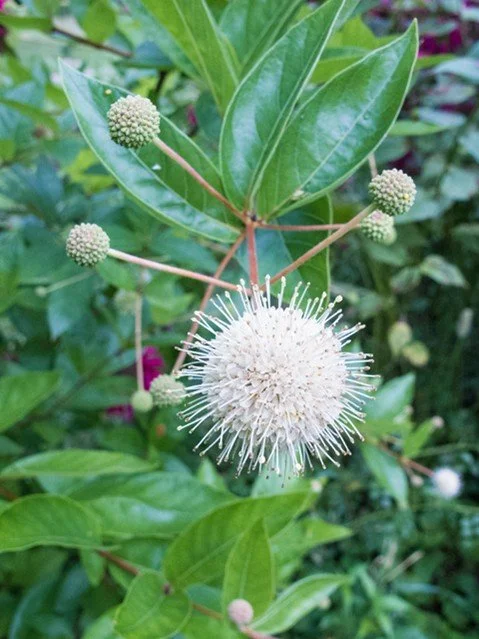
Cephalanthus occidentalis
Button Bush
A medium sized shrub with rounded shape. Lovely, unusual round spherical flowers. Best suited to moist soils, intolerant of drought.
Height: 3’-6’
Spread: 3’-6’
Pot size: 6 qt
Bloom time: late July-August
Light: Full sun-light shade
Moisture: Moist-Wet
Attracts: Specialist Bees, Butterflies
Deer resistance: Yes
Companion Plants: Coastal Joe Pye Weed, NY ironweed, swamp milkweed and cardinal flower
Photo credit: Lady Bird Johnson, Wildflower Digital Library, Brundage, Stephanie
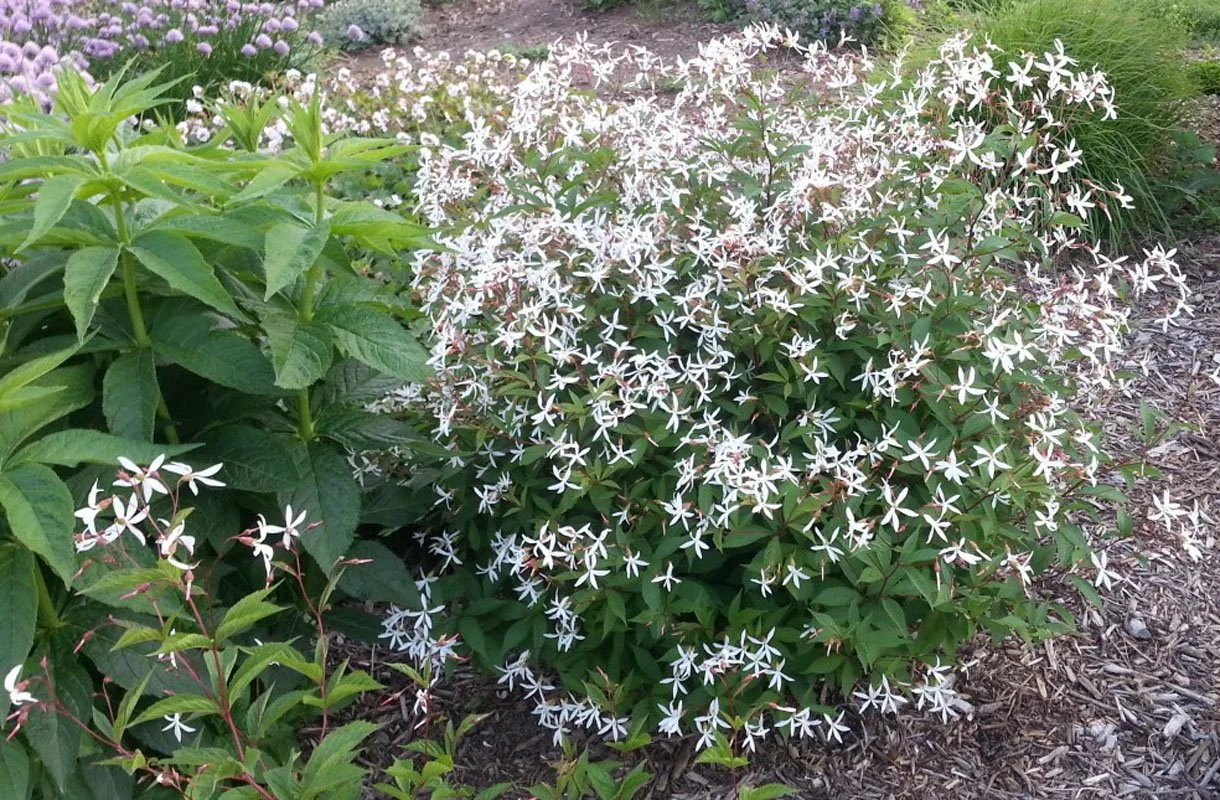
Gillenia trifoliata
Long lived perennial. Compact, bushy habit with star like flowers early-mid summer. Attractive fall foliage and interesting seed heads for winter interest.
Height: 24”-36”
Spread: 24”-36”
Pot size: 3 qt
Bloom time: June-July
Light: Light Shade-Part Sun
Moisture: Average-Moist
Attracts: Bees and Butterflies
Deer resistance: Yes
Companion Plants: Ferns, Astilbe, Tiarella, Heuchera
Picture by Glover Perennials
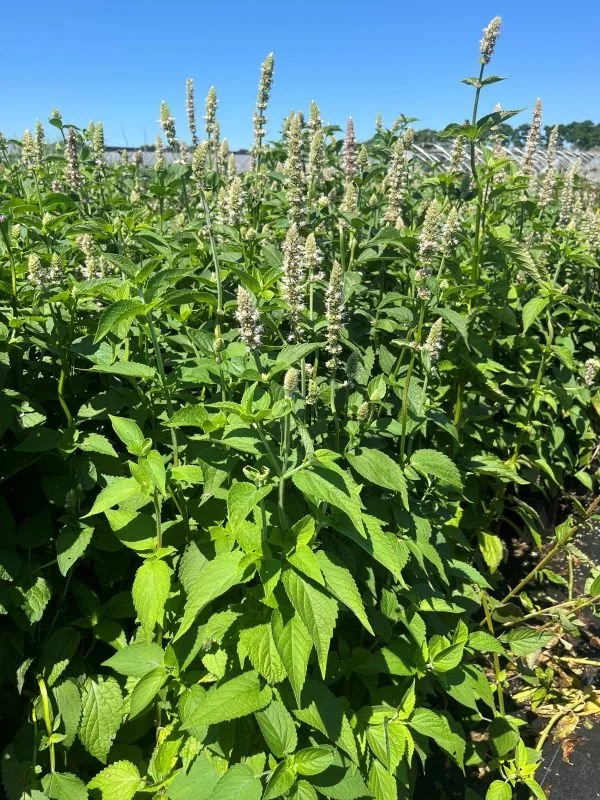
Agastache scrophulariifolia
Fantastic pollinator plant that blooms mid to late season with pleasantly scented foliage. With its long bloom period and high nectar content it makes an excellent addition to northeast gardens. Seed heads provide for birds and provide winter interest. Can be cut back in late spring to reduce overall height and create bushier shape. Great companion plant alongside grasses!
Height: 4’-6’+
Spread: 4’-6’+
Pot size: 4 qt
Bloom time: July-October
Light: Full Sun-Part Shade
Moisture: Drought Tolerant
Attracts: Butterflies, bees and birds
Deer resistance: Yes
Companion Plants: Native grasses, purple coneflower, New England aster, bee balm
Photo: Glover Perennials
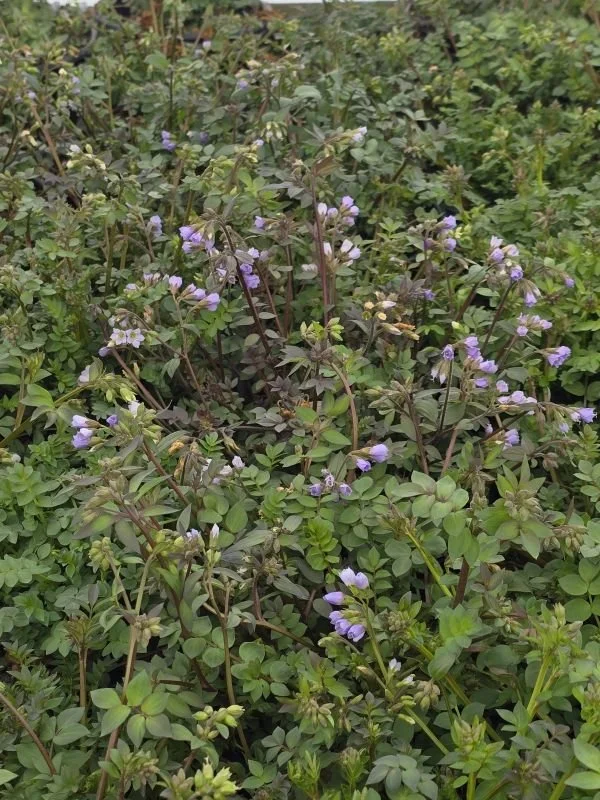
Polemonium reptans
Jacob’s Ladder is a perennial herbaceous spring ephemeral featuring light blue, bell-shape flowers in loose terminal clusters. Leaves with oval leaflets are arranged like the rungs of a ladder. It grows best in moist, well-drained soil in part shade and freely self-seeds in optimum growing conditions. Jacob’s ladder is best used in partially shaded areas of the rock garden, naturalized areas, woodland gardens or native plant gardens.
Height: 1 to 1.5’
Spread: 1 to 1.5’
Pot size: 3 qt
Bloom time: April to June
Light: Shade to Part shade
Moisture: Medium well drained
Attracts: Native bees and honeybees
Deer resistant: Tolerates and is not palatable to deer
Companion plants: shade-loving, moisture-tolerant plants with contrasting textures, such as ferns, coral bells, Tiarella, geranium, Phlox
Photo: Glover Perennials
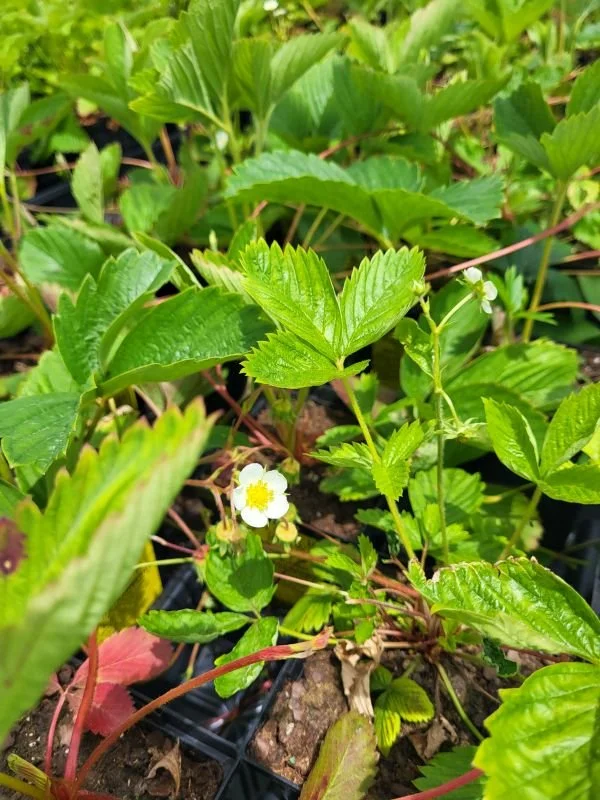
Fragaria virginiana 'Christina'
Fragaria virginiana ‘Christine’ is a selected cultivar of the North American wild strawberry, valued for its strong vigor, adaptability ,and sweet, aromatic fruits. This herbaceous perennial is a low-growing groundcover that spreads by slender, leafy runners, forming dense mats of attractive trifoliate foliage. The ‘Christine’ selection is grown for its productivity, resilience, and ornamental quality.
Height: Typically 4”-6”
Spread: Can extend up to 18 in or more via runners in a single season
Pot Size: 1 quart
Bloom time: Mid to Late Spring
Light: Full sun to partial shade (best fruiting in full sun)
Moisture: Prefers consistent moisture but intolerant of waterlogging.
Attracts: Bees, Butterflies and birds
Deer Resistant: Moderately deer resistant
Companion Plants: Wild columbine, butterfly weed, coral bells and wild geranium
Photo: Glover Perennials
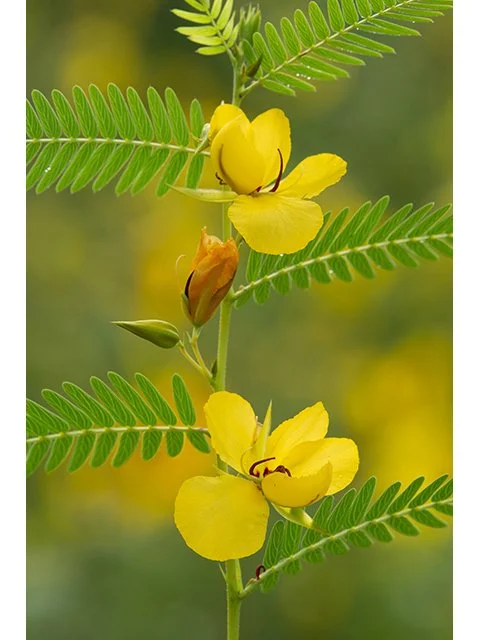
Chamaecrista fasciculata
Partridge Pea
Herbaceous annual with large yellow flowers that mature in summer and continue into early fall. Their feathery green leaves fold together when touched and in the evening as darkness approaches. The flower is followed by a narrow pod which is attractive to songbirds and game birds.
Height: 1-3’
Spread: 1-3’
Pot size: 1 qt
Bloom time: June to September
Light: Full sun
Moisture: Dry to medium
Attracts: Birds, butterflies
Deer resistance: No
Companion: Butterfly weed, showy swamp milkweed, whorled milkweed, little bluestem
Photo: Lady Bird Johnson, Leander, Bruce
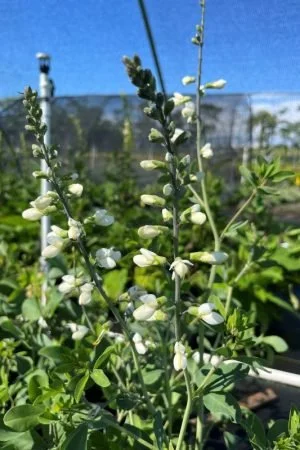
Baptisia alba
Baptisia alba is a graceful, long-lived native perennial prized for its upright form, elegant white flowers, and exceptional toughness. In late spring to early summer, it sends up tall spires of pea-like, pure white blooms that rise above soft blue-green foliage, attracting bees and other pollinators.
This clump-forming plant develops a shrub-like presence over time, reaching 3–4 feet tall and wide, with deep roots that make it highly drought-tolerant once established. After flowering, decorative charcoal-black seed pods form, adding texture and interest well into fall and winter.
Baptisia alba thrives in full sun to light shade and prefers well-drained soils, though it adapts well to poor or sandy conditions. Virtually maintenance-free and resistant to deer and rabbits, it’s an excellent choice for native gardens, prairie plantings, cottage gardens, and perennial borders.
Height: 3-4’
Spread: Upright, Clump forming
Pot Size: 3 quart
Bloom Time: Late Spring - Early Summer
Light: Full Sun, Light Shade
Moisture: New Plants moist, well drained; Established plants low moisture and drought tolerant
Attracts: Bees
Deer Resistant: Yes
Companion Plants: Wild geranium, bee balm, little bluestem grass, golden alexanders
Photo: Glover Perennials
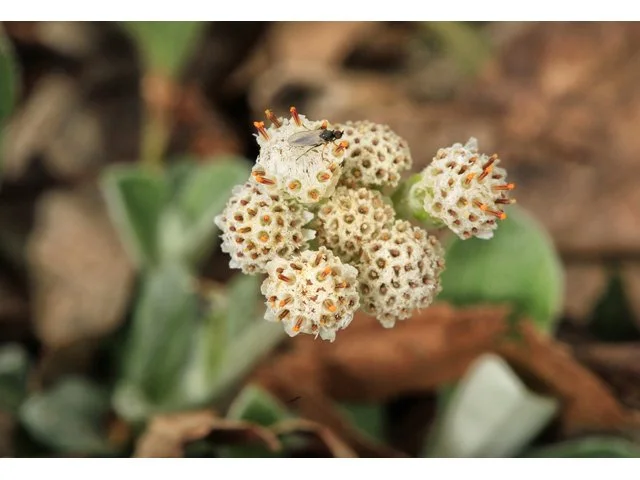
Pussytoes
Antennaria plantaginifolia
A low colony-forming plant that spreads by runners (stolens) with basal leaves and erect stems , each bearing a flower head that resembles a cat’s paw. Male and the showier female flowers are on different plants. This plant is happy on acid soil in lean, gritty, dry hillsides. Good groundcover on rocky slopes.
Height: 6"-12”
Pot size: 1 qt
Bloom time: April-June. Blooms are white. Female flowers are tinged with pink.
Light: Full sun to part shade
Moisture: Dry with high drought tolerance
Attracts: Host plant for American Lady Butterfly
Deer resistance: No
Companion Plants: Butterfly weed, wild strawberry, little bluestem, purple love grass, and Pennsylvania sedge

Vaccinium corymbosum ‘Duke’
This cold-hardy shrub is compact, rounded, and puts on a show three seasons of the year. Beautiful bell-shaped white flowers will decorate your berry bush as it announces the start of spring. The harvest season is late spring early summer. After the fruit season has passed, the green leaves turn lovely shades of bronze, red, and purple during the fall. To increase fruit yield, it is recommended to have more than one variety of Highbush Blueberry.
Height: 5’-7’
Width: 5’-7’
Pot Size: 4 qt
Bloom Time: April - May
Sun: Full to Partial
Moisture: Dry, Average, Well Drained
Attracts: Birds, Bees, Butterflies, Hummingbirds
Deer Resistant: No
Companion Plants: Strawberries, ferns, rhododendrons

Coreopsis tripteris ‘Gold Standard’
This Keystone, North American native wildflower produces bright lemon-yellow flowers with blue/green foliage. The sturdy stems prevent flopping. This popular sun lover is a good addition to the garden as it attracts pollinators, is drought tolerant and provides a long-lasting cut flower. Contrary to its name, the tickweed does not attract ticks, but was so named because it produces tick like seed capsules which the birds enjoy.
Height: 5’ – 6’
Spread: 2’
Pot size: 6 quarts
Bloom time: Late summer
Light: Full sun
Moisture: Average - Low
Attracts: Butterflies, bees, birds
Deer resistance: Yes
Companion Plants: Purple coneflower, butterfly weed, New York aster, false indigo, little bluestem grass ‘Standing Ovation’, black eyed Susan
Photo credit: Glover Perennials
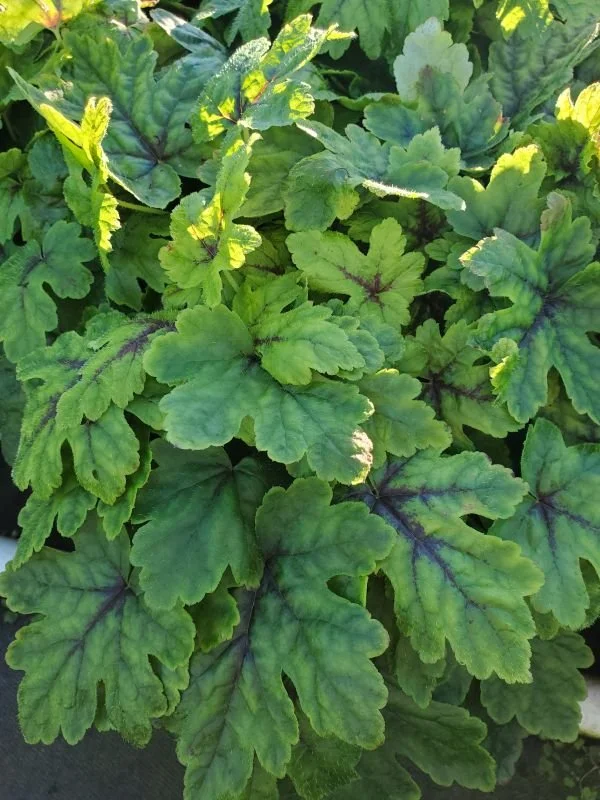
Tiarella cordifolia ‘Elizabeth Oliver’
Long blooming, substantial low clumps of deeply lobed leaves streaked with red veining. Spires of foamy pink flowers bloom throughout the spring. Works well as a ground cover, accent, in containers, and as edging for a shade garden. New growth appears bronze. It can be easily divided in spring.
Height: 12 - 15”
Spread: 12”
Pot size: 3 qt
Bloom time: May, June, July
Light: Part shade to shade
Moisture: Average, wet
Attracts: Butterflies and other pollinators
Deer resistance: Yes
Companion Plants: Lady fern, Virginia bluebells
Photo credit: Glover Perennials

Rudbeckia triloba
A bushy, free-flowering, tall perennial or biannual that readily self–sows. It features masses of 1-2” wide, daisy-like, golden-yellow flowers with flat, purplish-brown centers that are larger than Black-Eyed Susan flowers. They make an excellent cut flower. Deadheading encourages more blooms. Northeastern U.S. Native.
Height: 2-3’
Spread: 1-1.5’
Pot size: 1 qt
Bloom time: Late summer to early fall
Light: Full sun
Moisture: Average to moist
Attracts: Butterflies, Keystone Species - see our article HERE
Companion Plants: Purple coneflower, bee balm, New York aster, goldenrods
Photo Credit: Glover Perennials
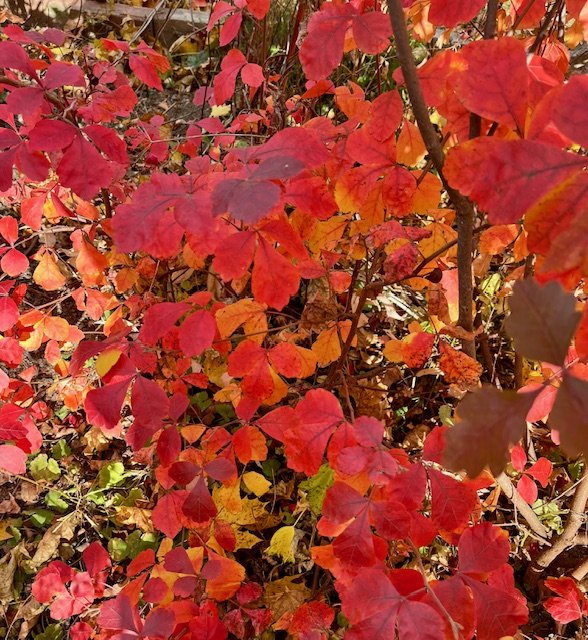
Rhus aromatica
Fragrant sumac is an adaptable native deciduous shrub with glossy dark green leaves. Small yellow flowers appear in early spring before the foliage emerges. Fragrant sumac develops stunning orange to red fall foliage color and red berries. Known for its citrus-like scent, it is an excellent plant for stabilizing embankments or as a garden mass.
Height at pickup: 2’+
Height: 2 - 6’
Spread: 6-10’
Pot size: 5 gal
Bloom time: Early spring
Light: Full sun to part shade
Moisture: Average to dry
Attracts: Birds, butterflies, and Luna moths
Deer resistant: Yes
Companion plants: Highbush blueberry, little bluestem, purple coneflower, sweet fern, flowering dogwood
Photo Credit: Kristen Ossmann

Phlox subulata ‘Purple Beauty’
An early to mid-spring-blooming, herbaceous perennial known for its clusters of 3/4” flowers, with needle-like, green leaves that resembles moss. This cultivar has a deep purple flower. Its dense spreading habit makes it a perfect ground cover for rock gardens, edgings, woodland gardens, or native plant gardens in sunny areas. Northeastern U.S. Native.
Height: 6”
Spread: 2-3’
Pot size: 1 qt
Bloom time: Early to mid-spring
Light: Full sun
Moisture: Moist with good drainage
Attracts: Bees, butterflies, hummingbirds
Companion Plants: Oak leaf hydrangea, creeping phlox, bee balm, coral bells, coneflower, back eyed Susan
Photo Credit: Glover Perennials

Leucothoe racemosa
This broadleaf shrub has fragrant pinkish white bell-shaped flowers in 4” clusters and glossy green leaves that turn red, orange, or yellow in fall. It can be used as a foundation plant, in a woodsy landscape as a hedge, on slopes as a bank stabilizer, near ponds and in rain gardens. The leaves and nectar are poisonous to humans and animals. Northeastern U.S. Native.
Height: 4’ – 6’
Spread: 4’ – 6’
Pot size: 6 qt
Bloom time: May - June
Light: Part shade - Shade
Moisture: Average - Wet
Attracts: Butterflies, Bees
Deer resistance: Yes
Companion Plants: Coral bells, lady fern
Photo: Glover Perennials

Gentiana andrewsii
Incredible cobalt blue/purple flowers are unique in that they stay closed in a budlike form. The leaves on the stem also get bigger as they ascend on the stem to the flower. Pollination is primarily carried out by bumblebees which are strong enough to part the corolla and get to the nectar and deposit pollen. This slow growing herbaceous perennial is ideal for shade, woodland, cottage gardens or in rain gardens and near ponds. Northeastern U.S. Native.
Height: 1.5 - 2’
Spread: 1.5 - 2’
Pot size: 1 qt
Bloom time: August - October
Light: Part shade – Full Sun
Moisture: Average - Moist
Attracts: Bumblebees, bees
Deer resistance: Yes
Companion Plants: Common sneezeweed, cardinal flower, white turtlehead, swamp milkweed, lady fern
Photo: Lady Bird Johnson, Cresslar, Alan

Ceanothus americanus
This is a deciduous compact, dense, rounded shrub with tiny, fragrant white flowers. It has a deep root system which makes it good for use in erosion control on slopes. The dried leaves were used as a tea substitute, without caffeine, during the Revolutionary War. The young twigs are noticeably yellow and stand out during winter. This plant is a good addition to a butterfly, drought tolerant, rain garden or nighttime garden.
Height: 3-4’
Spread: 3-5’
Pot size: 3 qt
Bloom time: May to July with white fragrant blooms that are long-lasting
Light: Full sun to part shade
Moisture: Dry to medium well-drained soil. Can withstand droughty conditions.
Attracts: Hummingbirds, songbirds and specialized bees. Food source for the larvae of the Mottled Duskywing, Spring Azure and Summer Azure butterflies.
Deer resistance: Moderate
Companion Plants: Butterfly weed, goldenrod, Echinacea pupura
Photo Credit: Glover
Second Photo: Mike Adamovic
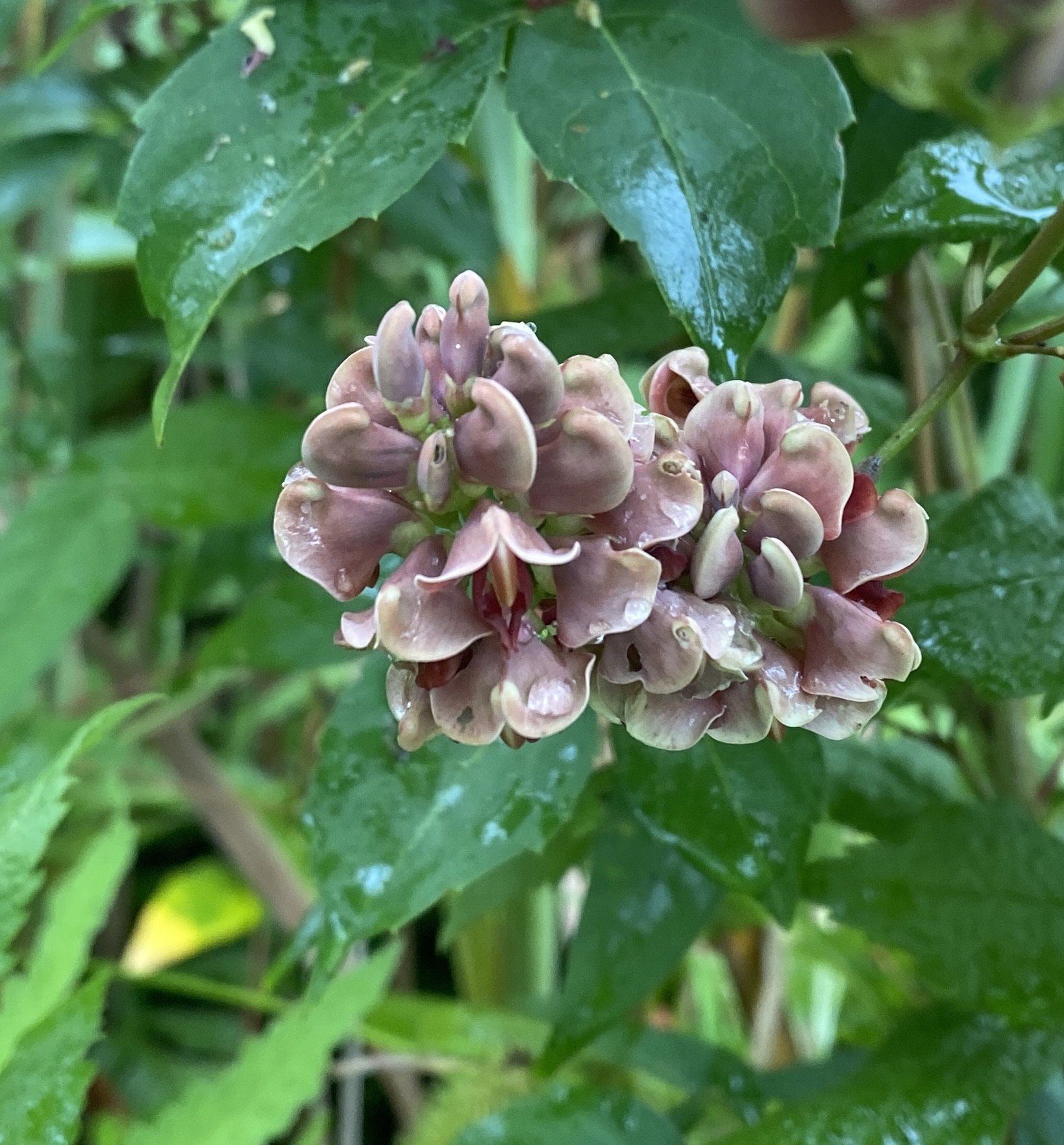
Apios americana ‘Treasure’
This is a climbing vine with maroon or reddish-brown pea-like showy flowers. This legume has a rootstalk with edible tubers that Native Americans gathered for food. The Pilgrims also relied on them for food. The tubers can be used in soups and stews or fried like potatoes. The tubers have 3 times the protein of potatoes with a nuttier flavor. The flowers are lovely.
Height: Stems can grow up to about 15 feet long
Pot size: 3 qt
Bloom time: July, August, September. Blooms are brown/copper, red/burgundy
Light: Full sun to part shade
Moisture: Moist, wet
Attracts: Host plant for Silver-spotted Skipper. Wildlife food source
Companion Plants: Elderberry, black eyed Susan, purple coneflower, sunflower, ferns
Photo by MGV Ginger Hughes

Adlumia fungosa
Delicate, biennial, climbing vine with fern like foliage with pinkish-white, tubular, hanging flowers similar to bleeding hearts (Dicentra) that bloom throughout summer. The vine is fast growing and can reach 13 feet in height if given something to climb on. Although the plant readily self-seeds, it is listed as endangered or threatened in most of it’s range Northeastern North America.
Height: Climbing stems can reach 13’
Pot size: 3 qt
Bloom time: June to September
Light: Sun, Part Shade, Shade
Moisture: Moist to Average
Attracts: Hummingbirds and other pollinators
Deer resistance: Yes
Companion Plants: Maidenhair fern, wild columbine, bee balm, purple coneflower, phlox, bellflower, ninebark
Photo Credit: Glover Perennials
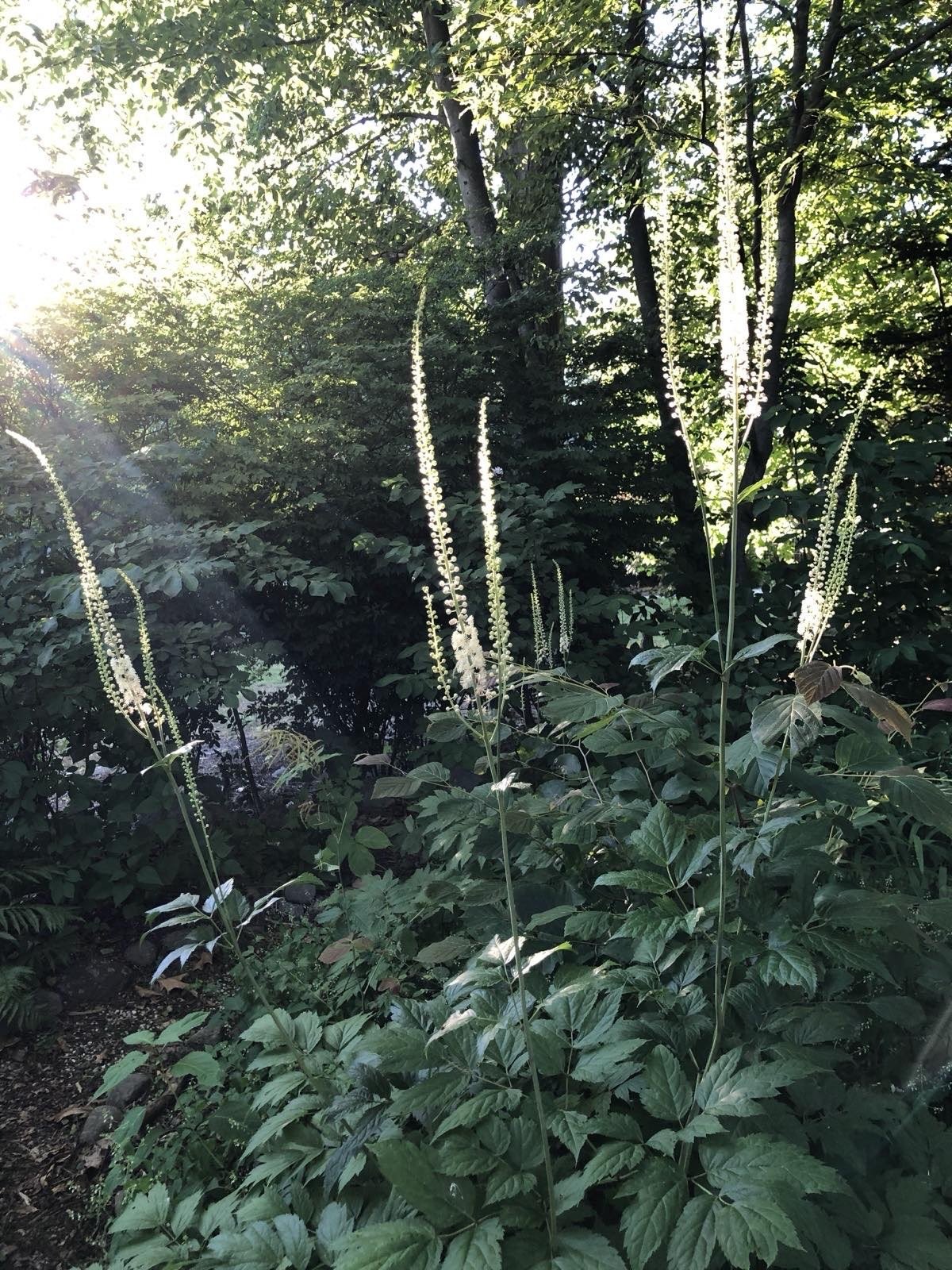
Actea (Cimicifuga) racemosa
Tall, white spikes of flowers bloom tightly in stalks above the sharped toothed foliage. Loved by pollinators, this plant does best in dappled shade. Excellent for woodland gardens where the flowers will light up the landscape.
Height: 4’-6’
Spread: 2’-4’
Pot size: 3 qt
Bloom time: June to August
Light: Partial Shade – Full Shade
Moisture: Average - Wet
Attracts: Pollinators
Deer resistance: Yes
Companion Plants: Ferns, wild geranium, coral bells, wild blue phlox
Photo: Peter Mancuso
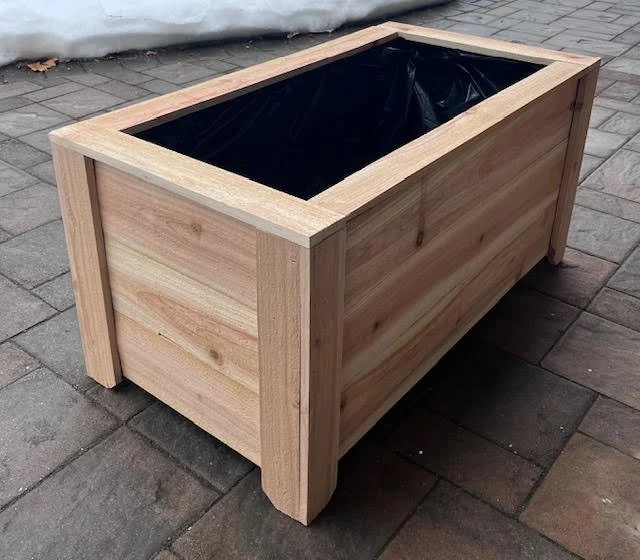
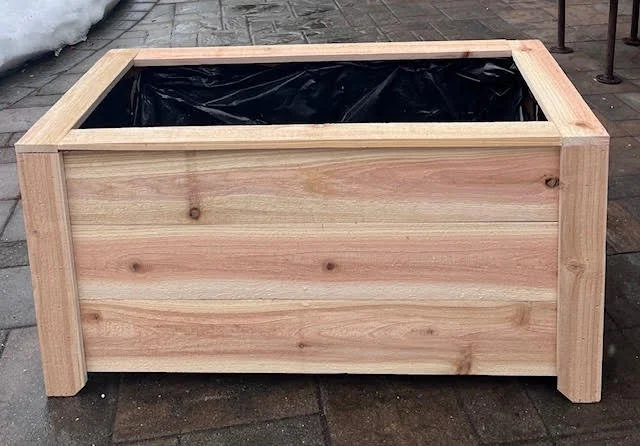
Bring natural warmth and lasting durability to your garden, patio, or entryway with this handcrafted 18” x 36” lined cedar planter. Made from premium cedar, it showcases the wood’s rich grain and warm tones while offering exceptional resistance to rot, decay, and insects—perfect for long-term outdoor use in any climate.
Designed with both beauty and practicality in mind, the planter features a fitted interior liner that helps retain soil and moisture while protecting the wood from constant contact with damp soil. This liner extends the life of the planter and keeps your planting environment tidy, making it ideal for flowers, herbs, ornamental grasses, or compact vegetables.
The generous 36-inch provides ample planting space for lush arrangements or layered seasonal displays. Its clean, rectangular profile complements both modern and traditional landscapes, making it a versatile accent for decks, porches, balconies, and garden beds.
Features
18" L x 36" W x 16" D
Crafted from naturally rot- and insect-resistant cedar
Interior liner protects wood and helps retain soil
Spacious planting area for flowers, herbs, or vegetables
Suitable for outdoor or indoor use with proper drainage
Classic rectangular design for any décor style
A timeless and functional addition to any planting space, this lined cedar planter offers the perfect balance of natural beauty, durability, and gardening ease.
Interesting in buying a cedar planter? Please feel free to reach out to Chris Addeo Directly from Addeo Woodworking - 845-304-6271
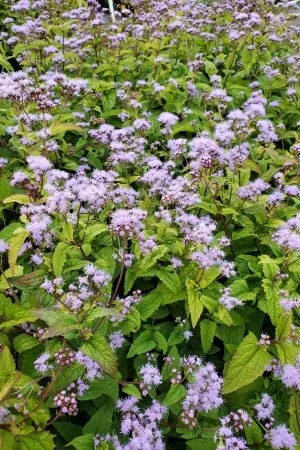
Eupatorium colestinum
Lovely, low-growing perennial. Soft blue-purple flowers add great late-season color attracting butterflies and other pollinators. Good cut flower. This cultivar is smaller than the straight species.
Height: 15-18”
Spread: 20”
Pot size: 3 qt.
Bloom time: August-September
Light: Full sun, light shade
Moisture: Average, Moist
Attracts: Butterflies, birds, and other pollinators
Deer Resistance: Yes
Companion Plants: Purple coneflower, tickseed, cardinal flower, NY ironweed, brown-eyed Susan
Photo: Glover Perennials

Sambucus canadensis
An elegant arching shrub with enormous white flower clusters that turn to dark black berries that the birds love. Fast Growing. Remove canes every few years for best performance. Northeastern U.S. Native.
Height: 6’- 10’
Pot size: 6 qt
Bloom time: June
Light: Full sun-Part shade
Moisture: Average- Moist Tolerant
Attracts: Butterflies, pollinators, and birds
Companion Plants: Winterberry, phlox and bee balm
Photo: Glover Perennials

Spiraea tomentosa
Mounding shrub with spires of showy pink flowers. Attractive reddish-gold fall foliage. Raingarden suitable. Northeastern U.S. Native.
Height: 3-4’
Spread: 3-4’
Pot size: 6 qt.
Bloom time: July-August
Light: Full Sun
Moisture: Moist, Wet
Attracts: Butterflies, birds and pollinators
Deer resistance: Yes
Companion Plants: New Jersey tea, white turtlehead, American elderberry, common ninebark, buttonbush
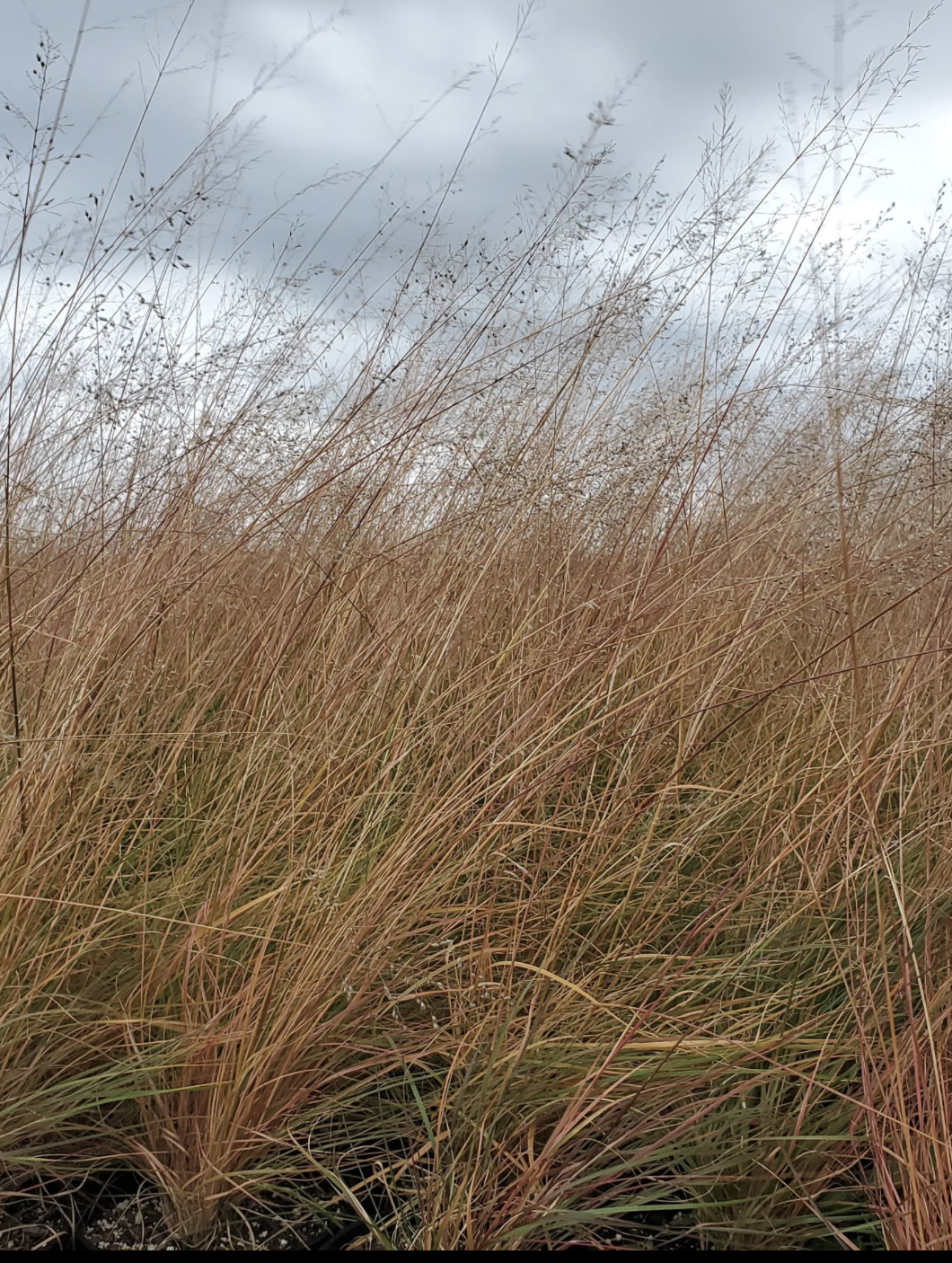
Sporobolus heterolepis
Fine textured foliage forms flowing light green and gold mounds. Lovely orange gold fall color. Attractively scented flowers 30” tall. Great for meadows, container, and accent plantings.
Height: 3 - 4’
Spread: 3’
Pot size: 1 qt.
Bloom time: August- October
Light: Full sun
Moisture: Dry, average, wet
Attracts: Butterflies, pollinators, birds
Deer Resistance: Yes
Companion Plants: Purple coneflower, little bluestem, asters, butterfly weed
Photo: Glover Perennials
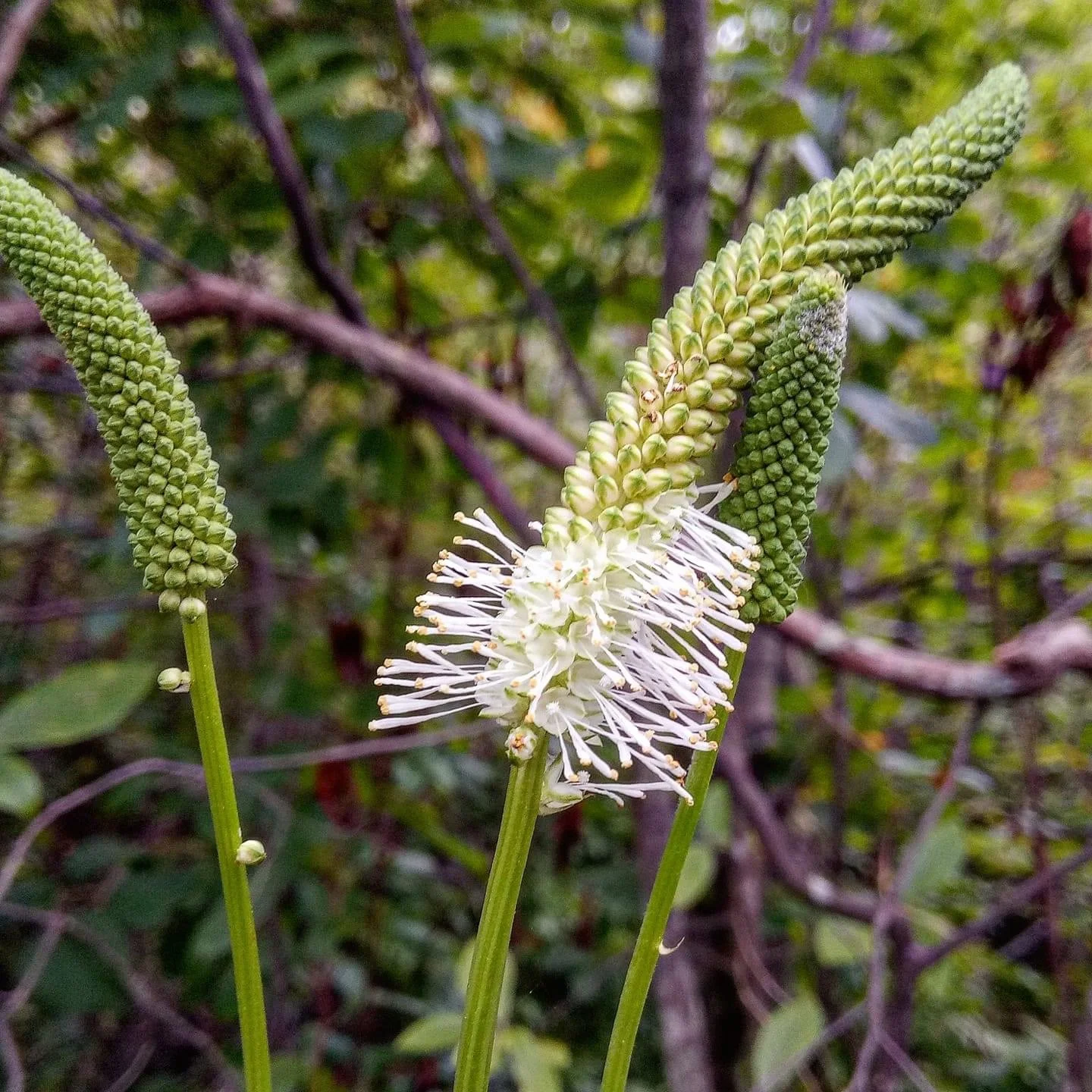
Sanguisorba canadensis
White bottle-brush-shaped flowers. Forms clumps of attractive saw-toothed foliage. Graceful accents for the late-season garden. Due to habitat loss, American Burnet is listed as threatened or endangered throughout much of its native range. This underappreciated species is native to much of the northeastern and northwestern coasts of North America.
Height: 4-6’
Spread: 2-3’
Pot size: 4 qt.
Bloom time: August, September
Light: Full sun-Part shade
Moisture: Average, Wet
Attracts: Pollinators, butterflies, bees
Companion Plants: Purple coneflower, anise hyssop, blazing star
Photo: Gregory Strosnider

Clematis virginiana
Rapid climbing, twining vine with sweetly aromatic, pure white flowers that bloom in late summer to fall. Once the flowers fade, they give way to attractive, plume-like seed-heads. Northeastern U.S. Native.
Height: 12 - 20’
Spread: 3 - 6’
Pot size: 4 qt. trellised
Bloom time: August, September, October
Light: Full sun, part shade
Moisture: Average, Wet
Attracts: Provides nesting material for birds, provides cover for wildlife
Deer Resistance: Yes
Companion Plants: Foxglove, bellflower, American elderberry, button brush, white dogwood, spotted Joe Pye weed
Photo: Glover Perennials
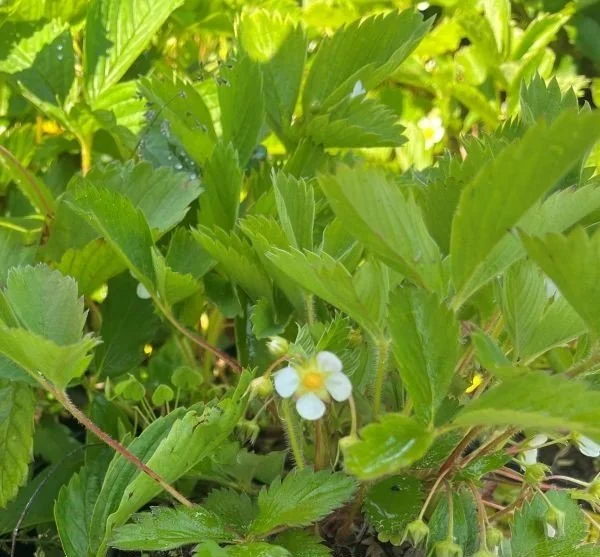
Fragaria virginiana ‘Intensity’
A low-growing, fast-spreading groundcover with white flowers in spring and sweet edible berries that appear early to mid-summer. It tolerates foot traffic and is an excellent alternative to conventional lawns. This cultivar has larger berries than the straight species.
Height: 2-5”
Spread: 1 – 2’
Pot size: 1 qt.
Bloom time: May
Light: Sun, part sun
Moisture: Average
Attracts: Pollinators, songbirds, host plant for Grey Hairstreak Butterfly
Deer Resistance: Yes
Companion Plants: Pennsylvania sedge, asters, purple coneflower
Photo: Glover Perennials

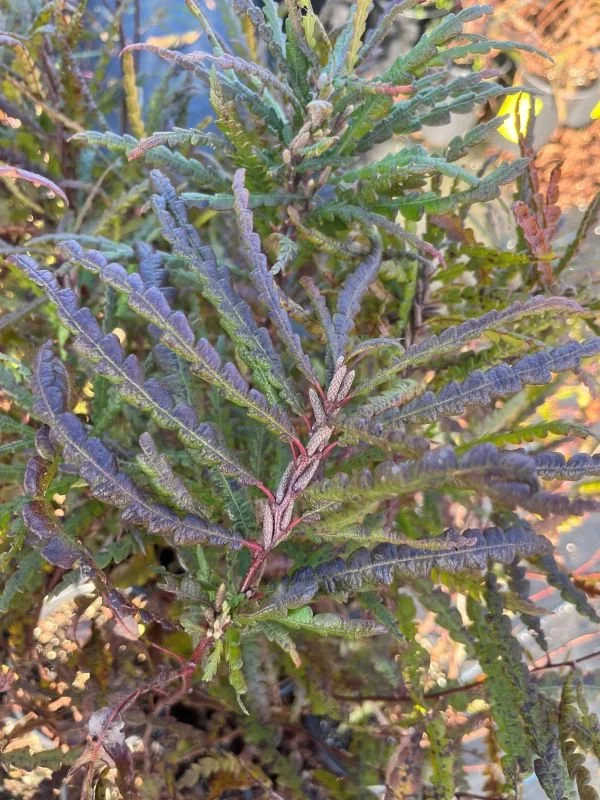
Comptonia peregrina
Small, low-maintenance perennial with wonderfully aromatic, fern-like leaves. Tolerates wet conditions, wind, and drought. Yellowish-green blossoms in Spring. Northeastern U.S. Native.
Height: 2’ - 5’
Spread: 4’ - 8’
Pot size: 3 qt.
Bloom time: April, May
Light: Full sun, part shade
Moisture: Average, wet, dry
Attracts: Pollinators, provides nesting materials for birds
Deer Resistance: Yes
Companion Plants: Bearberry, New Jersey tea, little bluestem
Photo: Glover Perennials

Symphyotrichum (Aster) novi-belgii
Showy sprays of blue-violet or pink-to-white blossoms with yellow disk centers. A great addition to fall gardens as an important food source for pollinators late in the season. Northeastern U.S. Native.
Height: 3 - 4’
Spread: 3’
Pot size: 1 qt.
Bloom time: September, October
Light: Full sun
Moisture: Average
Attracts: Butterflies, pollinators
Deer Resistance: Yes
Companion Plants: Yarrow, Solidago cassia, bee balm, coastal Joe Pye weed
Photo: Glover Perennials

Athyrium filix-femina ‘Lady in Red’
Often found near streams and ponds, Lady Fern is a large clustered fern that can reach 3 ft in favorable conditions. The ‘Lady in Red’ cultivar sports bright red stems and light green bipinnate fronds with finely-toothed leaflets, which give it a light, lacy appearance. Perfect for the back of the shade and woodland border, it prefers rich and moist soil, though it tolerates drier conditions than most other ferns. Every few years it can be easily divided in the spring, once the crown has grown above soil level. Lady Fern is not affected by serious pests or diseases, but is not deer resistant.
Height: 18 - 30”
Spread: 1.5 - 2.5’
Pot size: 3 qt.
Bloom time: Non-flowering
Light: Part shade, shade
Moisture: Average
Attracts: Birds
Deer Resistance: Yes
Companion Plants: Yarrow, Solidago cassia, bee balm, coastal Joe Pye weed
Photo: CCE MGV Ginger Hughes
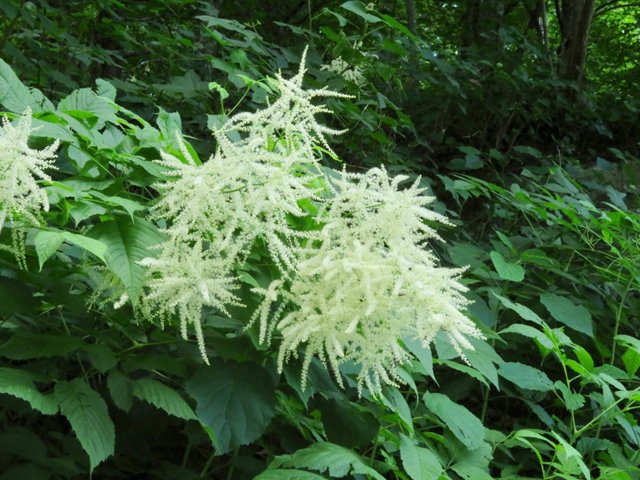

Aruncus dioicus
Tall, showy, cream-colored plumes of flowers with fern-like foliage. Excellent background plant for borders in shade and woodland gardens. Northeastern U.S. Native.
Height: 4 - 6’
Spread: 2 - 4’
Pot size: 3 qt.
Bloom time: April, May
Light: Full sun, part shade
Moisture: Average, Wet
Attracts: Birds, butterflies, pollinators, host plant for Dusky Azure Butterfly
Deer Resistance: Yes
Companion Plants: Columbine, Virginia bluebells, bloodroot, foamflower, cranesbill geranium
1st Photo: Lady Bird Johnson Wildflower Site: https://www.wildflower.org/
2nd Photo: Glover Perennials

Ilex verticillata
Slow-growing deciduous shrub with upright rounded habit. Dark green leaves with inconspicuous greenish-white flowers. The beauty of this shrub is the red berries which provide interest from the winter through to spring. One male winterberry is needed to pollinate 6-10 female plants.
Height: 6 - 12’
Spread: 6 - 12’
Pot size: 3 qt.
Bloom time: June, July
Light: Full sun, part shade
Moisture: Average, wet
Attracts: Birds such as gray catbirds, eastern bluebirds, American robins, cedar waxwings and woodpeckers, butterflies
Deer Resistance: Not preferred but deer will browse
Companion Plants: Purple coneflower, coastal Joe Pye weed, arrowwood viburnum, switchgrass
Photo: Brundage, Stephanie Lady Bird Johnson Wild Flower Center
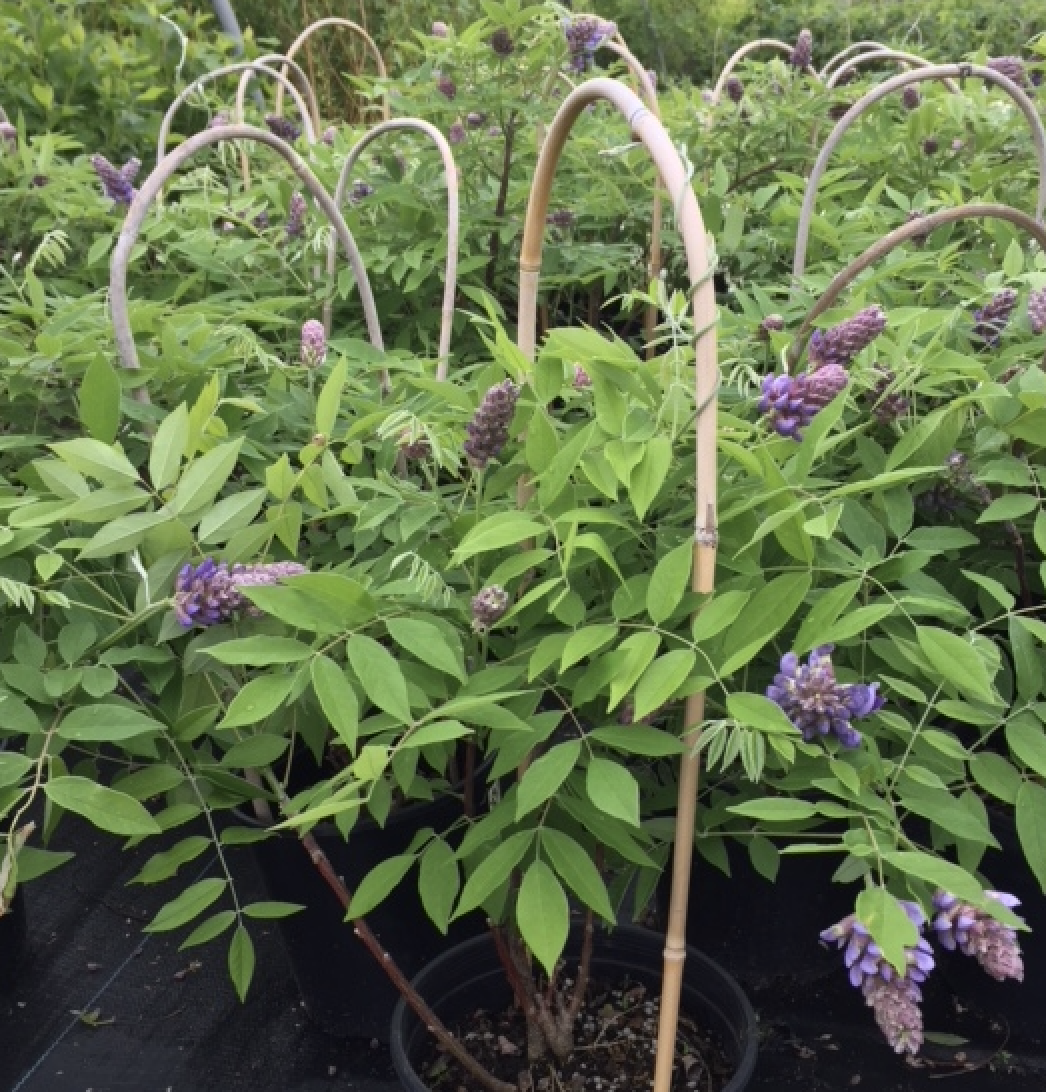
Wisteria frutescens ‘Amethyst Falls’
This is a long blooming climbing vine with fragrant blue lilac-colored flowers and glossy foliage that can be trained on deck railings, pergolas, arbors or fences. Can climb up to 30’. Vines need regular pruning to train and shape. This cultivar is considered a dwarf wisteria.
Height: 6’ plus
Spread: 10’ - 15’
Pot size: 4 qt.
Bloom time: June, July, August
Light: Full sun
Moisture: Average, Moist
Attracts: Butterflies, pollinators
Deer Resistance: Yes
Companion Plants: Little bluestem, ferns, bee balm, Labrador violet
Photo: Glover Perennials

Viburnum dentatum
This shrub adds plenty of seasonal interest to any landscape. Creamy white flowers in flat-topped clusters appear in late spring followed by blue-black berry-like drupes. Dark blue fruits are a favorite for migrating songbirds. In the fall dark green leaves take on the fall shades of yellow, red, or reddish-purple. This plant can be a large statement piece in your garden. It is also good for rain gardens and is salt tolerant. Northeastern U.S. Native.
Height: 6-12’
Spread: 6 - 10’
Pot size: 6 qt.
Bloom time: May, June
Light: Full sun, part shade
Moisture: Average, Moist
Attracts: Birds, bees, butterflies, and other pollinators
Deer Resistance: Moderate
Companion Plants: Red osier dogwood, common ninebark, coral bells, lady fern, New England aster, New York aster, aromatic aster
Photo: Glover Perennial

Vernonia noveboracensis
This lovely versatile perennial has a strong vertical presence with clusters of deep lavender to violet flower heads. Showy seed-heads that add winter interest. Use in a rain garden, cottage garden, meadow, along streams or ponds or the back of the border. Prune for different heights or if a shorter plant is desired. Northeastern U.S. Native.
Height: 4 – 7’
Spread: 2 - 4’
Pot size: 4 qt.
Bloom time: August, September
Light: Full sun, part shade
Moisture: Average, Moist
Attracts: Birds, hummingbirds, butterflies, pollinators
Deer Resistance: Moderate
Companion Plants: Swamp Milkweed, Cardinal Flower, White Turtlehead

Pycnanthemum muticum
Clustered Mountain Mint, is a clump-forming, aromatic perennial. Given the right conditions, this plant will spread by rhizomes; if spreading is not desired you can prune the roots in the spring. From mid to late summer the foliage is adorned by clusters of small pink, white or lavender flowers that will attract a multitude of pollinators. Easy to grow. Northeastern U.S. Native.
Height: 24- 36”
Spread: 3 - 4’
Pot size: 3 qt
Bloom time: July to September
Light: Full sun, part shade
Moisture: Average, Moist
Attracts: Birds, hummingbirds, butterflies, bees
Deer Resistance: Yes
Companion Plants: Wild bergamot, butterfly weed, purple coneflower, anise hyssop, golden rod, red cardinal flower, blazing star, little blue stem.
Photo: CCE MGV Ginger Hughes

Heuchera americana ‘Green Spice’
A lovely variety of Coral Bells that have lobed, rounded, dark green-edged silver leaves with smooth burgundy veins. In fall the leaves turn pumpkin-orange and red. In late spring to midsummer, it gets small, bell-shaped creamy white flowers. This cultivar is prized for its foliage.
Height: 24-28”
Spread: 16”
Pot size: 3 qt.
Bloom time: Late spring to midsummer
Light: Part shade
Moisture: Average, Dry
Attracts: Butterflies
Deer resistance: Yes
Companion Plants: Bloodroot, Christmas fern, aromatic aster
Photo: Glover Perennials

Clethra alnifolia
Fragrant white flowers appear as dense, narrow, cylindric spikes. Plants should be spaced 4'-6' apart.
Height: 3 - 8'
Pot Size: 6 qt
Bloom Time: July - August
Sun: Full to Partial
Moisture: Average, Well Drained, Moist
Attracts: Birds, Bees, Butterflies, Hummingbirds
Deer Resistant: Yes
Companion Plants: Black-eyed Susan, cardinal flower
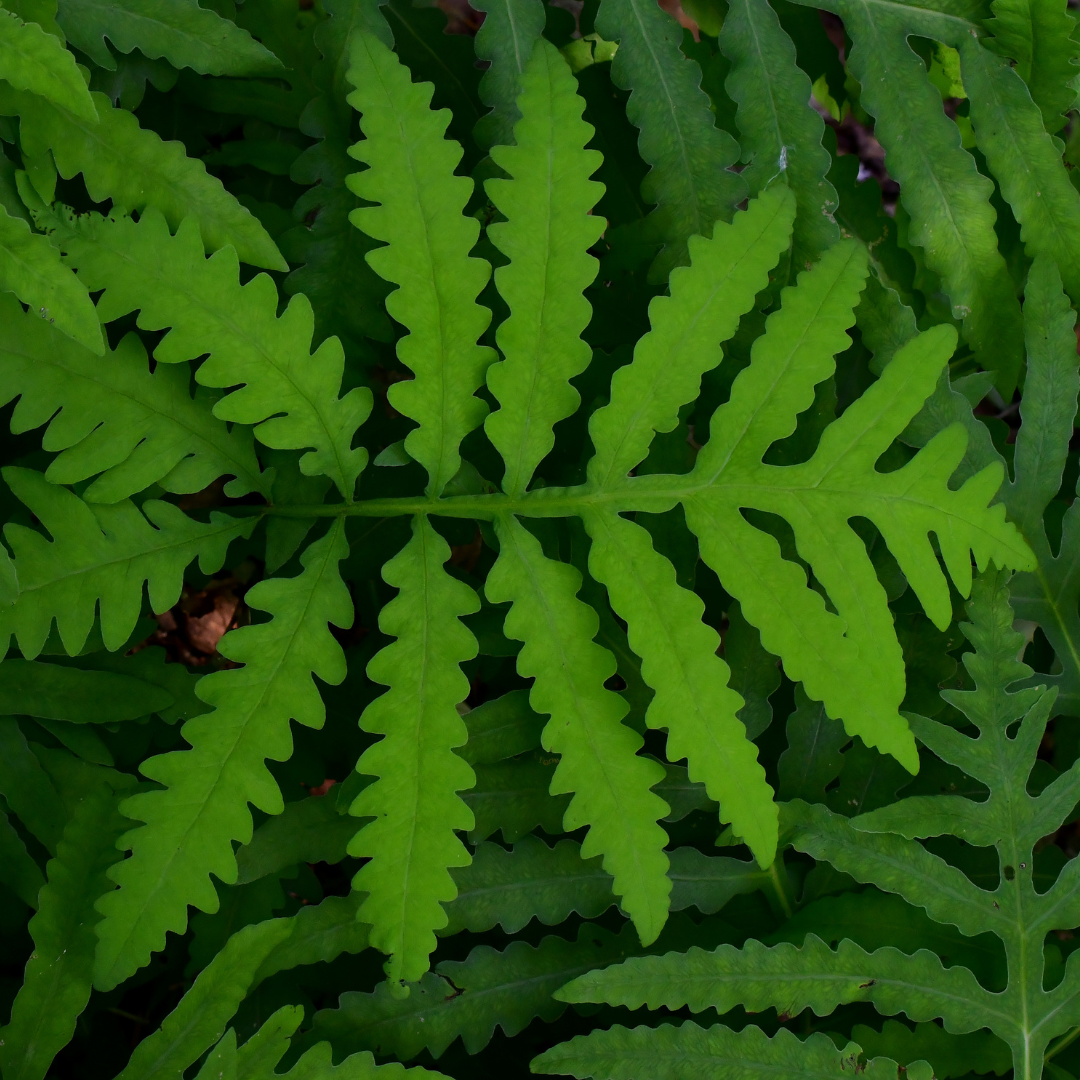
Onoclea sensibilis
Attractive foliage with seed heads that provide winter interest. Spreads slowly forming colonies in ideal conditions with moist soils and room to grow.
Height: 12”-18”
Spread: 18”-36”
Pot size: 3 qt
Bloom time: N/A
Light: Shade-Part Sun
Moisture: Damp-Medium
Attracts: N/A
Deer resistance: Yes
Companion Plants: Showy swamp milkweed,, coastal Joe Pye weed, white turtlehead, pink turtlehead, broad leafed sedge
Photo: Glover Perennials

Chelone glabra
Sun-loving, wetland perennial with flowers that resemble a turtle's head, attract bumblebees which have the strength to pry open the bloom to get to the nectar among other pollinators. Host plant for the Baltimore Checkerspot butterfly and the flowers are attractive to butterflies. Turtlehead can grow 2 to 3 feet tall and works well in sun or partially shady locations. Turtlehead grows well in moist locations and is deer resistant.
Height: 24”-36”
Pot Size: 3 qt
Bloom Time: July - September
Sun: Partial
Moisture: Average, Wet
Attracts: Birds, Bees, Butterflies, Hummingbirds
Deer Resistant: Yes
Companion Plants: Rose mallow, cardinal flower, sedges, coastal Joe Pye weed, marsh milkweed, meadowrue
Photo: Kingdon, John. Chelone glabra flowers from a plant in cultivation. 2008. Web. 19 March 2018.< https://commons.wikimedia.org/wiki/File:Chelone-glabra.jpg>.

Baptisia australis
Foot-long lupine like spires of true blue pea-like flowers. Almost shrub-like appearance.
Height: 35”-48”
Pot Size: 3 qt
Bloom Time: May - June
Sun: Full to Partial
Moisture: Dry to Average
Attracts: Birds, Bees, Butterflies, Hummingbirds
Deer Resistant: Yes
Companion Plants: Butterfly weed, cranesbill geraniums, purple coneflower, Eastern bluestar and Amsonia
Photo: Glover Perennials

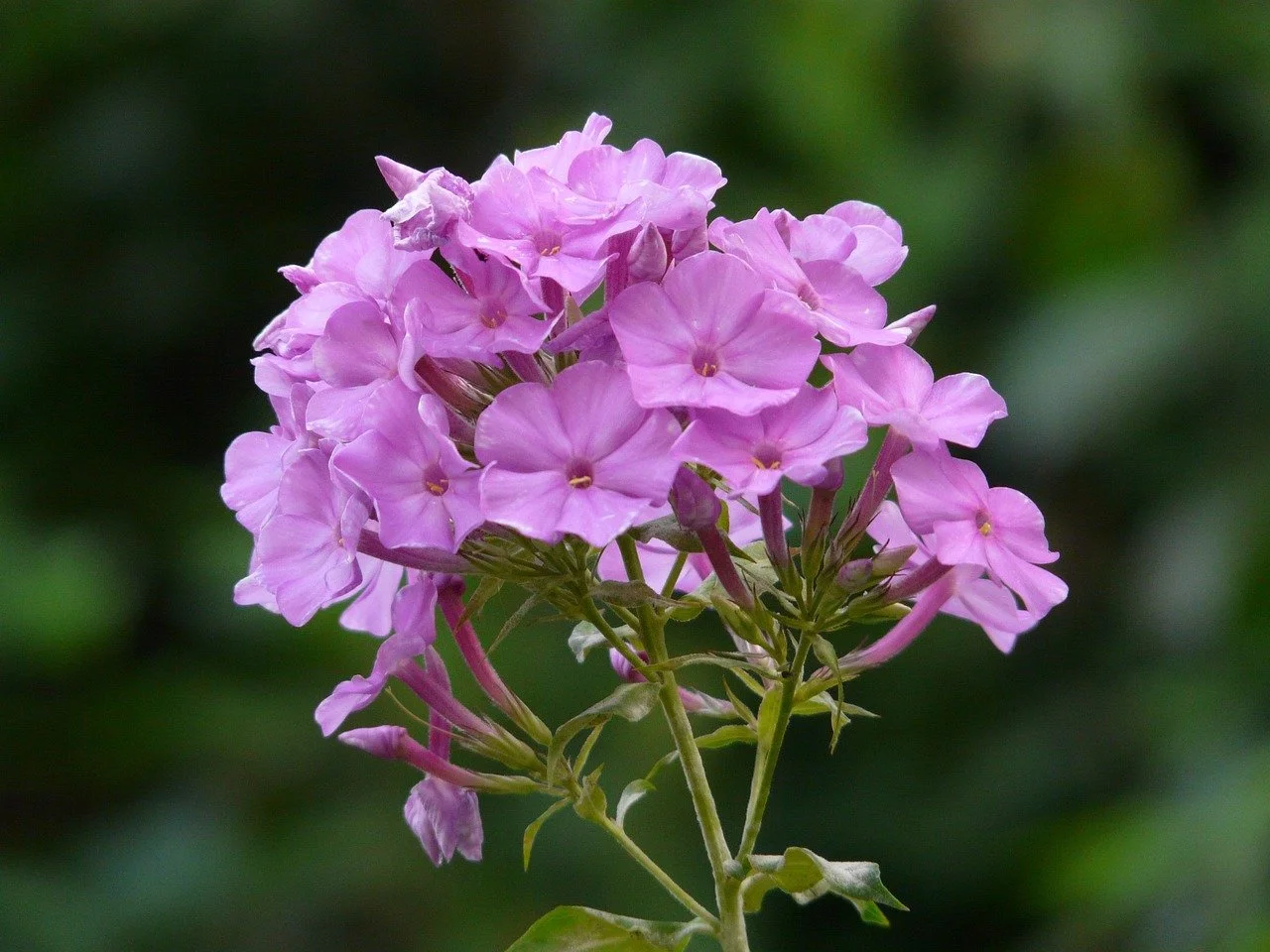
Phlox paniculata ‘Jeana’
A staple in perennial gardens since it mixes well with other perennials. Tubular, lavender-pink sweetly scented flowers bloom mid-summer to early autumn. The individual flowers of this type of phlox are smaller than the straight species. This cultivar scored high on the Mt Cuba pollinator trials.
Height: 4’-5’
Spread: 2’-3’
Pot Size: 4 qt
Bloom Time: July - September
Sun: Full to Partial
Moisture: Average, Well drained
Attracts: Birds, Bees, Butterflies, Hummingbirds
Companion Plants: Culver's root, coastal Joe Pye weed, brown eyed Susan, switchgrass, false sunflower

Aquilegia canadensis
Light yellow to red flowers are good for naturalizing. Remove flowering stems after bloom to encourage additional bloom. Self-sows and blooms in the shade.
Height: 10”
Width: 8”-10”
Pot Size: 1 qt
Bloom Time: April - June
Sun: Partial to Shade
Moisture: Average, Well Drained
Attracts: Bees, Butterflies, Hummingbirds
Deer Resistant: Yes
Companion Plants: Brown eyed Susan, cardinal flower, creeping phlox, milkweed, coral bells, ferns
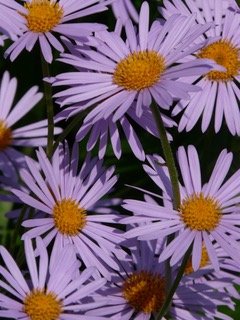
Symphyotrichum (Aster) novae-angliae
Large, showy plant with flowers ranging from lavender to blue to white. Most common are showy purple flowers with orange-yellow centers. Plant with goldenrod for an attractive fall garden display.
Height: 24'“-60”
Pot Size: 1 qt
Bloom Time: August - October
Sun: Shade to Partial
Moisture: Average, Well Drained
Attracts: Bees, Butterflies
Deer Resistant: Yes
Companion Plants: Goldenrod, ironweed, mountain mint, big bluestem, swamp milkweed, wild bergamot, yarrow, blazing star, purple coneflower
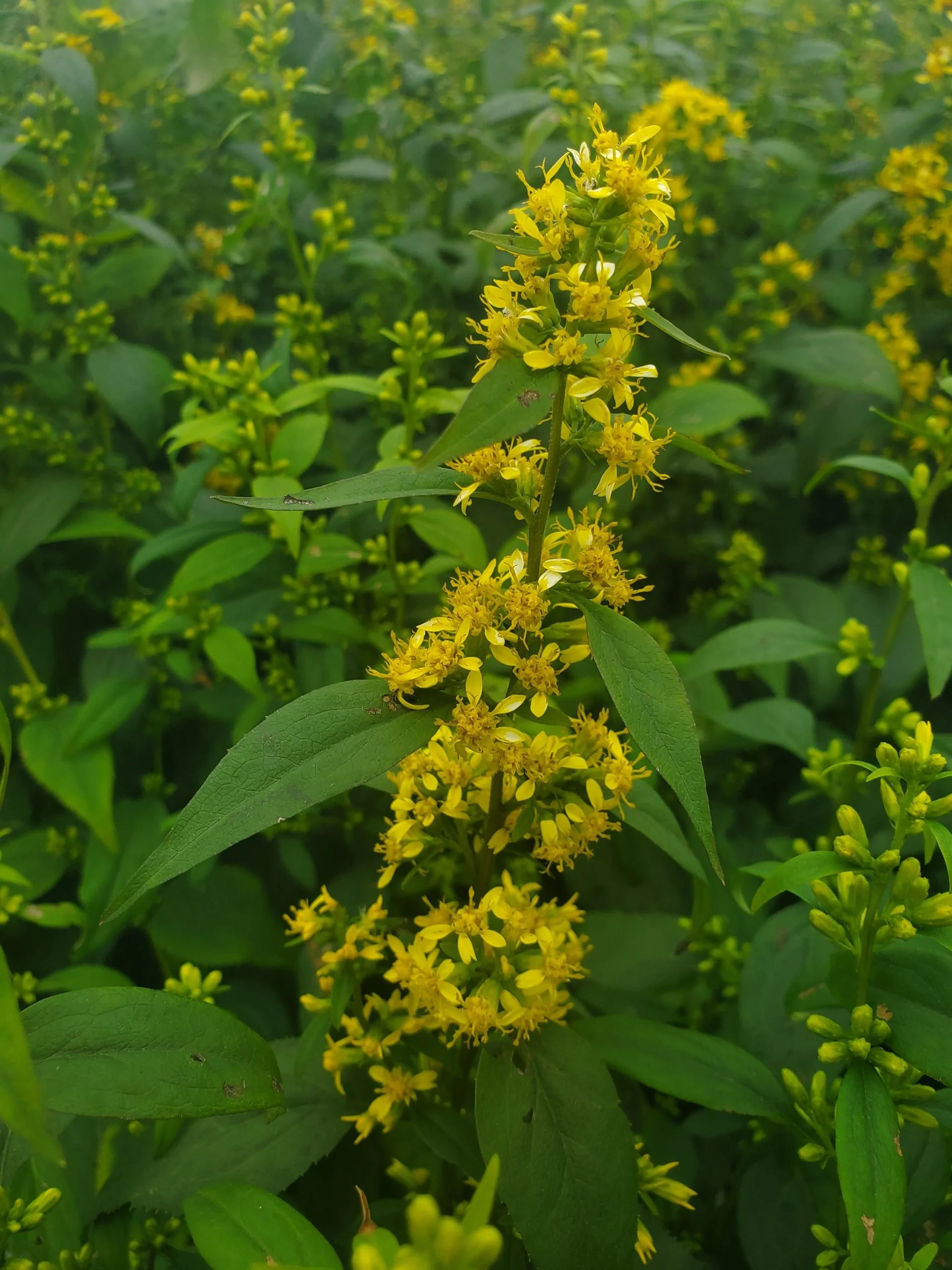
Solidago flexicaulis
Solidago flexicaulis earned its common name from the stems, which sometimes grow in a zig-zag pattern. Yellow flowers appear in clusters on the upper part of the stems. It is tolerant of shade and clay soils. As with other goldenrods, this species is a pollinator powerhouse, supporting dozens of species of butterflies, moths, and bees. Northeastern U.S. Native
Height: 1-3’
Spread: 1-3’
Pot size: 3 qt
Bloom time: July to October
Light: Full Sun to Part Shade to Shade
Moisture: Medium to Dry
Attracts: Butterflies, bees, Pollinator Powerhouse Plant, Keystone Species - read our article HERE
Deer resistance: Yes
Companion Plants: Foamflower, Jacob’s ladder, columbine
Photo: Glover Perennials
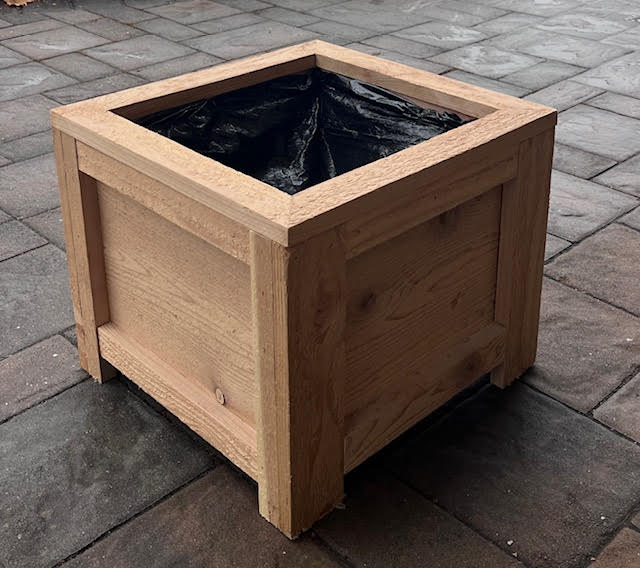
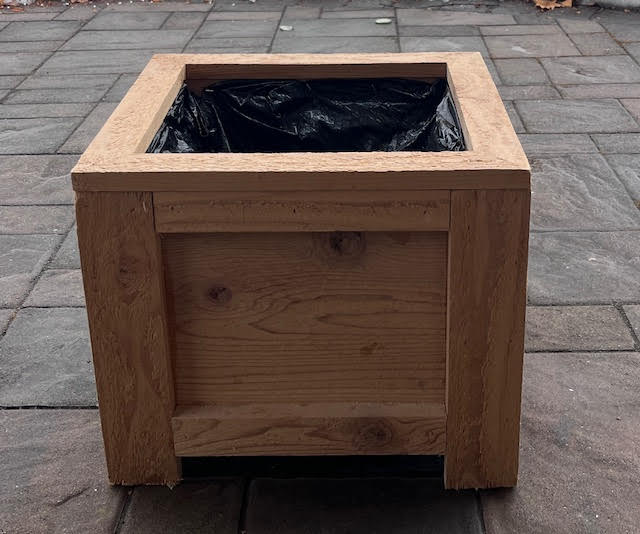
Lined Cedar Planter – 16" length x 16" wide x 16" depth
This 16 x 16 x 16 planter is perfect for small spaces. Excellent planter for a mini herb garden. Ideal for Townhome, Condominium or even Apartment gardens.
Features
16" L x 16" W x 16" D
Crafted from naturally rot- and insect-resistant cedar
Interior liner protects wood and helps retain soil
Spacious planting area for flowers, herbs, or vegetables
Suitable for outdoor or indoor use with proper drainage
Classic rectangular design for any décor style
Interesting in buying a cedar planter? Please feel free to reach out to Chris Addeo Directly from Addeo Woodworking - 845-304-6271
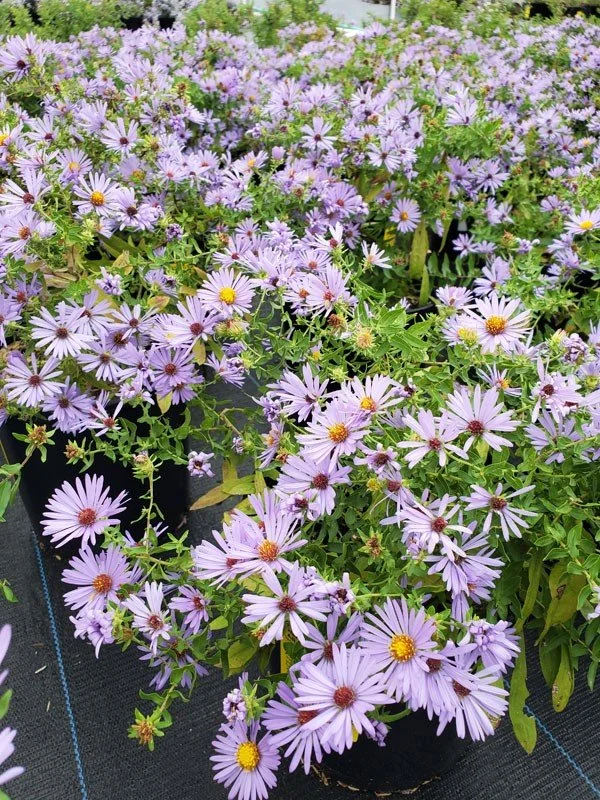
Symphyotrichum (Aster) oblongifolius ‘October Skies’
Low growing bushy habit. Lovely sky blue light purple flowers. Drought and poor soil tolerant. Easy care and prolific.
Height: 18”
Spread: 18”-36”
Pot size: 1 qt
Bloom time: September-October
Light: Full Sun
Moisture: Average-Dry
Attracts: Bees, Butterflies
Deer resistance: Yes
Companion Plants: Goldenrods, Northern dropseed, purple coneflower
Photo credit: Glover Perennials

Zizia aptera
Zizia aptera is a tall upright perennial wildflower with glossy heart-shaped basal leaves. From late spring to early summer flowering stems elongate bearing showy flat-topped umbels of small yellow florets. Mixes well with blue flowers and foliage. Excellent in masses as a groundcover. Nectar source for spring emerging bumblebee queens. Native to Eastern U.S.
Height: 12-24”
Spread: 12-18”
Pot size: 3 qt
Bloom time: May - June
Light: Full sun to Partial shade
Moisture: Average to Moist
Attracts: Birds, bees, butterflies, pollinating flies, beetles, and other plant insects; the caterpillars of the black swallowtail butterfly eat the foliage.
Deer resistant: Yes
Companion plants: Wild columbine , Christmas fern, little bluestem grass, coastal Joe Pye weed, showy swamp milkweed
Photo: Lady Bird Johnson, Wildflower Digital Library
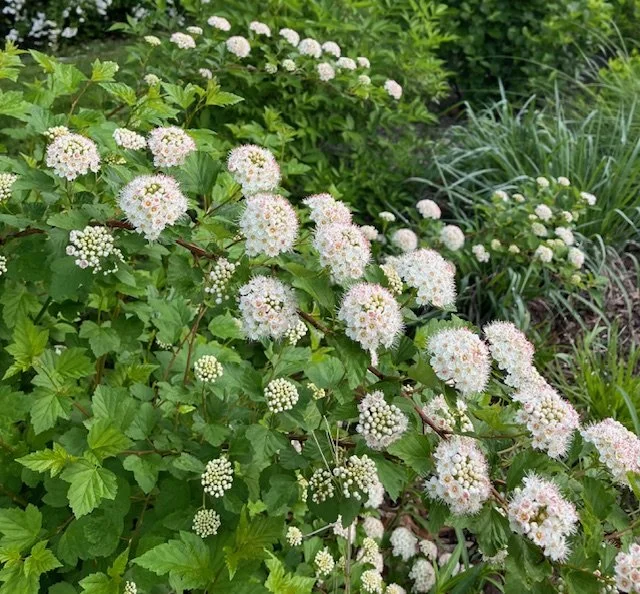
Physocarpus opulifolius
This fast growing deciduous four- season shrub is a mixture of toughness and beauty. It produces pink or white showy flower clusters in late spring. Flowers give way to drooping clusters of red fruit. Leaves emerge yellowish- green and darken to a reddish purple. The exfoliating bark peels in strips to reveal several layers of reddish to light brown bark for winter interest, which is how it got its name. It tolerates drought, erosion, clay soil, dry soil, wet soil, rocky soil and black walnut. It’s good for hedges or a shrub border. Can be used for erosion control on banks.
Height at pickup: 12”+
Height: 5-8’
Spread: 4-6’
Pot size: 1 gal
Bloom time: May to June
Light: Full sun-part shade
Moisture: Dry-medium
Attracts: Butterflies, moths, native bees, wasps and flies. It’s the larval host for the Ninebark Pygmy Moth and Unicorn Caterpillar. Birds like the fruit/seedpods.
Deer resistance: Moderate. Deer generally avoid ninebark though will browse in winter when food is scarce.
Companion plants: Bee balm, coneflower, black-eyed Susan, lavender and sedum.

Carex plantaginea
Vibrant evergreen sedge with textured foliage that is an excellent addition to shade areas in the garden. It is an excellent, deer-resistant substitute for Hostas, offering similar shade-loving, lush foliage without attracting deer. Clump forming habit.
Height: 6”-12”
Spread: 6”-12”
Pot size: 3 qt
Bloom time: May - June
Light: Light Shade-Shade
Moisture: Medium-Moist
Attracts: butterflies, host plants for the Appalachian Brown and Eyed Brown, caterpillars, songbirds, small mammals
Deer resistance: Yes
Companion Plants: Ferns , coral bells, Tiarella, astilbe, hostas
Photo by Glover Perennials
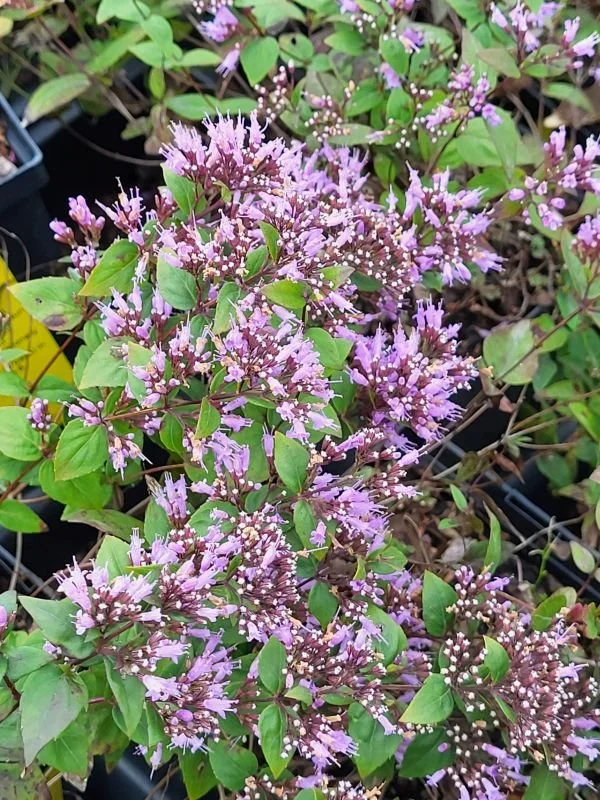
Cunila origanoides
American Dittany is a fragrant low-growing pollinator perennial in the mint family. Purple-pinkish flowers. Produces “frost flowers” in the fall during first freezes. Drought tolerant. A lovely addition to dry pollinator gardens and rock gardens.
Height: 12”-18”
Spread: 12”-18”
Pot size: 1 qt
Bloom time: July-August
Light: Full Sun-Light Shade
Moisture: Average-Dry
Attracts: Bees and Butterflies.
Deer resistance: Yes
Companion Plants: Northern dropseed, purple coneflower, butterfly weed, wild bergamot
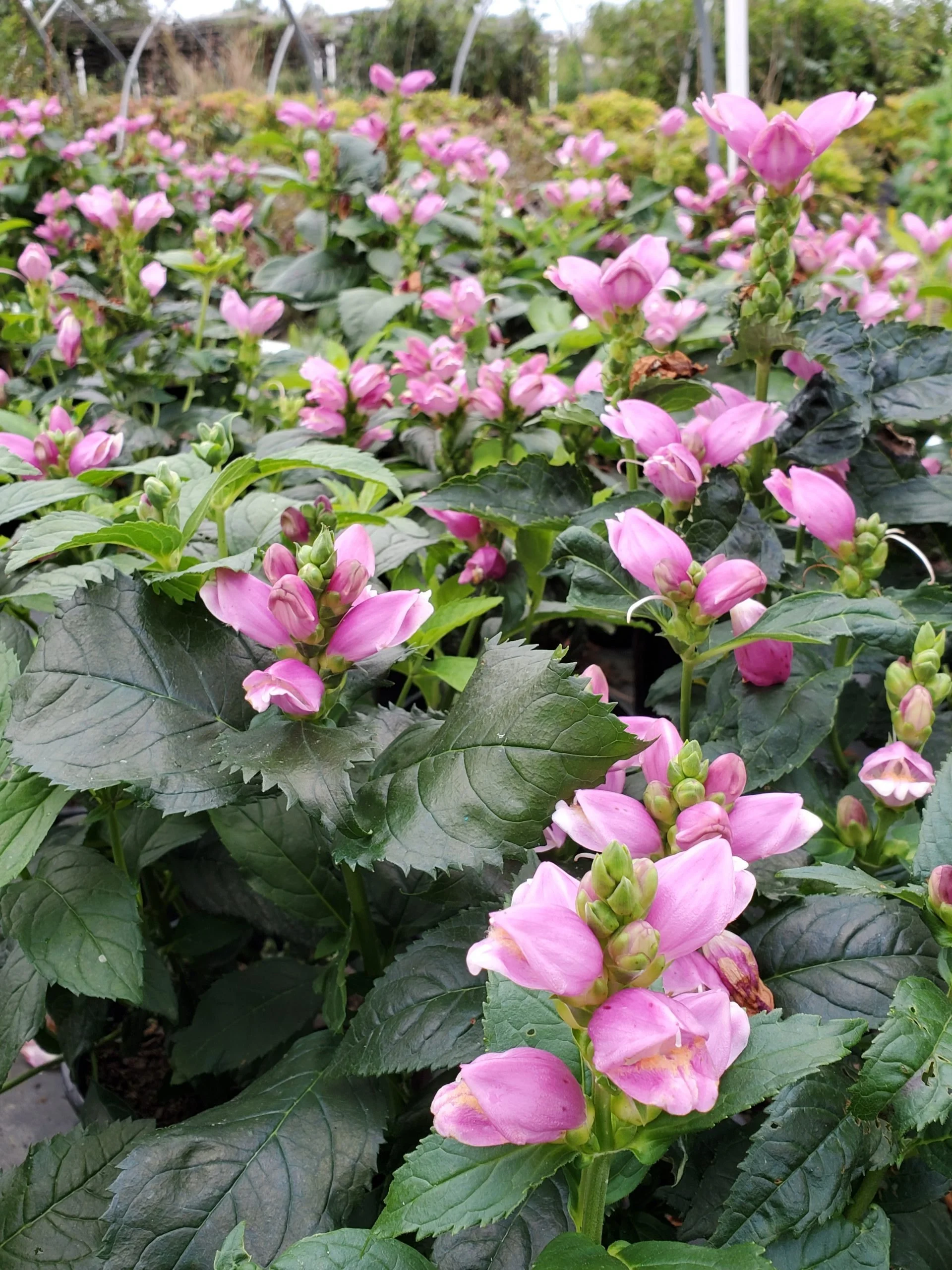
Chelone obliqua
Rose pink-purple flowers. Excellent border plant that can form colonies in ideal conditions. Deer, rabbit and juglone (black walnut tree) tolerant once established. Easy care with great beauty.
Height: 2’-3’
Spread: 2’-3’
Pot size: 3 qt
Bloom time: July-September
Light: Light Shade-Part Sun
Moisture: Average-Moist
Attracts: Bees, Hummingbirds and Butterflies.
Deer resistance: Yes
Companion Plants: Astilbes, Heuchera and wild ginger
Pictures: Glover Perennials
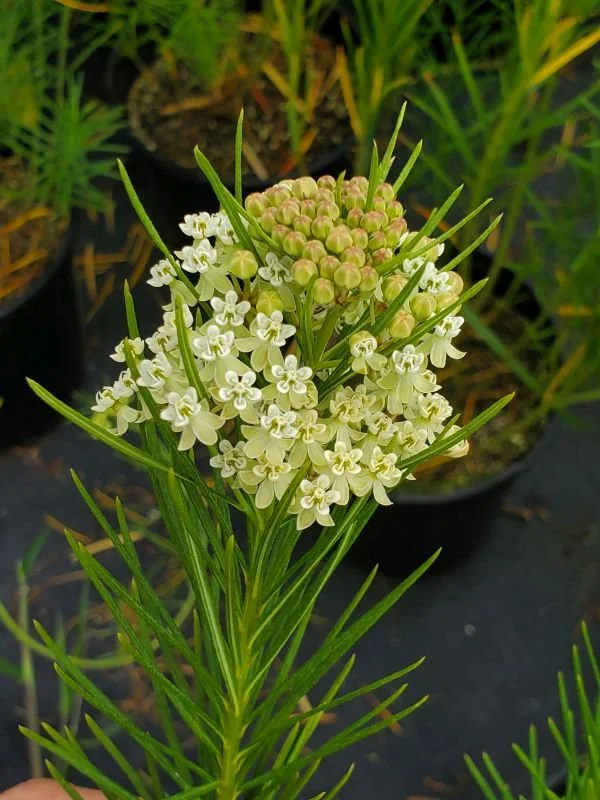
Asclepias verticillata
An excellent pollinator plant with elegant narrow leaves and white flowers. The nectar of the flowers attracts many kinds of insects and hummingbirds. Important food source for native pollinators. Like all members of the Asclepias genus, Asclepias verticillata is a larval host plant for monarch butterflies.
Height: 2’
Spread: 2’+
Pot size: 3 qt
Bloom time: July-September
Light: Full Sun
Moisture: Drought Tolerant
Attracts: Bees, Butterflies and Hummingbirds
Deer resistance: Yes
Companion Plants: Native grasses, little blue stem, purple coneflower, aromatic aster
Picture: Glover Perennials
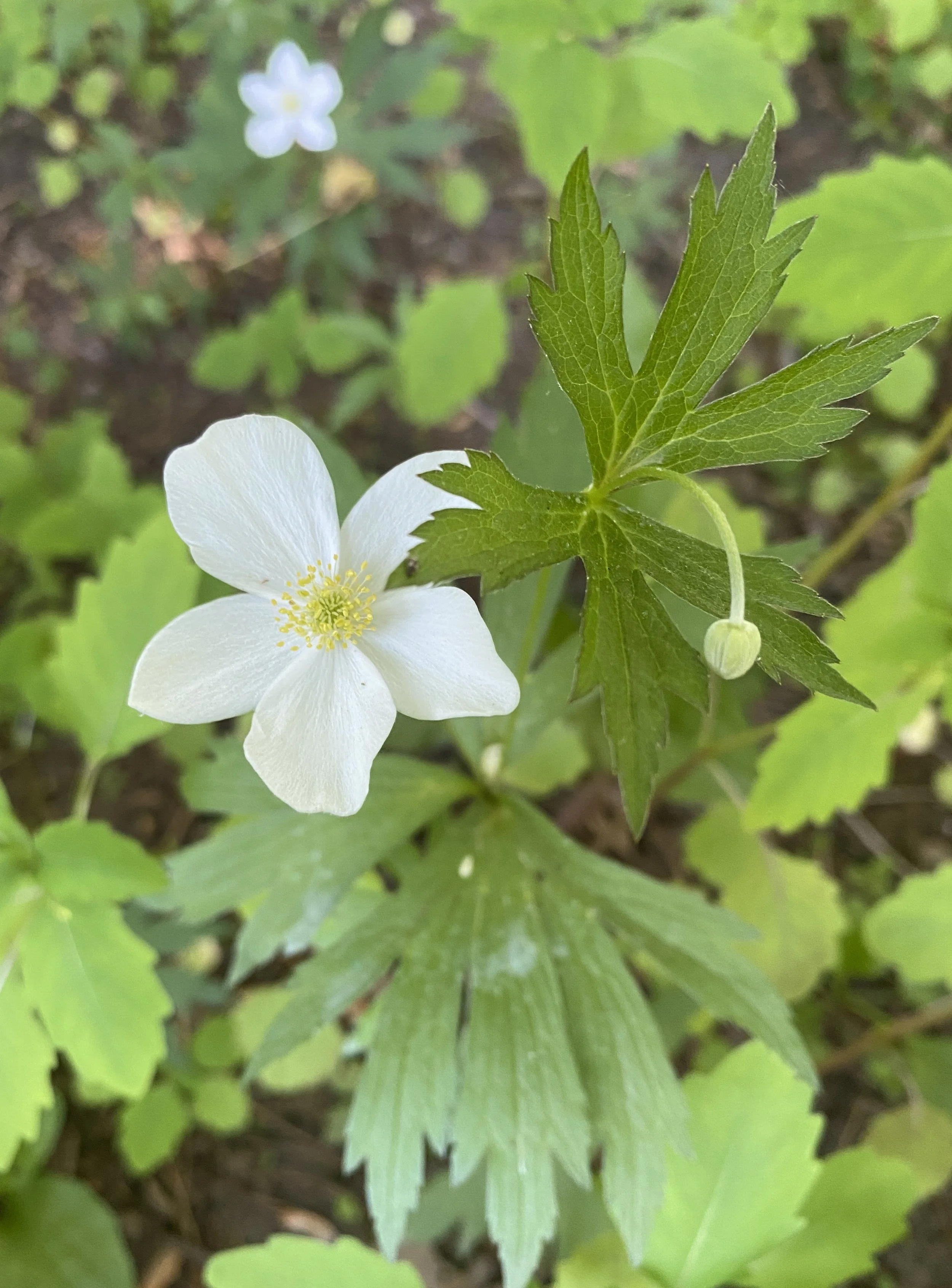
Anemone canadensis
A vigorously spreading groundcover with beautiful, dramatic, deep green foliage and pure white, cup shaped flowers that bloom in spring. Extremely low maintenance plant that works well in between shrubs or larger perennials in place of mulch. Stunning when in bloom in a mass planting.
Height: 12”-24”
Spread: 3’-5’
Pot size: 3 qt
Bloom time: April-June
Light: Sun- Part Shade
Moisture: Average
Attracts: Native bees and wasps
Deer resistance: Yes
Companion Plants: Coral bells, switchgrass, lady fern, New England aster, New York aster, aromatic aster
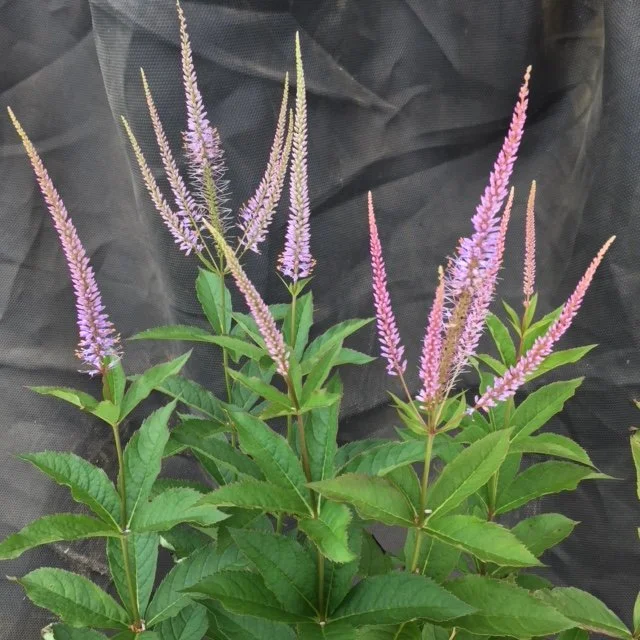
Veronicastrum virginicum 'Adoration'
This summer blooming tall, clump forming perennial has white to lavender tube-like flowers which bloom from the top down. It has a strong vertical presence and is candelabra-like when in full bloom. A great addition to a pollinator garden. Native to Northeastern U.S.
Height: 4’-5’
Spread: 2’
Pot size: 3 qt
Bloom time: June - August
Light: Full sun to partial shade
Moisture: Average to Wet
Attracts: Birds, Bees, Butterflies, Hummingbirds
Deer resistant: Yes
Companion plants: Symphyotrichum (Aster), Chelone, Helianthus and Hibiscus.
Photo: Glover Perennials
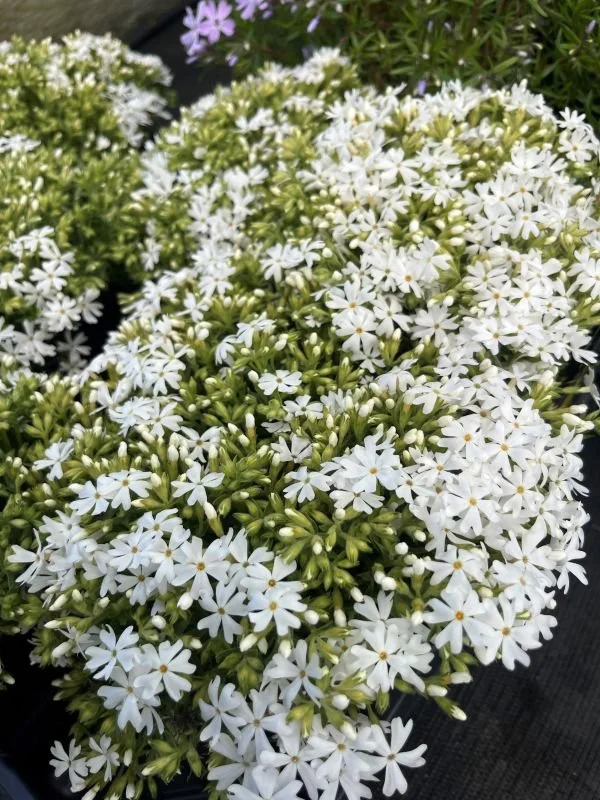
Phlox subulata 'Snowflake'
An easy-to-grow evergreen creeper with tiny needle like leaves. It produces a dazzling display of fragrant, white flowers. To encourage rebloom cut back spent flowers. It prefers well-drained soil and is moderately drought tolerant. A perfect edger for all flower gardens and a great addition to rock gardens, A Northeastern U.S. native.
Height: 4 - 6”
Spread: 24”
Pot Size: 1 qt
Bloom Time: May - June
Light: Full sun to partial sun
Moisture: Average to dry
Attracts: Pollinators
Deer Resistant: Yes
Companion Plants: Coneflower, blazing star, bee balm, Amsonia
Photo: Glover Perennials
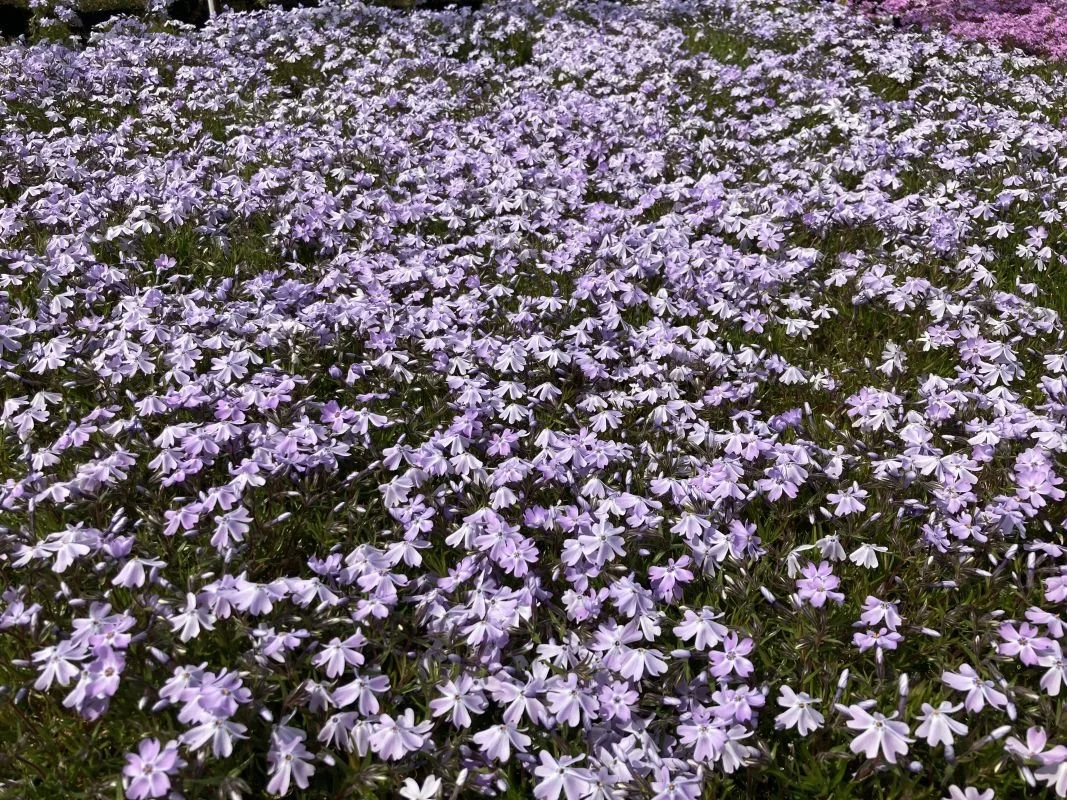
Phlox subulata 'Emerald Blue'
An easy-to-grow evergreen creeper with tiny needle like leaves. It produces a dazzling display of fragrant, sky-blue flowers. To encourage rebloom cut back spent flowers. It prefers well-drained soil and is moderately drought tolerant. A perfect edger for all flower gardens and a great addition to rock gardens, A Northeastern U.S. native.
Height: 4 - 6”
Spread: 24”
Pot Size: 1 qt
Bloom Time: May - June
Light: Full sun to partial sun
Moisture: Average to dry
Attracts: Pollinators
Deer Resistant: Yes
Companion Plants: Coneflower, blazing star, bee balm, Amsonia
Photo: Glover Perennials
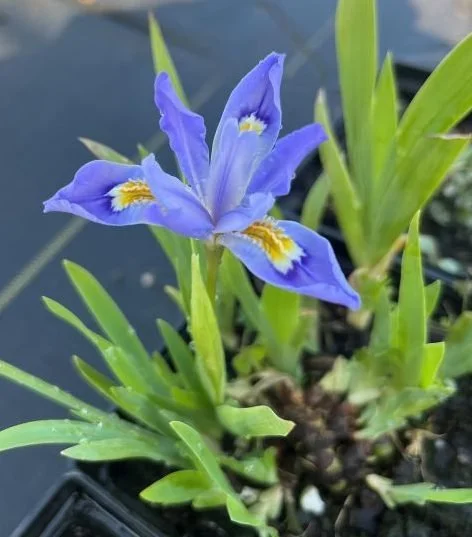
Iris cristat
This perennial is a fragrant flower with golden crested pale blue/violet flowers. Each sepal on the flower has a crested ridge (beard) along a purple striped band. The short stems and large flowers make an ideal ground cover with blue/violet flowers resting on beds of narrow, sword shaped green leaves. Valuable to the gardener as a showy understory, woodland, edging plant or in a rock garden. Tends to form dense colonies and can be used to replace nonnative invasives such as vinca, ajuga and liriope in the landscape. It is a Northeastern U.S. native
Height: 6”
Spread: ½” - 1’’
Pot size: 1 qt
Bloom time: April, May
Light: Full sun to partial shade
Moisture: Moist
Attracts: Hummingbirds, bees, butterflies
Deer resistant: Yes
Companion plants: Woodland phlox , foamflower, coral bells, Christmas fern, spotted geranium , fringed bleeding heart
Photo: Glover Perennials
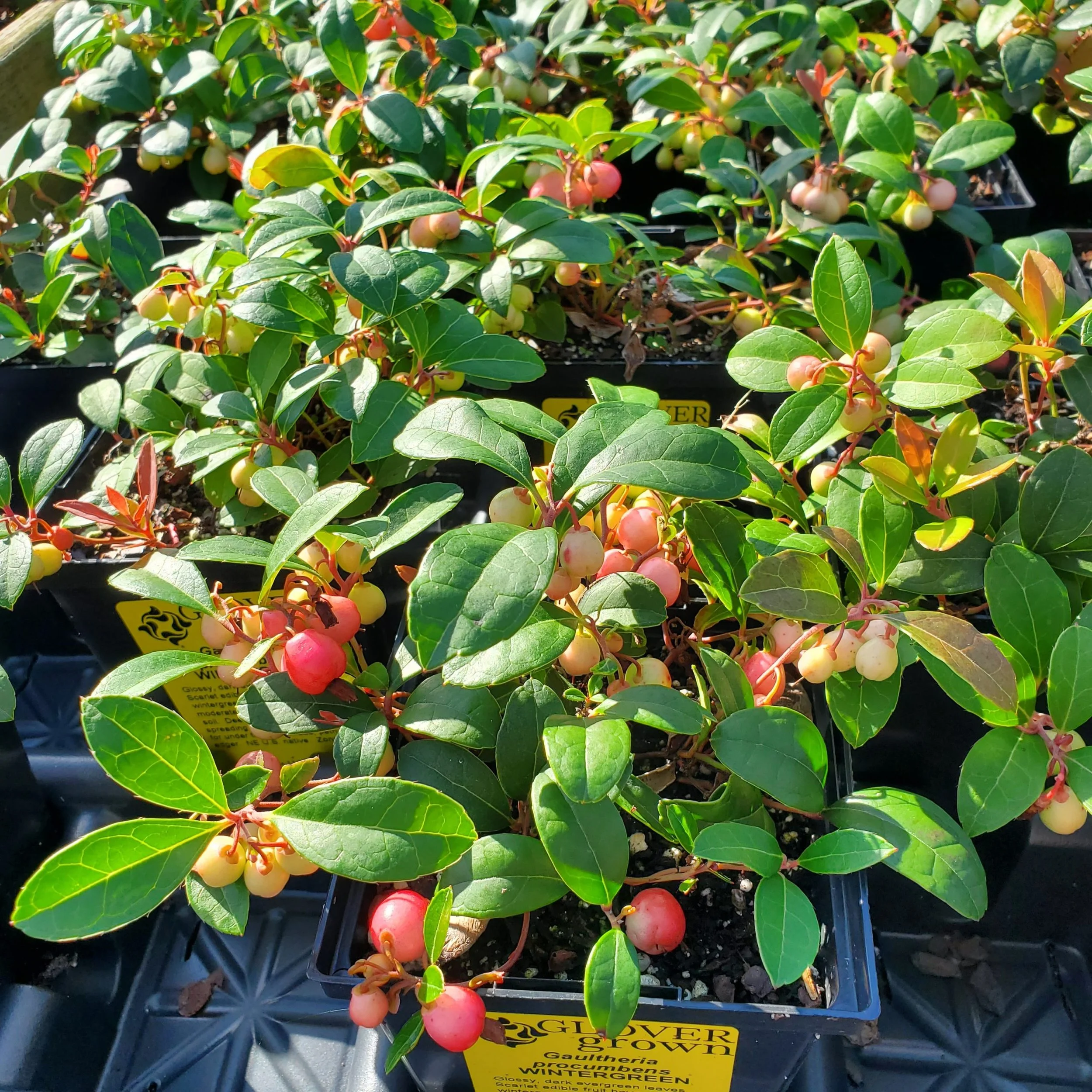
Gaultheria procumbens
Gaultheria procumbens, commonly known as wintergreen or eastern teaberry, is a low-growing, ever green ground cover native to eastern North America. It forms a dense mat of glossy, dark green leaves that often develop attractive burgundy or bronze tones in cold weather.
In summer, small, nodding, bell-shaped white to pale pink flowers appear along the stems. These are followed in fall by bright red berries that persist through winter, providing visual interest and a food source for wildlife. The leaves are aromatic when crushed, releasing the classic wintergreen scent.
Wintergreen thrives in acidic, well-drained soils and prefers partial to full shade, making it well suited for woodland gardens, shaded borders, and naturalized landscapes. It spreads slowly by underground rhizomes and requires minimal maintenance once established.
Height:4–6i” tall
Spreads:12–24”
Pot size: 4” pot
Bloom Time: Summer
Light: Partial to full shade
Soil: Acidic moist, well-drained
Attracts: Bees and butterflies
Deer Resistant: Deer and rabbit resistant
Companion Plants: Foamflower, Christmas fern, highbush blueberry
Photo: Glover Perennial

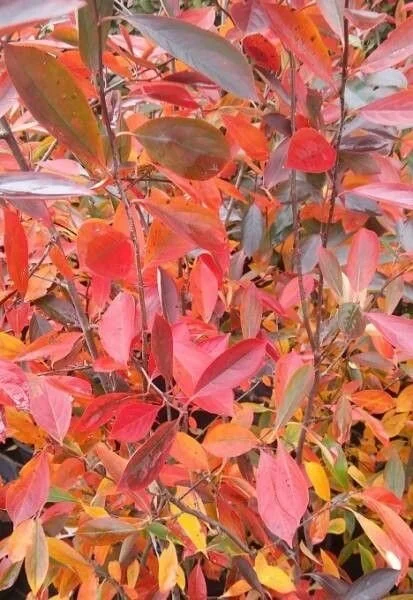
Photinia pyrifolia
Red chokeberry is a deciduous shrub that thrives in wet meadows, swamps, and woodland edges. Clusters of white flowers in spring are followed by bright red berries that persist into winter. Its foliage turns brilliant red in fall, adding ornamental value. The berries, while astringent to humans, are an important winter food source for birds. Native to eastern North America.
Height at pickup: 2’+
Height: 6’ – 12’
Spread: 3’ - 6’
Pot size: 5 gal
Bloom time: May
Light: Full sun to Partial shade
Moisture: Average
Attracts: Birds, Bees, Butterflies
Deer resistant: Moderately
Companion plants: White fringe tree , Virginia sweetspire, winterberry

Phlox subulate 'Candy Stripe'
An early to mid-spring-blooming, herbaceous perennial known for its clusters of 3/4” flowers, with needle-like, green leaves that resemble moss. This cultivar has pink and white striped flowers. Its dense spreading habit makes it a perfect ground cover for rock gardens, edgings, woodland gardens, or native plant gardens in sunny areas. Northeastern U.S. Native.
Height: 6”
Spread: 2-3’
Pot size: 1 qt
Bloom time: Early to mid-spring
Light: Full sun
Moisture: Moderately drought tolerant once established
Attracts: Bees, butterflies, hummingbirds
Companion Plants: Bee balm, tickseed, coneflower
Photo Credit: Glover Perennials

Chrysopsis mariana
This golden yellow flowered perennial has a long blooming season. It has a clumping form, grows well as a border plant, or as ground cover which tolerates light traffic. Drought tolerant used in waterwise landscaping. When finished blooming the flowers form an attractive silver brown fluffy seedhead which provides a delectable meal for birds.
Height: 1’- 2.5’
Spread: 1’- 2’
Pot size: 1 qt
Bloom time: August - October
Light: Full sun – part shade
Moisture: Dry to medium
Attracts: Butterflies, bees, birds, Keystone Species - See our article HERE
Deer resistance: Moderate
Companion Plants: Blazing star, little bluestem, butterfly weed, goldenrods
Photo credit: Mette Rossi

Solidago caesia
Bright yellow flowers bloom on the purplish, arching stems of this shade tolerant perennial. This is a relatively small goldenrod and not aggressive. Provides nectar for pollinators late in the season. Charming addition to a shade or woodland garden. Native to Northeastern United States.
Height: 1.5-3’ tall
Width: 1-1.5’
Pot size: 1 qt
time: August-September
Light: Full Sun-Part Shade
Moisture: Medium-Dry
Attracts: Pollinators, Birds
Deer resistance: Yes
Companion Plants: Black cohosh, Eastern red columbine, Christmas fern, broad-leafed sedge

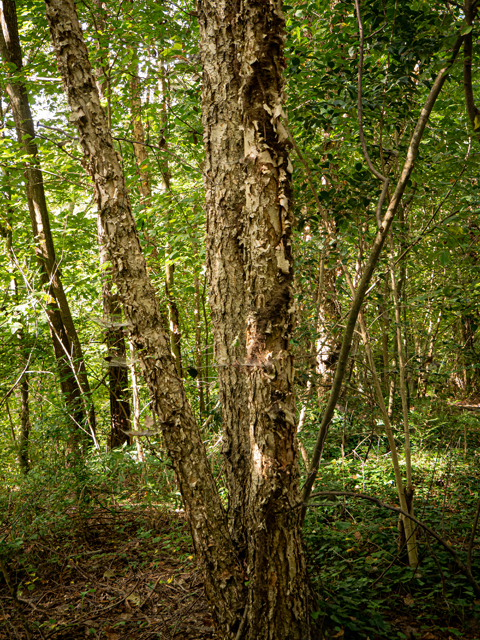
Betula nigra
Valued as a fast-growing tree with an attractive exfoliating cinnamon-brown bark and striking yellow fall foliage. It is borer-resistant and heat-tolerant. Excellent specimen tree in the landscape. Northeastern U.S. Native.
Height: 30’ – 80’ ( approx. height at delivery 5’-6’ feet)
Spread: 40’ – 60’
Pot size: 2 gal
Bloom time: April
Light: Full sun
Moisture: Average to wet
Attracts: Birds, wildlife, pollinators. Host plant for Mourning Cloak and Duskywing butterflies.
Deer Resistance: Yes
Companion Plants: Ferns, coral bells, astilbe and bee balm
Second Photo by Ladybird Johnson Wildflower Center
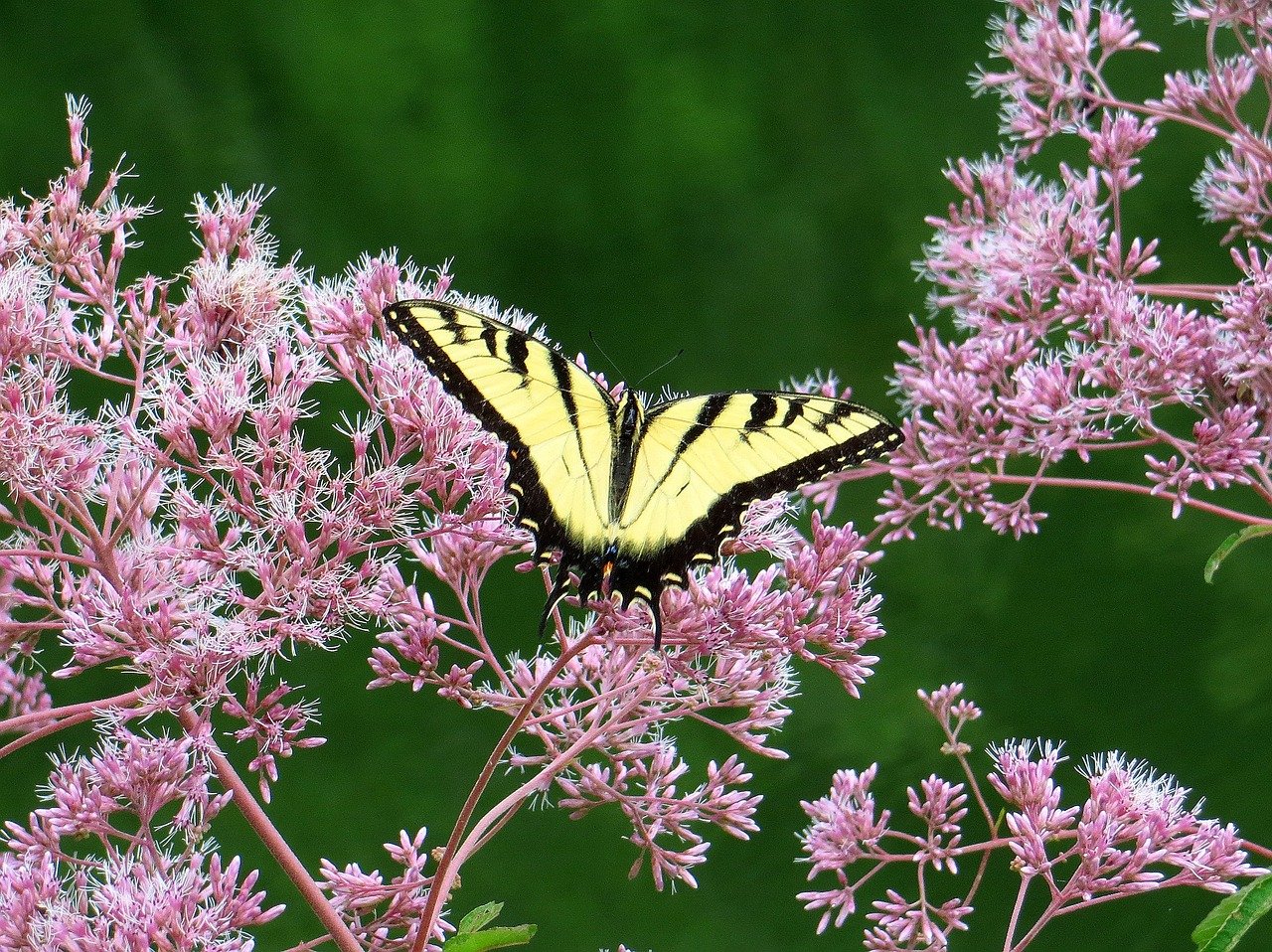
Eupatorium (Eutrochium) dubium
Wetland species with small, showy fragrant, flowers ranging from pale pink to dark purple in 4 – 7” clusters. Excellent choice for rain gardens. High pollinator value. Northeastern U.S. Native.
Height: 3 – 5’
Spread: 2 -4’
Pot size: 1 qt.
Bloom time: July, August, September
Light: Full sun, part shade
Moisture: Average, Wet
Attracts: Butterflies, beneficial insects
Deer Resistance: Yes
Companion Plants: Purple coneflower, swamp milkweed, asters, obedient plant, bee balm, tickseed


Hamamelis virginiana
A beautiful early blooming plant with yellow spidery flowers with four crinkly, ribbon-shaped petals appear along the branches. Space plants 12' to 24' apart.
Height at pickup: 6” +
Height: 10’-15'
Spread: 12’-24’
Pot Size: 1 gal
Bloom Time: October - March
Sun: Full to Partial
Moisture: Average
Attracts: Birds, bees, butterflies
Deer Resistance: Yes
Companion Plants: American holly, mountain laurel, mapleleaf viburnum, Christmas fern,
pinxterbloom azalea

Monarda didyma ‘Jacob Cline’
Bee balm’s scarlet flowers add beautiful color and contrast to gardens. while attracting hummingbirds and other pollinators. Leaves have a minty fragrance. ‘Jacob Cline’ is more powdery mildew resistant than other Monardas.
Height: 36”-48”
Width: 36”
Pot Size: 4 qt
Bloom Time: July - August
Sun: Full to Partial
Moisture: Average, Well Drained
Attracts: Birds, Bees, Butterflies, Hummingbirds
Deer Resistant: Yes
Companion Plants: Coneflower, blazing star, tickseed
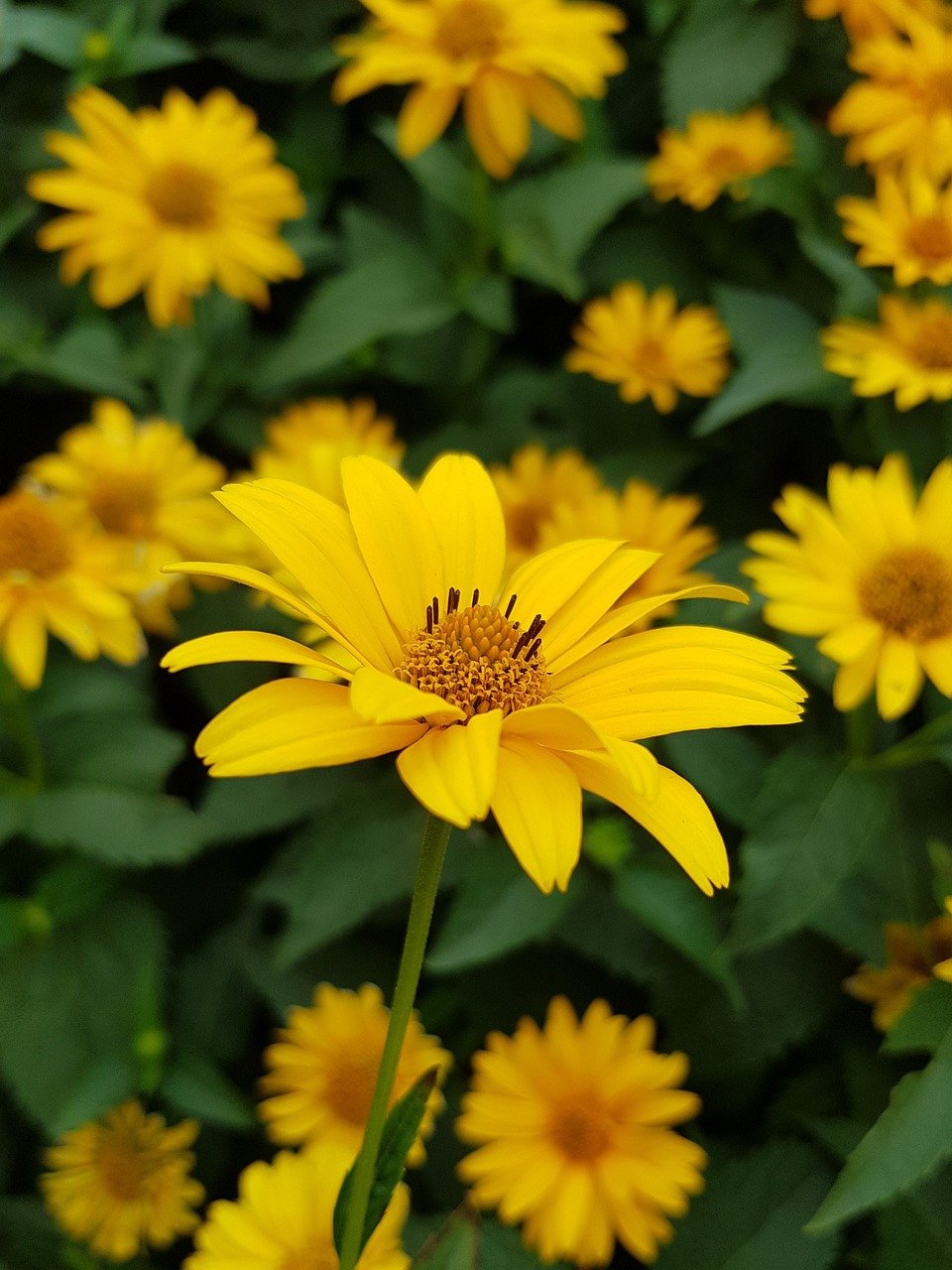
Heliopsis helianthoides
This showy perennial resembles a true sunflower, but unlike sunflowers, its rays persist on the flowerheads. It’s easily grown and is a good choice for dry sites or clay soil.
Height: Up to about 5 feet tall.
Pot size: 1 qt
Bloom time: June, July, August, September
Light: Full sun to part shade
Moisture: Dry
Attracts: Hummingbirds
Deer resistance: Yes
Companion Plants: Black eyed Susan, phlox, coreopsis, miscanthus, bee balm, purple coneflower, milkweed

Mertensia virginica
Beautiful native wildflower that appears in early spring. The pink buds open and reveal delicate, pendulous, slightly fragrant, blue bell-shaped blooms that last about 3 weeks. Plant with other shade-loving perennials that will emerge as the Virginia Bluebells go dormant mid-summer. Northeastern U.S. Native.
Height: 1.5’ - 2.0’
Spread: 1.0’ – 1.5’
Pot size: 1 qt
Bloom time: March to April
Light: Part shade to full shade
Moisture: Average
Attracts: Pollinators such as bumblebees, long-tongued bees, butterflies, skippers, moths, and hummingbirds
Deer resistance: No
Companion Plants: Trillium, mayapple, Christmas fern, cinnamon fern, fringed bleeding heart
This plant may be dormant at the time of pickup.
Photo: CCE MGV Ann Ellis

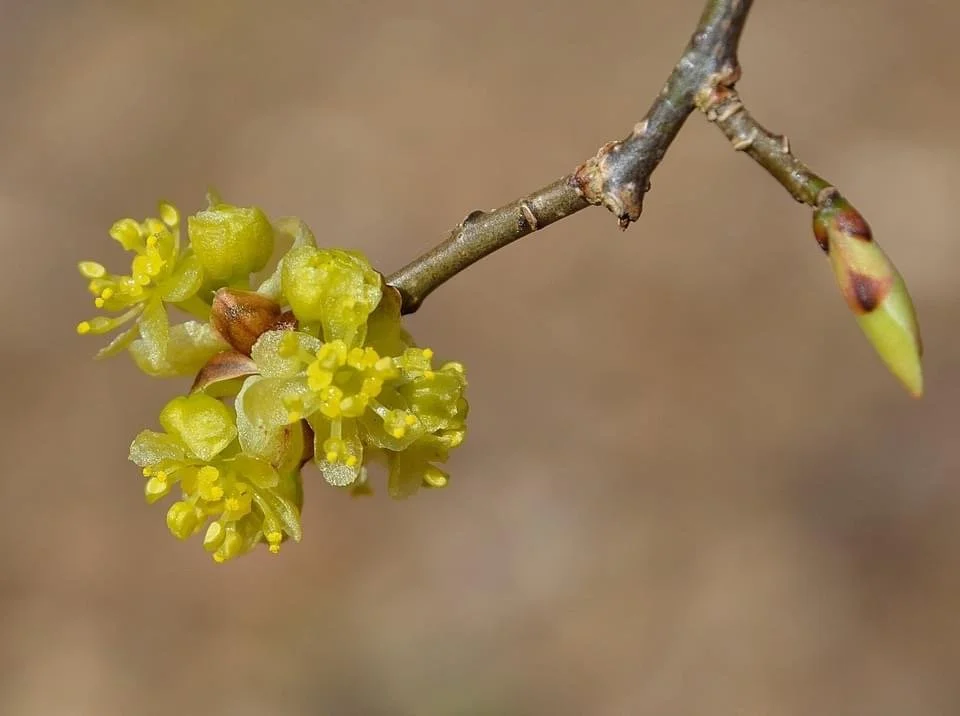
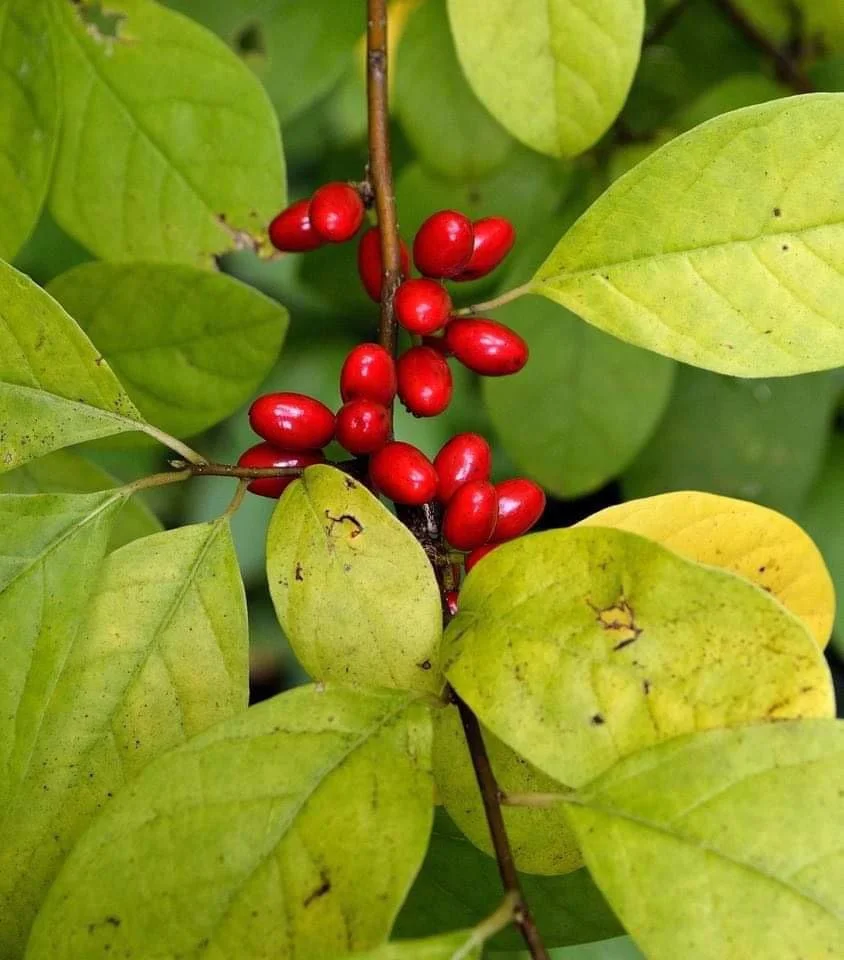
Lindera benzoin
A few-stemmed deciduous shrub thought of as “the forsythia of the wilds.” Dense clusters of tiny, pale yellow flowers bloom before the leaves. They are followed by glossy red fruit. Both fruit and foliage are aromatic. The leaves turn a colorful yellow in the fall, truly a 3-season plant. Northeastern U.S. Native.
Height at pickup: 2’+
Height: 15’
Spread: 6 -12’
Pot size: 5 gal
Bloom time: March, April, May
Light: Full sun, part shade
Moisture: Average
Attracts: Birds, butterflies, hosts for Eastern Tiger Swallowtail and Spicebush Swallowtail
Deer Resistance: Yes
Companion Plants: Virginias bluebells, Eastern redbud, witch hazel, Christmas fern
First Photo:Mike Adamovic
Second Photo: Mike Adamovic
Third Photo: Kristen Ossmann

Allium cernuum
Lovely pink “nodding” flowers on persistent foliage. Great for edging, rock gardens, and containers. Edible can be used like chives.
Height: 12 -16”
Spread: 4 - 6”
Pot size: 1 qt.
Bloom time: July, August
Light: Full Sun, light Shade
Moisture: Dry, Average
Attracts: Hummingbirds, butterflies, and beneficial insects
Deer resistance: Yes
Companion Plants: Purple love grass, little bluestem, goldenrods, strawberries
Photo: Glover Perennials

Ilex verticillata
Slow-growing, low-maintenance woody, deciduous tree or shrub makes a nice border in pond areas, and native, winter, and pollinator gardens. It has red berries which mature in the fall providing winter interest and food for birds and small mammals. It must have a male plant within 50 feet to produce berries. Northeastern U.S. Native.
Height: 3 -15’
Spread: 6 - 12’
Pot size: 3 qt.
Bloom time: April, May, June, July
Light: Full sun, part shade, shade
Moisture: Average, Moist
Attracts: Birds, butterflies, larval host for Henry’s Elfin Butterfly
Deer Resistance: Yes
Companion Plants: Purple coneflower, coastal Joe Pye weed, arrowwood viburnum, switchgrass,
Photo: Glover Perennials

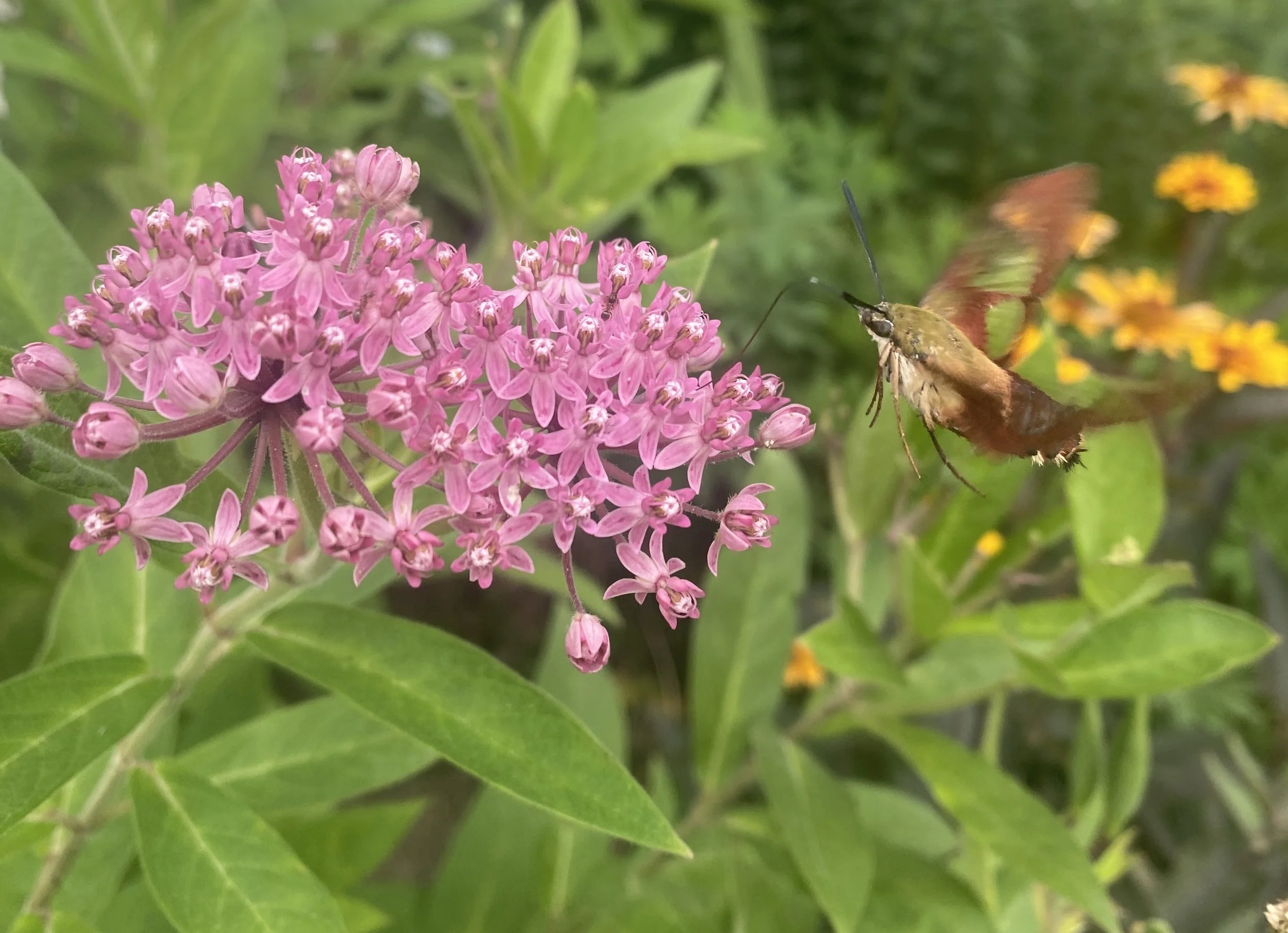
Asclepias incarnata ssp. pulchra
Erect, clump-forming plant with showy, fragrant, pink to mauve blossoms in summer. A pollinator favorite and an excellent choice for a butterfly garden. Northeastern U.S. Native and Rockland Native.
Height: 3 - 4’
Spread: 2 - 3’
Pot size: 1 qt.
Bloom time: July-August
Light: Full sun
Moisture: Average, Wet
Attracts: Hummingbirds, butterflies, host plant for Monarch butterfly
Deer Resistance: Yes
Companion Plants: Joe Pye Weed, turtlehead, New England aster, goldenrod, NY ironweed, cardinal flower
Photo: CCE MGV Ginger Hughes

Viola labradorica
Lovely dark green heart-shaped leaves flushed with purple. Long blooming violet-purple flowers. Mass plants for use as a ground cover or filler between pavers or in rock gardens. Mixes well with ferns and in a shaded shrub border. Self-seeds regularly to form colonies. Northeastern U.S. Native.
Height: 1 - 6”
Spread: 4 - 6”
Pot size: 1 qt.
Bloom time: April, May, September, October
Light: Part shade, shade
Moisture: Dry to moist
Attracts: Pollinators, host plant for Fritillary Butterfly
Deer Resistance: Yes
Companion Plants: Christmas Fern, Golden Alexanders, Wild Columbine
Photo: Glover Perennials

Liatris spicata
Tall purple spikes, which bloom from the top down, draw pollinators to this summer blooming perennial. Blazing Star, like many native plants, is resistant to deer. This doesn't necessarily guarantee that deer won't eat it, but it certainly increases the odds that they'll leave it alone.
Height: 24”-48”
Pot Size: 4”
Bloom Time: July - August
Sun: Full to Partial
Moisture: Dry
Attracts: Birds, Bees, Butterflies, Hummingbirds
Deer Resistant: Yes
Companion Plants: Coneflower, tickseed, goldenrod, sneezeweed, New England aster, bee balm, butterfly weed, beardtongue

Carex pensylvanica
Male flowers appear in spiklets above the female flowers. Male flowers are green with reddish-purple with white margins and female flowers are dark brown to purple-black with green midribs and white margins. Plants should be spaced less than 12" apart.
Height: 6-10”
Post Size: 4” Pot
Bloom Time: May
Light: Partial Shade to Full Shade
Moisture: Dry, Average, Well Drained
Attracts: Birds, Bees, Butterflies, Hummingbirds
Deer Resistant: Yes
Companion Plants: Columbine, wild Senna, yellow coneflower, coral bells, blueberry and ferns
Photo: Harris, Susan. Pennsylvania Carex. 2009.
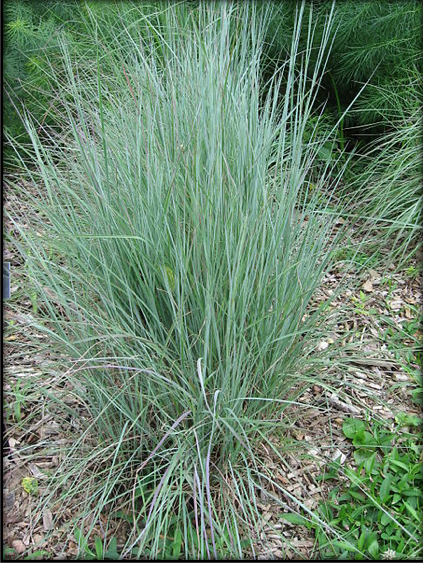
Schizachyrium scoparium ‘Standing Ovation’
Excellent native grass with upright growth habit and beautiful blue color that turns to red, purple and orange in the fall. Provides lovely winter interest in the landscape. Once established has excellent drought tolerance.
Height: 24 - 48"
Spread: 12”
Pot Size: 3 qt
Bloom Time: August - First Frost
Sun: Full
Moisture: Dry, Average, Well Drained
Attracts: Birds and Pollinators
Deer Resistant: Yes
Companion Plants: Muhly grass, blazing star, butterfly weed
Photo: Chhe. wiki. Schizachyrium scoparium. 2009.
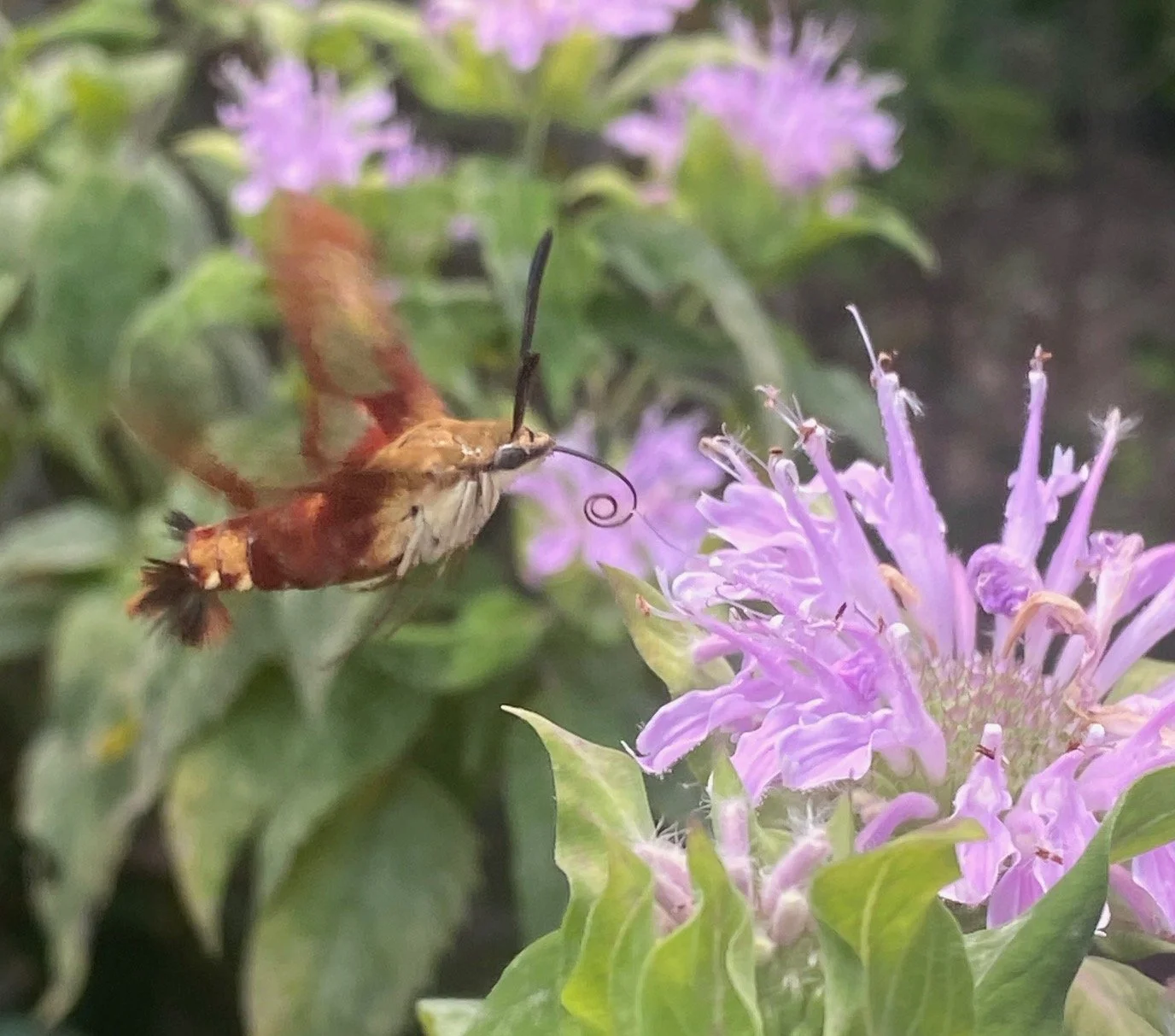
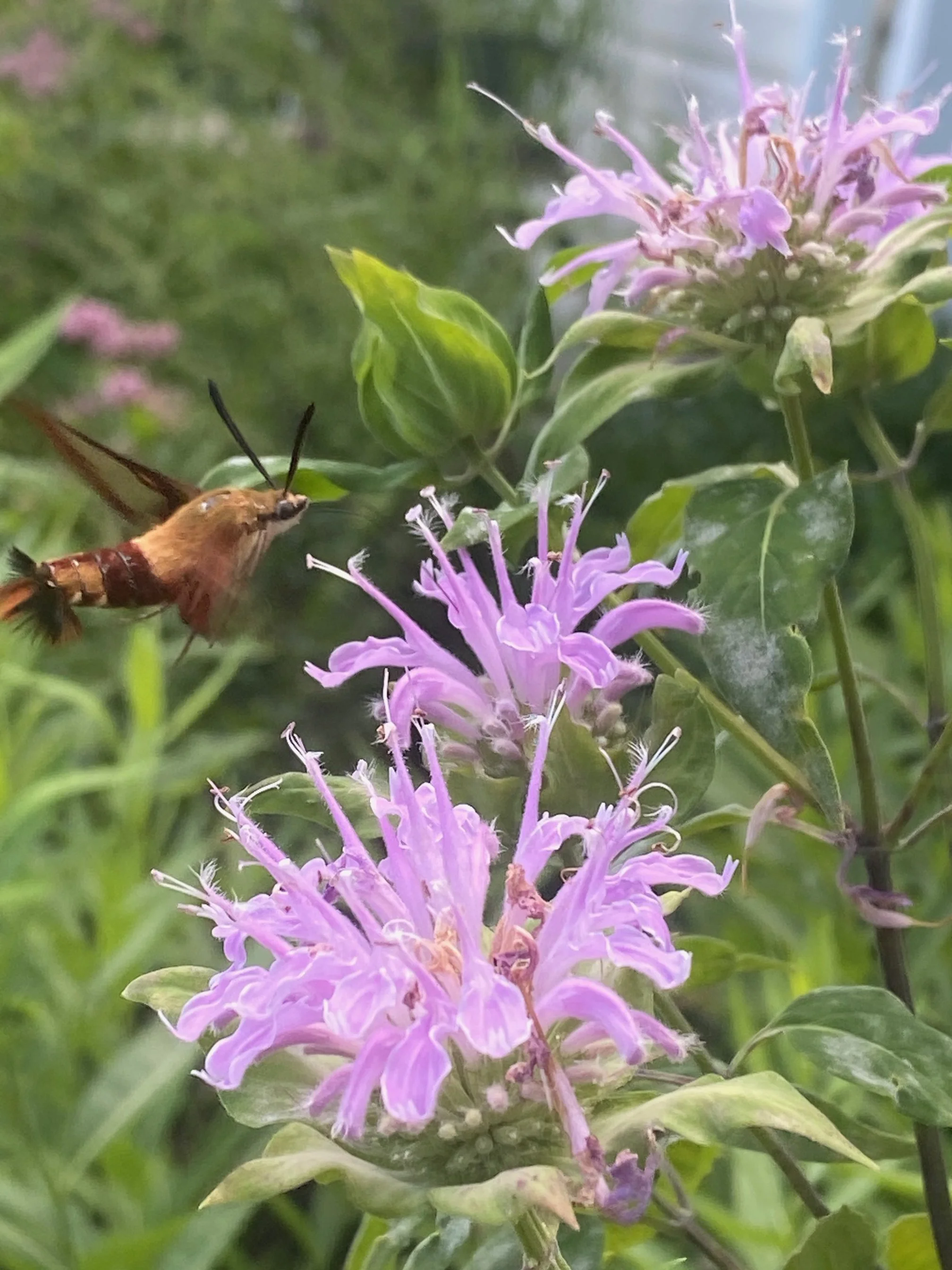
Monarda fistulosa
Wild Bergamot’s long lasting, fragrant, light powder-pink blossoms attract many pollinators and birds. It tolerates a range of soil and light conditions making it ideal for perennial, pollinator, and native gardens.
Height: 36”-48”
Pot Size: 1 gal
Bloom Time: July - August
Sun: Full
Moisture: Dry, Average
Attracts: Birds, Bees, Butterflies, Hummingbirds
Deer Resistant: Yes
Companion Plants: Purple coneflower, black-eyed Susan, Culver’s root
Photo credit: MGV Ginger Hughes

Polystichum acrostichoides
Most common evergreen fern in Northeast, remains green throughout the winter.
Height: 8-16”
Pot Size: 3 qt
Sun: Partial to Shade
Attracts: Birds
Deer Resistant: Yes
Companion Plants: Columbine, Virginia bluebells, blue-stemmed goldenrod,
foamflower, coral bells
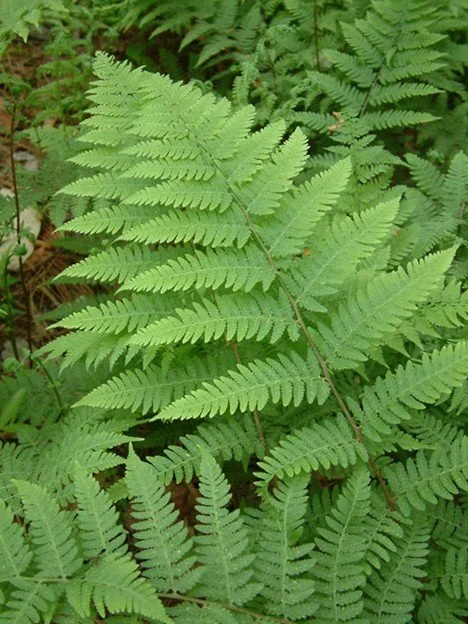
Athyrium filix-femina
A hardy soft textured fern. Grows best in organically rich moist soils.
Height: 18”-36”
Spread: 18”-36”
Pot size: 1 qt
Bloom time: N/A
Light: Shade-Part Sun
Moisture: Moist-Average
Attracts: N/A
Deer resistance: Yes
Companion Plants: Carex, Tiarella, spring ephemerals
Photo credit: Lady Bird Johnson, Bloodworth, Stefan
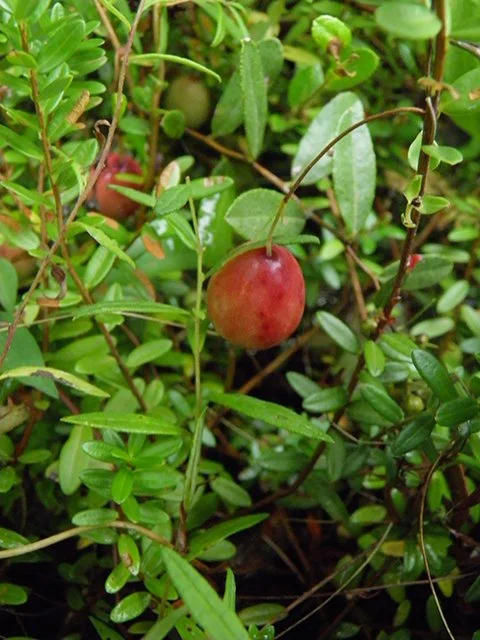
Vaccinium macrocarpon
Large cranberry, American cranberry or bearberry is a low growing vine or trailing broadleaf evergreen with white to pink blooms in late spring to early summer. Best grown in damp to boggy soil, it can be used as a ground cover for boggy or marshy areas with acidic soils. The berries mature in August-November. This plant is intolerant of heat and drought. The leaves are a larval food source for the bog copper butterfly, the flowers are visited by bees, and the fruits are eaten by birds.
Height: 0.25 to 0.50’
Spread: 1.00 to 6.00’
Pot size: 1 qt.
Bloom time: May to June
Light: Full sun
Moisture: medium to wet
Attracts: Flowers are visited by bees, and the fruits are eaten by birds
Deer resistant: high to moderate resistance
Companion plants: Highbush blueberries, azaleas, and rhododendrons
Photo: Lady Bird Johnson, Anderson, Wynn
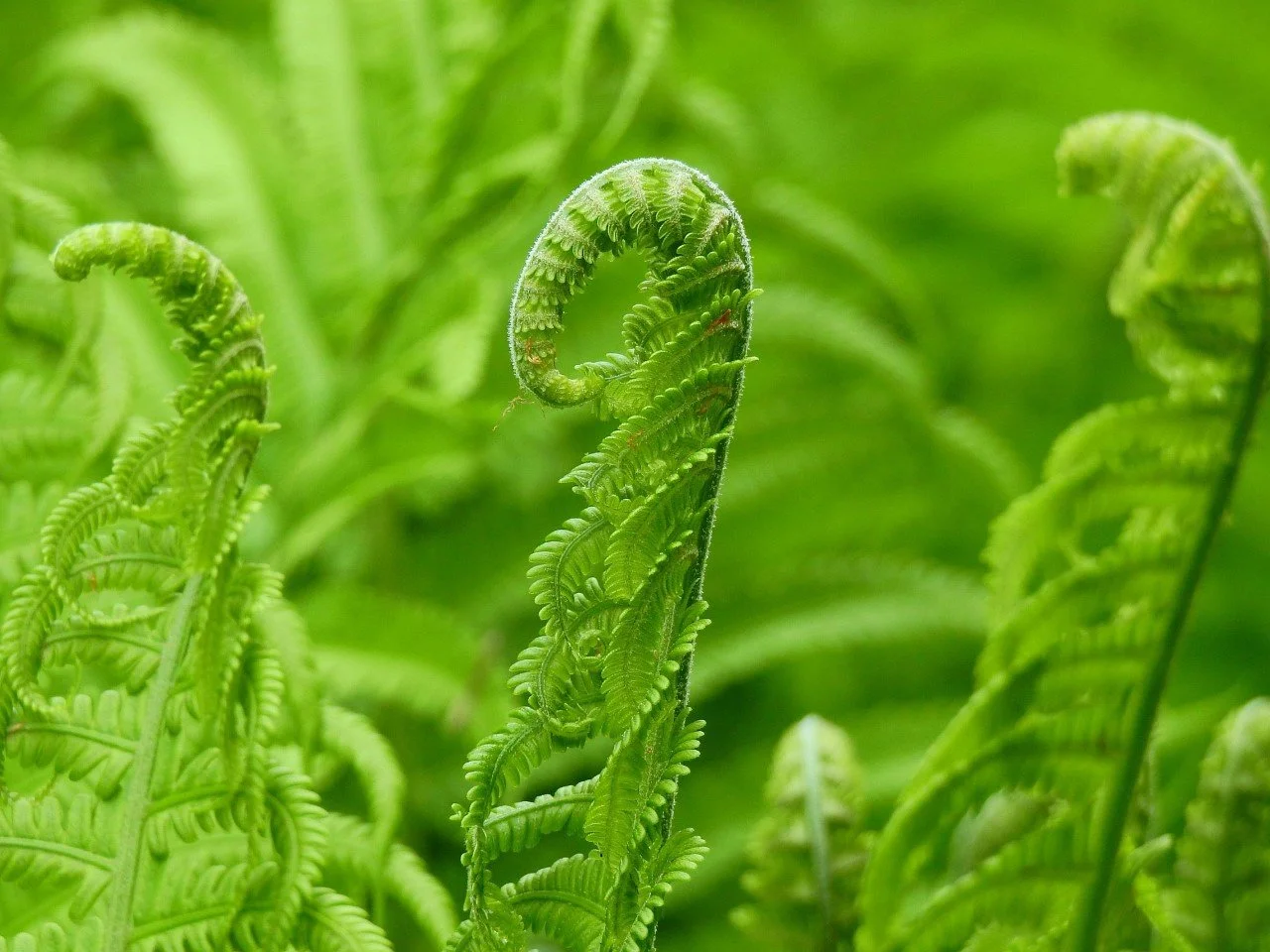
Matteuccia struthiopteris
Easy to grow in shady moist location. Spreads by runners.
Height: 24 - 36"
Pot Size: 3 qt
Sun: Partial to Shade
Moisture: Average, Well Drained
Attracts: Birds
Deer Resistant: Yes
Companion Plants: Virginia bluebells, coral bells, American elderberry, red chokeberry
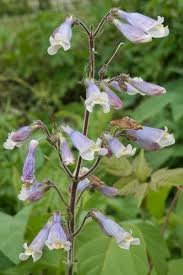
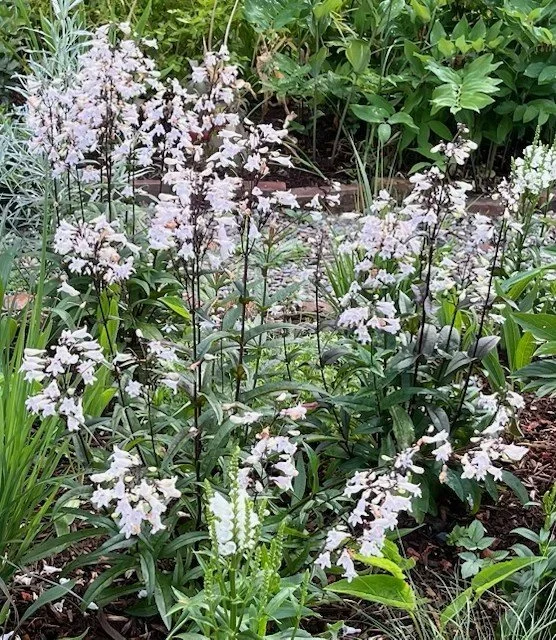
Penstemon hirsutus
Beautiful clusters of lavender to violet trumpet-shaped flowers blossom on downy stems from May to July. Distinct seed pods appear that provide winter interest. Well-drained soil is best. Great addition to stone walls, rock gardens, low meadows and woodland gardens. Northeastern US native.
Height: 12-24”
Spread: 12-24”
Pot size: 3 qt.
Bloom time: Spring, summer
Light: Sun, part shade
Moisture: Average, dry
Attracts: Hummingbirds, pollinators, butterflies, bees
Deer resistance: deer tolerant
Companion Plants: Coneflower, bee balm, foxglove, Eastern blue star, anise hyssop, black eyed Susan
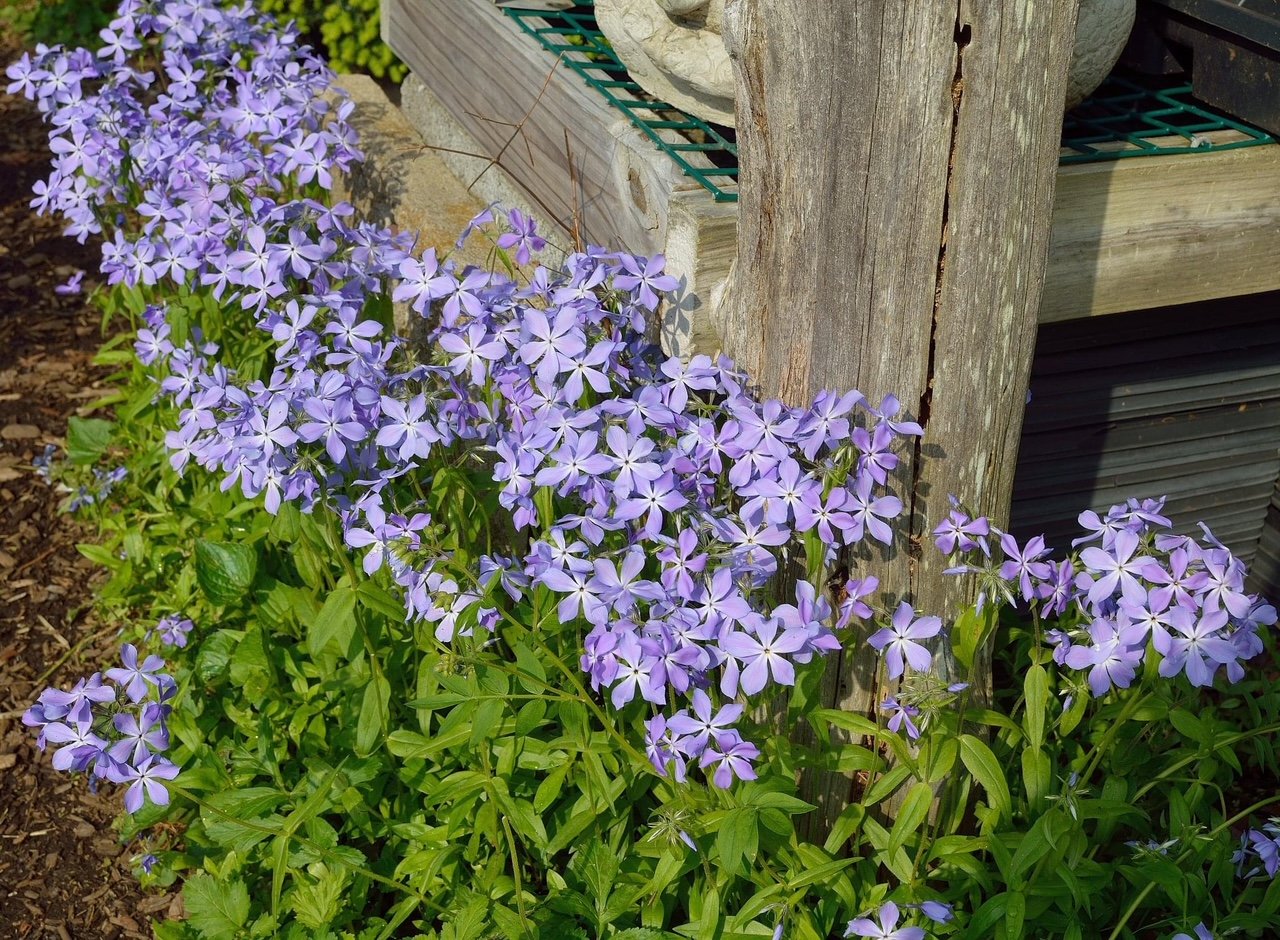
Phlox divaricata ‘Blue Moon’
Beautiful fragrant violet-blue clustered flowers with notched petals. Woodland Phlox is a top choice for shade- part shade gardens. Easy to grow with compact growth habit.
Height: 12”-18”
Width: 24’-36”
Pot Size: 1 qt
Bloom Time: April - May
Sun: Partial to Shade
Moisture: Average, Well Drained
Attracts: Birds, Bees, Butterflies, Hummingbirds
Deer Resistant: Yes
Companion Plants: Foamflower, coral bells
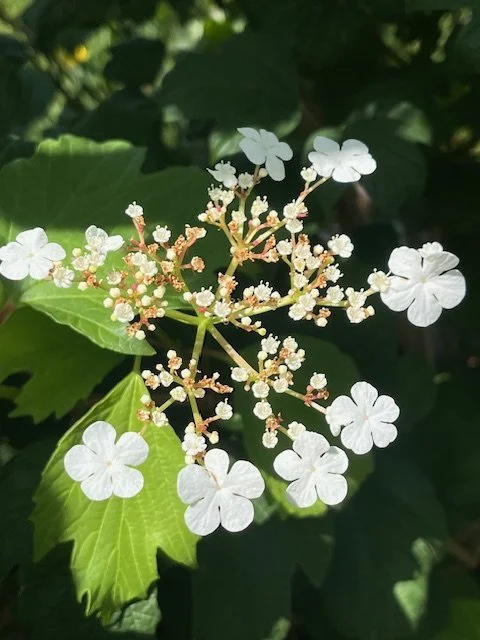
Viburnum trilobum
Clusters of white flowers appear in spring and are followed by edible red drupes that resemble cranberries and mature in Aug-Sept. It is an arching erect shrub that spreads and has yellow-red or reddish-purple color in the fall. Native to Northeastern U.S.
Height: 8’ – 12’
Spread: 8’ – 12’
Pot size: 6 qt
Bloom time: May to July
Light: Full sun to partial shade
Moisture: Wet to moist
Attracts: Pollinators, small mammals and songbirds
Deer resistant: Yes
Companion plants: Red osier dogwood, red maple, fringed bleeding heart, coral bells and ferns
Photo: Kristen Ossmann
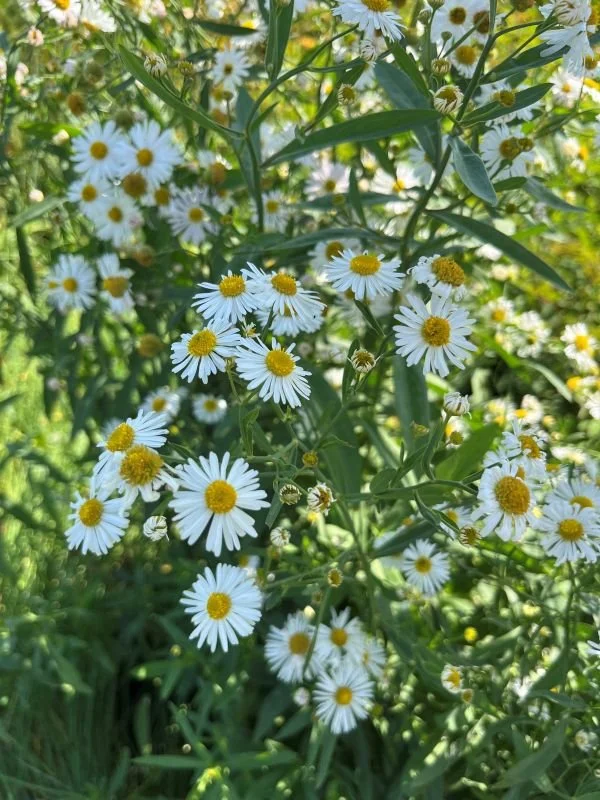
Boltonia asteroides
A prolific bloomer with white daisy like flowers that attract a vast number of pollinators. An excellent back of the garden plant or meadow planting addition. Tolerant of different soil conditions.
Height: 3’-5’
Spread: 3’-5’
Pot size: 1 qt
Bloom time: September-October
Light: Full Sun-Light Shade
Moisture: Moist Tolerant
Attracts: Bees, Butterflies and Birds
Deer resistance: Yes
Companion Plants: Goldenrod, coastal Joe Pye weed, asters and native grasses
Picture: Glover Perennials
No results match your search. Try removing a few filters.