 Image 1 of 1
Physocarpus opulifolius
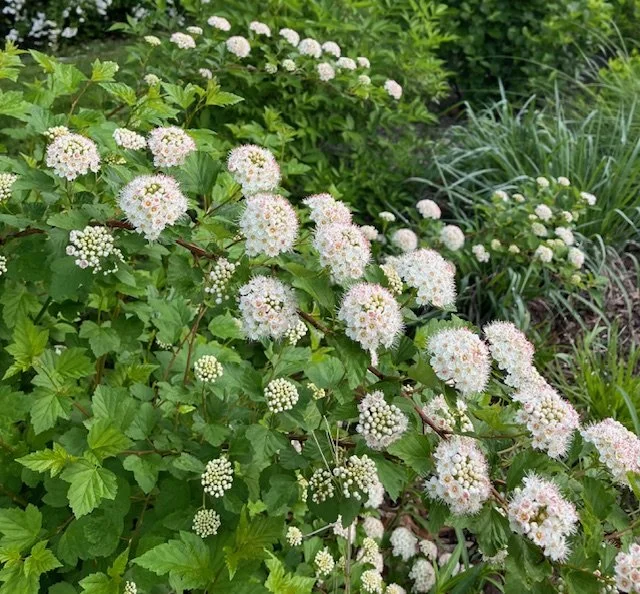
This fast growing deciduous four- season shrub is a mixture of toughness and beauty. It produces pink or white showy flower clusters in late spring. Flowers give way to drooping clusters of red fruit. Leaves emerge yellowish- green and darken to a reddish purple. The exfoliating bark peels in strips to reveal several layers of reddish to light brown bark for winter interest, which is how it got its name. It tolerates drought, erosion, clay soil, dry soil, wet soil, rocky soil and black walnut. It’s good for hedges or a shrub border. Can be used for erosion control on banks.
Height at pickup: 12”+
Height: 5-8’
Spread: 4-6’
Pot size: 1 gal
Bloom time: May to June
Light: Full sun-part shade
Moisture: Dry-medium
Attracts: Butterflies, moths, native bees, wasps and flies. It’s the larval host for the Ninebark Pygmy Moth and Unicorn Caterpillar. Birds like the fruit/seedpods.
Deer resistance: Moderate. Deer generally avoid ninebark though will browse in winter when food is scarce.
Companion plants: Bee balm, coneflower, black-eyed Susan, lavender and sedum.
Physocarpus opulifolius
This fast growing deciduous four- season shrub is a mixture of toughness and beauty. It produces pink or white showy flower clusters in late spring. Flowers give way to drooping clusters of red fruit. Leaves emerge yellowish- green and darken to a reddish purple. The exfoliating bark peels in strips to reveal several layers of reddish to light brown bark for winter interest, which is how it got its name. It tolerates drought, erosion, clay soil, dry soil, wet soil, rocky soil and black walnut. It’s good for hedges or a shrub border. Can be used for erosion control on banks.
Height at pickup: 12”+
Height: 5-8’
Spread: 4-6’
Pot size: 1 gal
Bloom time: May to June
Light: Full sun-part shade
Moisture: Dry-medium
Attracts: Butterflies, moths, native bees, wasps and flies. It’s the larval host for the Ninebark Pygmy Moth and Unicorn Caterpillar. Birds like the fruit/seedpods.
Deer resistance: Moderate. Deer generally avoid ninebark though will browse in winter when food is scarce.
Companion plants: Bee balm, coneflower, black-eyed Susan, lavender and sedum.