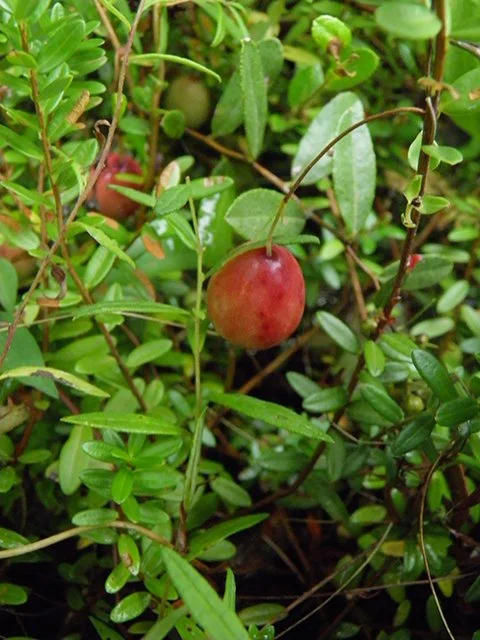
Vaccinium macrocarpon
Large cranberry, American cranberry or bearberry is a low growing vine or trailing broadleaf evergreen with white to pink blooms in late spring to early summer. Best grown in damp to boggy soil, it can be used as a ground cover for boggy or marshy areas with acidic soils. The berries mature in August-November. This plant is intolerant of heat and drought. The leaves are a larval food source for the bog copper butterfly, the flowers are visited by bees, and the fruits are eaten by birds.
Height: 0.25 to 0.50’
Spread: 1.00 to 6.00’
Pot size: 1 qt.
Bloom time: May to June
Light: Full sun
Moisture: medium to wet
Attracts: Flowers are visited by bees, and the fruits are eaten by birds
Deer resistant: high to moderate resistance
Companion plants: Highbush blueberries, azaleas, and rhododendrons
Photo: Lady Bird Johnson, Anderson, Wynn

Spiraea tomentosa
Mounding shrub with spires of showy pink flowers. Attractive reddish-gold fall foliage. Raingarden suitable. Northeastern U.S. Native.
Height: 3-4’
Spread: 3-4’
Pot size: 6 qt.
Bloom time: July-August
Light: Full Sun
Moisture: Moist, Wet
Attracts: Butterflies, birds and pollinators
Deer resistance: Yes
Companion Plants: New Jersey tea, white turtlehead, American elderberry, common ninebark, buttonbush
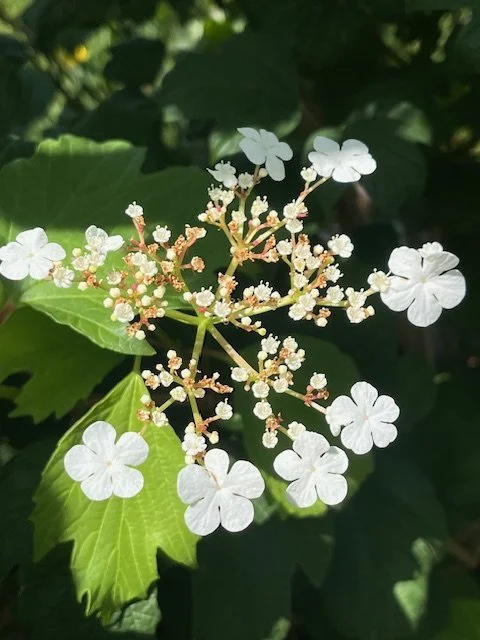
Viburnum trilobum
Clusters of white flowers appear in spring and are followed by edible red drupes that resemble cranberries and mature in Aug-Sept. It is an arching erect shrub that spreads and has yellow-red or reddish-purple color in the fall. Native to Northeastern U.S.
Height: 8’ – 12’
Spread: 8’ – 12’
Pot size: 6 qt
Bloom time: May to July
Light: Full sun to partial shade
Moisture: Wet to moist
Attracts: Pollinators, small mammals and songbirds
Deer resistant: Yes
Companion plants: Red osier dogwood, red maple, fringed bleeding heart, coral bells and ferns
Photo: Kristen Ossmann

Hypericum prolificum
A compact, slow growing, rounded shrub with dark green, narrow leaves. Interesting, bright, yellow, 1-inch flowers cover the plant in early summer and give way to cone shaped seed clusters once they fade. Bark of older stems exfoliates to reveal an attractive, pale orange inner bark. Plant in groups along the shrub border or use it as a hedge. Tolerates some drought once established. Will grow in a variety of soils including clay. Native to the Northeastern US.
Height: 1’-5’
Spread: 1’-4’
Pot size: 6 qt
Bloom time: June-August
Light: Full Sun- Part Shade
Moisture: Average
Attracts: Birds, Bumblebees
Deer resistance: Yes
Companion Plants: Serviceberry, New Jersey tea, bee balm
Photo credit: Erin Hunt-cc wikimedia
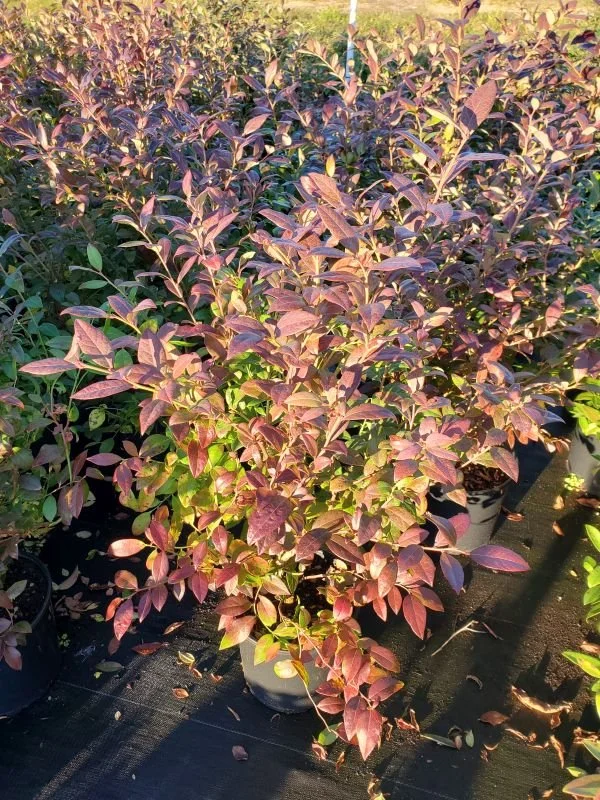
Vaccinium corymbosum ‘Legacy’
A highly productive, vigorous cultivar prized for producing some of the best-flavored, large, sweet berries with an extended mid-to-late season harvest. White urn-shaped flowers in May. Features glossy green summer leaves that turn bright orange-red in the fall. Self-fertilizing, but yields increase with a companion plant such as Vaccinium corymbosum ‘Duke’. Native to eastern North America.
Height: 4-6’
Spread: 3-4’
Pot size: 4 qt
Bloom time: May
Light: Full sun to Partial shade
Moisture: Moist
Attracts: Birds, butterflies, other pollinators and wildlife
Companion plants: Creeping phlox, lady fern, Virginia bluebells
Photo: Glover Perennials
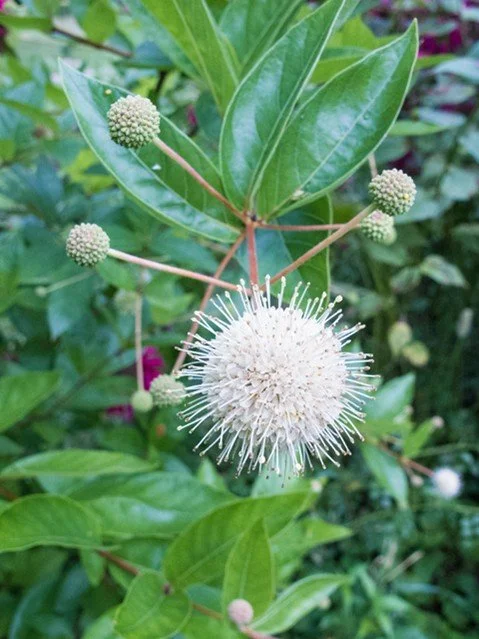
Cephalanthus occidentalis
Button Bush
A medium sized shrub with rounded shape. Lovely, unusual round spherical flowers. Best suited to moist soils, intolerant of drought.
Height: 3’-6’
Spread: 3’-6’
Pot size: 6 qt
Bloom time: late July-August
Light: Full sun-light shade
Moisture: Moist-Wet
Attracts: Specialist Bees, Butterflies
Deer resistance: Yes
Companion Plants: Coastal Joe Pye Weed, NY ironweed, swamp milkweed and cardinal flower
Photo credit: Lady Bird Johnson, Wildflower Digital Library, Brundage, Stephanie

Vaccinium corymbosum ‘Duke’
This cold-hardy shrub is compact, rounded, and puts on a show three seasons of the year. Beautiful bell-shaped white flowers will decorate your berry bush as it announces the start of spring. The harvest season is late spring early summer. After the fruit season has passed, the green leaves turn lovely shades of bronze, red, and purple during the fall. To increase fruit yield, it is recommended to have more than one variety of Highbush Blueberry.
Height: 5’-7’
Width: 5’-7’
Pot Size: 4 qt
Bloom Time: April - May
Sun: Full to Partial
Moisture: Dry, Average, Well Drained
Attracts: Birds, Bees, Butterflies, Hummingbirds
Deer Resistant: No
Companion Plants: Strawberries, ferns, rhododendrons
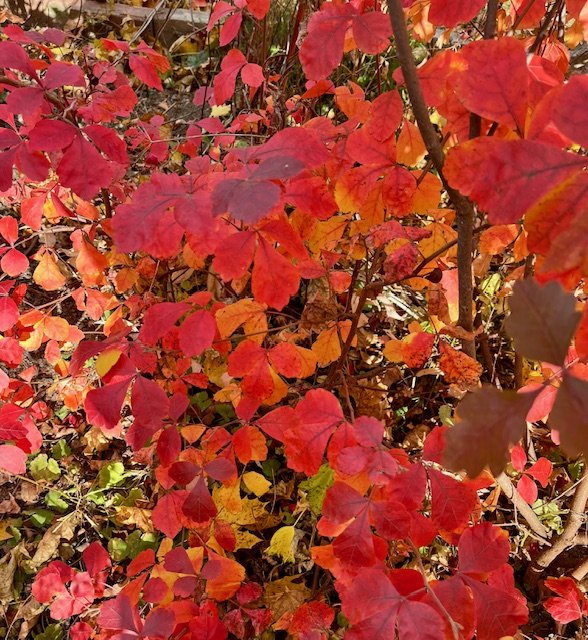
Rhus aromatica
Fragrant sumac is an adaptable native deciduous shrub with glossy dark green leaves. Small yellow flowers appear in early spring before the foliage emerges. Fragrant sumac develops stunning orange to red fall foliage color and red berries. Known for its citrus-like scent, it is an excellent plant for stabilizing embankments or as a garden mass.
Height at pickup: 2’+
Height: 2 - 6’
Spread: 6-10’
Pot size: 5 gal
Bloom time: Early spring
Light: Full sun to part shade
Moisture: Average to dry
Attracts: Birds, butterflies, and Luna moths
Deer resistant: Yes
Companion plants: Highbush blueberry, little bluestem, purple coneflower, sweet fern, flowering dogwood
Photo Credit: Kristen Ossmann

Leucothoe racemosa
This broadleaf shrub has fragrant pinkish white bell-shaped flowers in 4” clusters and glossy green leaves that turn red, orange, or yellow in fall. It can be used as a foundation plant, in a woodsy landscape as a hedge, on slopes as a bank stabilizer, near ponds and in rain gardens. The leaves and nectar are poisonous to humans and animals. Northeastern U.S. Native.
Height: 4’ – 6’
Spread: 4’ – 6’
Pot size: 6 qt
Bloom time: May - June
Light: Part shade - Shade
Moisture: Average - Wet
Attracts: Butterflies, Bees
Deer resistance: Yes
Companion Plants: Coral bells, lady fern
Photo: Glover Perennials

Ceanothus americanus
This is a deciduous compact, dense, rounded shrub with tiny, fragrant white flowers. It has a deep root system which makes it good for use in erosion control on slopes. The dried leaves were used as a tea substitute, without caffeine, during the Revolutionary War. The young twigs are noticeably yellow and stand out during winter. This plant is a good addition to a butterfly, drought tolerant, rain garden or nighttime garden.
Height: 3-4’
Spread: 3-5’
Pot size: 3 qt
Bloom time: May to July with white fragrant blooms that are long-lasting
Light: Full sun to part shade
Moisture: Dry to medium well-drained soil. Can withstand droughty conditions.
Attracts: Hummingbirds, songbirds and specialized bees. Food source for the larvae of the Mottled Duskywing, Spring Azure and Summer Azure butterflies.
Deer resistance: Moderate
Companion Plants: Butterfly weed, goldenrod, Echinacea pupura
Photo Credit: Glover
Second Photo: Mike Adamovic

Sambucus canadensis
An elegant arching shrub with enormous white flower clusters that turn to dark black berries that the birds love. Fast Growing. Remove canes every few years for best performance. Northeastern U.S. Native.
Height: 6’- 10’
Pot size: 6 qt
Bloom time: June
Light: Full sun-Part shade
Moisture: Average- Moist Tolerant
Attracts: Butterflies, pollinators, and birds
Companion Plants: Winterberry, phlox and bee balm
Photo: Glover Perennials

Ilex verticillata
Slow-growing deciduous shrub with upright rounded habit. Dark green leaves with inconspicuous greenish-white flowers. The beauty of this shrub is the red berries which provide interest from the winter through to spring. One male winterberry is needed to pollinate 6-10 female plants.
Height: 6 - 12’
Spread: 6 - 12’
Pot size: 3 qt.
Bloom time: June, July
Light: Full sun, part shade
Moisture: Average, wet
Attracts: Birds such as gray catbirds, eastern bluebirds, American robins, cedar waxwings and woodpeckers, butterflies
Deer Resistance: Not preferred but deer will browse
Companion Plants: Purple coneflower, coastal Joe Pye weed, arrowwood viburnum, switchgrass
Photo: Brundage, Stephanie Lady Bird Johnson Wild Flower Center

Viburnum dentatum
This shrub adds plenty of seasonal interest to any landscape. Creamy white flowers in flat-topped clusters appear in late spring followed by blue-black berry-like drupes. Dark blue fruits are a favorite for migrating songbirds. In the fall dark green leaves take on the fall shades of yellow, red, or reddish-purple. This plant can be a large statement piece in your garden. It is also good for rain gardens and is salt tolerant. Northeastern U.S. Native.
Height: 6-12’
Spread: 6 - 10’
Pot size: 6 qt.
Bloom time: May, June
Light: Full sun, part shade
Moisture: Average, Moist
Attracts: Birds, bees, butterflies, and other pollinators
Deer Resistance: Moderate
Companion Plants: Red osier dogwood, common ninebark, coral bells, lady fern, New England aster, New York aster, aromatic aster
Photo: Glover Perennial

Clethra alnifolia
Fragrant white flowers appear as dense, narrow, cylindric spikes. Plants should be spaced 4'-6' apart.
Height: 3 - 8'
Pot Size: 6 qt
Bloom Time: July - August
Sun: Full to Partial
Moisture: Average, Well Drained, Moist
Attracts: Birds, Bees, Butterflies, Hummingbirds
Deer Resistant: Yes
Companion Plants: Black-eyed Susan, cardinal flower

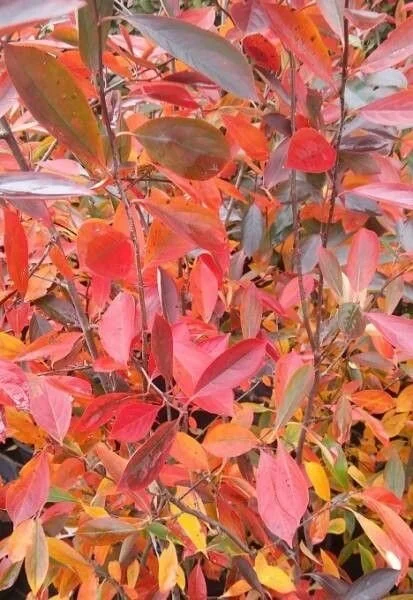
Photinia pyrifolia
Red chokeberry is a deciduous shrub that thrives in wet meadows, swamps, and woodland edges. Clusters of white flowers in spring are followed by bright red berries that persist into winter. Its foliage turns brilliant red in fall, adding ornamental value. The berries, while astringent to humans, are an important winter food source for birds. Native to eastern North America.
Height at pickup: 2’+
Height: 6’ – 12’
Spread: 3’ - 6’
Pot size: 5 gal
Bloom time: May
Light: Full sun to Partial shade
Moisture: Average
Attracts: Birds, Bees, Butterflies
Deer resistant: Moderately
Companion plants: White fringe tree , Virginia sweetspire, winterberry
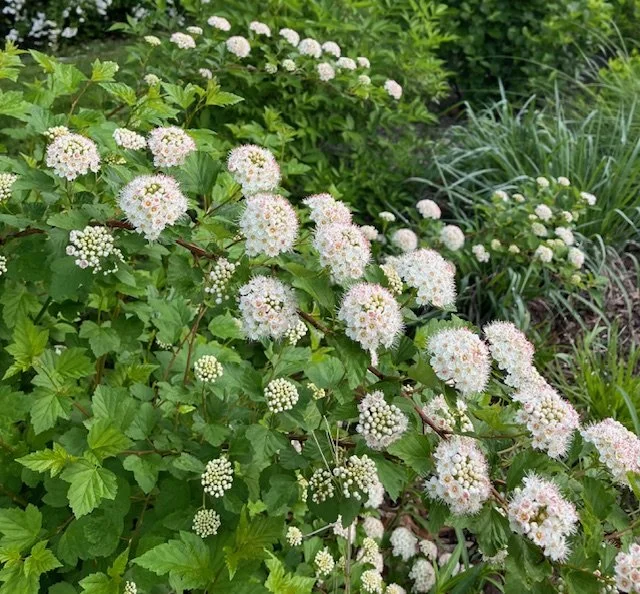
Physocarpus opulifolius
This fast growing deciduous four- season shrub is a mixture of toughness and beauty. It produces pink or white showy flower clusters in late spring. Flowers give way to drooping clusters of red fruit. Leaves emerge yellowish- green and darken to a reddish purple. The exfoliating bark peels in strips to reveal several layers of reddish to light brown bark for winter interest, which is how it got its name. It tolerates drought, erosion, clay soil, dry soil, wet soil, rocky soil and black walnut. It’s good for hedges or a shrub border. Can be used for erosion control on banks.
Height at pickup: 12”+
Height: 5-8’
Spread: 4-6’
Pot size: 1 gal
Bloom time: May to June
Light: Full sun-part shade
Moisture: Dry-medium
Attracts: Butterflies, moths, native bees, wasps and flies. It’s the larval host for the Ninebark Pygmy Moth and Unicorn Caterpillar. Birds like the fruit/seedpods.
Deer resistance: Moderate. Deer generally avoid ninebark though will browse in winter when food is scarce.
Companion plants: Bee balm, coneflower, black-eyed Susan, lavender and sedum.

Ilex verticillata
Slow-growing, low-maintenance woody, deciduous tree or shrub makes a nice border in pond areas, and native, winter, and pollinator gardens. It has red berries which mature in the fall providing winter interest and food for birds and small mammals. It must have a male plant within 50 feet to produce berries. Northeastern U.S. Native.
Height: 3 -15’
Spread: 6 - 12’
Pot size: 3 qt.
Bloom time: April, May, June, July
Light: Full sun, part shade, shade
Moisture: Average, Moist
Attracts: Birds, butterflies, larval host for Henry’s Elfin Butterfly
Deer Resistance: Yes
Companion Plants: Purple coneflower, coastal Joe Pye weed, arrowwood viburnum, switchgrass,
Photo: Glover Perennials


Hamamelis virginiana
A beautiful early blooming plant with yellow spidery flowers with four crinkly, ribbon-shaped petals appear along the branches. Space plants 12' to 24' apart.
Height at pickup: 6” +
Height: 10’-15'
Spread: 12’-24’
Pot Size: 1 gal
Bloom Time: October - March
Sun: Full to Partial
Moisture: Average
Attracts: Birds, bees, butterflies
Deer Resistance: Yes
Companion Plants: American holly, mountain laurel, mapleleaf viburnum, Christmas fern,
pinxterbloom azalea

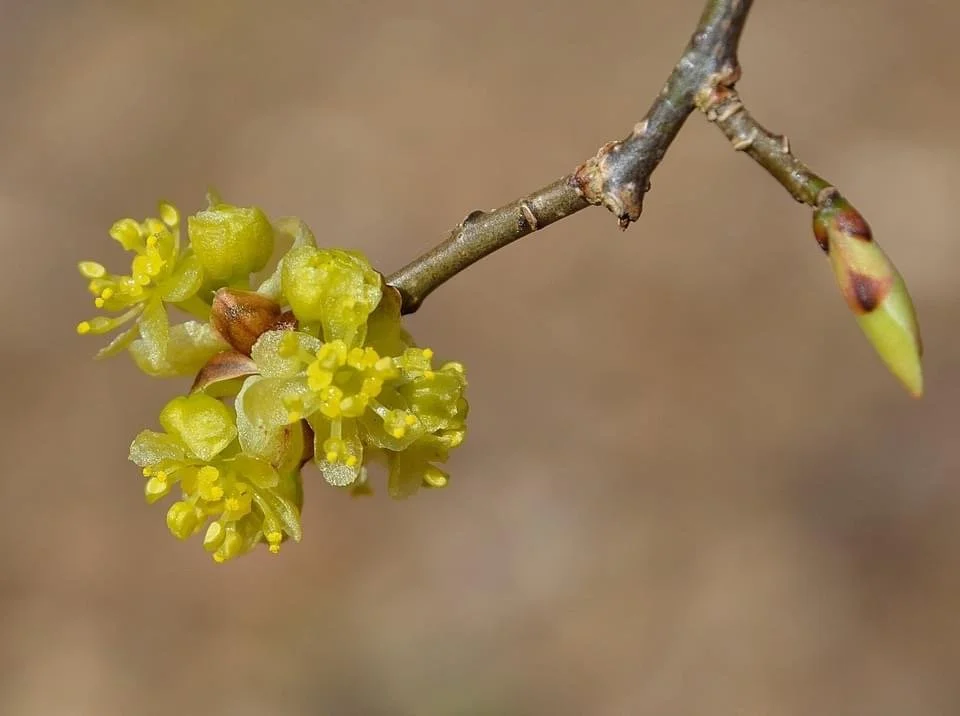
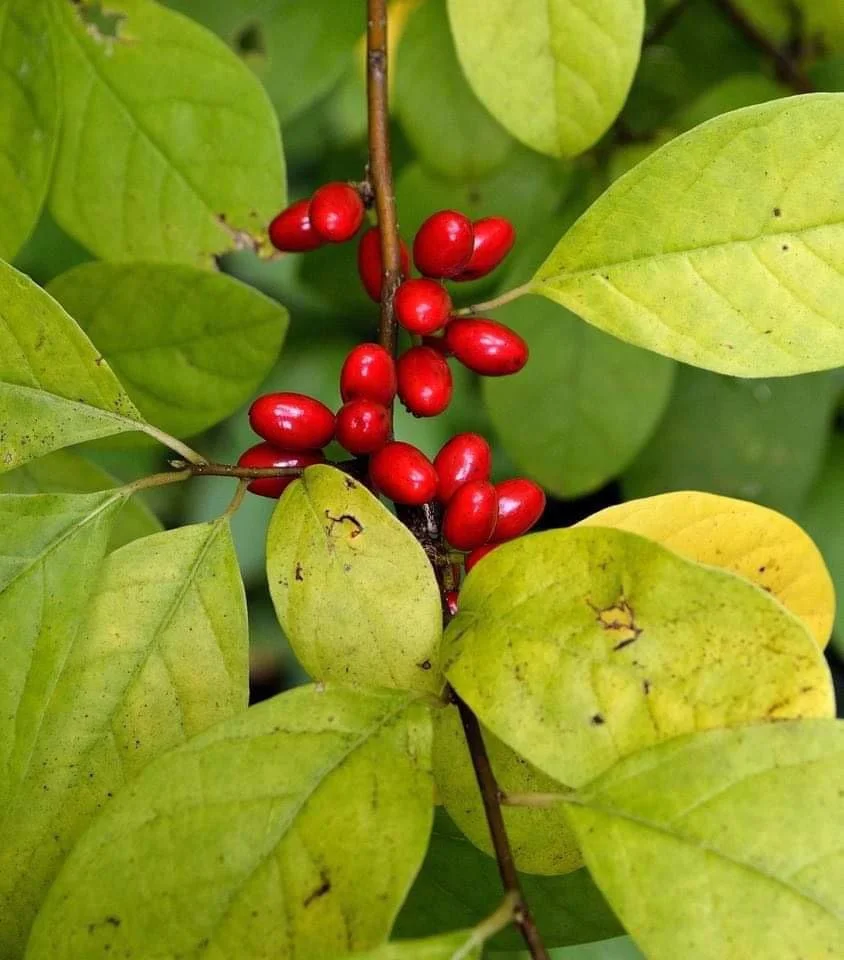
Lindera benzoin
A few-stemmed deciduous shrub thought of as “the forsythia of the wilds.” Dense clusters of tiny, pale yellow flowers bloom before the leaves. They are followed by glossy red fruit. Both fruit and foliage are aromatic. The leaves turn a colorful yellow in the fall, truly a 3-season plant. Northeastern U.S. Native.
Height at pickup: 2’+
Height: 15’
Spread: 6 -12’
Pot size: 5 gal
Bloom time: March, April, May
Light: Full sun, part shade
Moisture: Average
Attracts: Birds, butterflies, hosts for Eastern Tiger Swallowtail and Spicebush Swallowtail
Deer Resistance: Yes
Companion Plants: Virginias bluebells, Eastern redbud, witch hazel, Christmas fern
First Photo:Mike Adamovic
Second Photo: Mike Adamovic
Third Photo: Kristen Ossmann
No results match your search. Try removing a few filters.