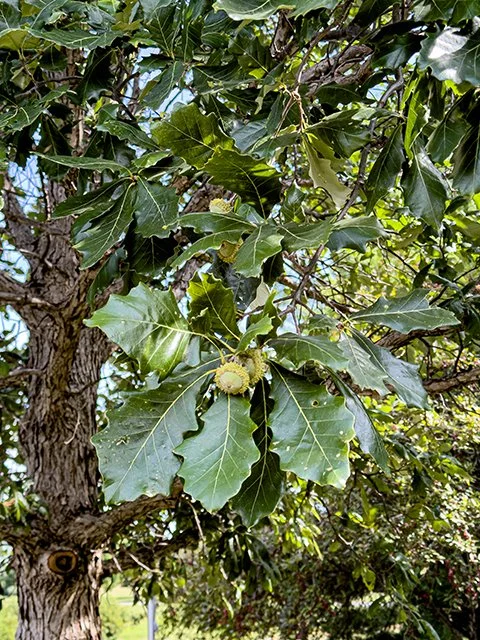
Quercus bicolor
Swamp white oak is a medium to large tree with leaves that have shallow lobes or wavy edges with a shiny green upper surface and a silvery, fuzzy underside. The bark is dark and scaly, often flaking in strips, and the tree produces acorns in pairs on long stalks. Adapted to wet soils, it thrives in swamps, riverbanks, and poorly drained areas.
Ecologically, swamp white oak provides food and shelter for birds, mammals, and insects. Its acorns are an essential energy source for wildlife. The species is also favored in urban planting due to its tolerance of compacted soils and pollutants. Its durable, water-resistant wood is used for construction, fencing, and furniture. Native to wetlands and floodplains in the eastern and midwestern United States.
Height at pickup: 12”+
Height: 50’ – 80’
Spread: 50’ - 60’
Pot size: 2 gal
Bloom time: March to May
Light: Part Shade
Moisture: Moist - Wet
Attracts: Birds, mammals and insects
Deer resistant: Moderate until maturity
Companion Plants: River birch, flowering dogwood, white turtlehead, Virginia bluebells, foamflower, coral bells
Photo: Lady Bird Johnson, Brundage, Stephanie

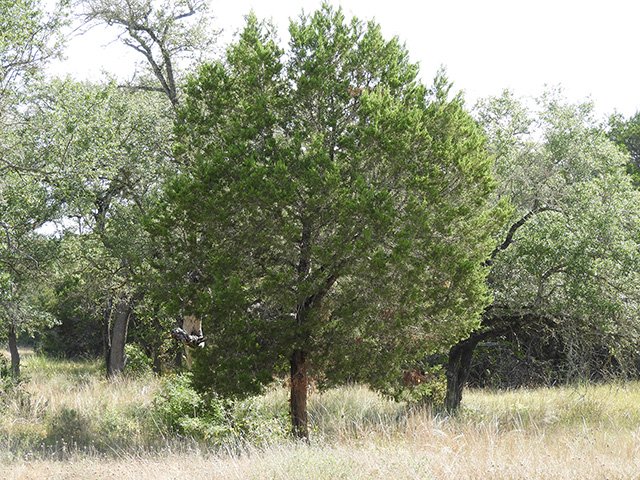
Juniperus virginiana
Magnificent evergreen, with shreddy reddish-brown bark and blue-green scale-like foliage, provides great winter interest and shelter, food and nesting material for birds and small animals. Although named redcedar, it is a juniper producing blue berry-like cones (female). This drought tolerant tree draws its name from the aromatic true cedar fragrance of its heartwood. It is a Keystone plant, stabilizing soil erosion with its deep roots, while providing and supporting wildlife. Native to eastern U.S.
Height at pickup: 6”+
Height: 30’ – 65’
Spread: 8’ – 25’
Pot size: 1 gal.
Bloom time: non-flowering
Light: Full sun
Moisture: Dry
Attracts: Birds - cedar waxwings (named for their love of the berry-like cones). Butterflies -host for the Olive Juniper Hairstreak. Moths - imperial moth
Deer resistant: Yes
Companion plants: Pussytoes, winterberry, witch hazel, lady fern
2nd Photo: Lady Bird Johnson Wildflower Center https://www.wildflower.org/

Chionanthus virginicus
A small, deciduous tree with a multi-stemmed habit that can be trained into a single trunk. In late spring, fragrant flower clusters with creamy white fringe-like petals appear turning into showy blue-black fruits as they mature in late summer. The bark, with its scaly dark brown ridges and red furrows, brings winter interest. Fringe Tree grows about 6 to 10 inches each year.
Height at pickup: 2’+
Height: 12-20’
Spread: 12-20’
Pot size: 5 gal
Bloom time: May - June
Light: Full to part sun. Best foliage in partial shade and the best flowering in full sun
Moisture: Medium
Attracts: Birds, host plant for butterfly and moth larvae (caterpillars), including Rustic sphinx (Manduca rustica).
Deer resistance: Moderate
Companion Plants: Indian pink, skullcap, Arrowood Viburnum, Heuchera, ferns
Photo Credit: Jason Sturner-cc wikimedia

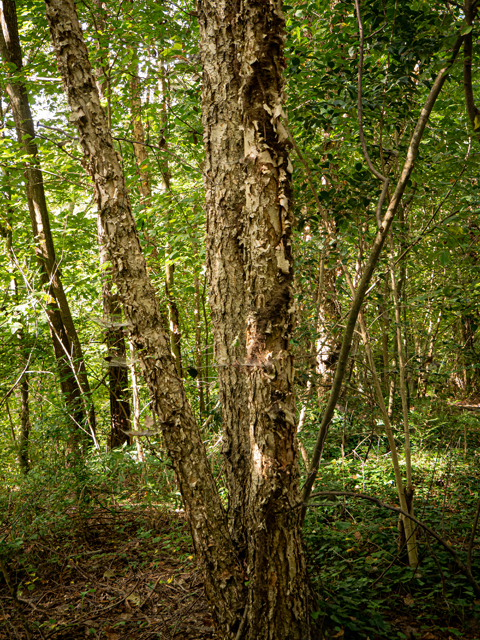
Betula nigra
Valued as a fast-growing tree with an attractive exfoliating cinnamon-brown bark and striking yellow fall foliage. It is borer-resistant and heat-tolerant. Excellent specimen tree in the landscape. Northeastern U.S. Native.
Height: 30’ – 80’ ( approx. height at delivery 5’-6’ feet)
Spread: 40’ – 60’
Pot size: 2 gal
Bloom time: April
Light: Full sun
Moisture: Average to wet
Attracts: Birds, wildlife, pollinators. Host plant for Mourning Cloak and Duskywing butterflies.
Deer Resistance: Yes
Companion Plants: Ferns, coral bells, astilbe and bee balm
Second Photo by Ladybird Johnson Wildflower Center
No results match your search. Try removing a few filters.